

 English
 Español
A pencil skirt that still hangs straight after a season of office wear, or a shift dress that comes out of the wash ready to put on — these are the jobs Ponte Roma fabric was engi...
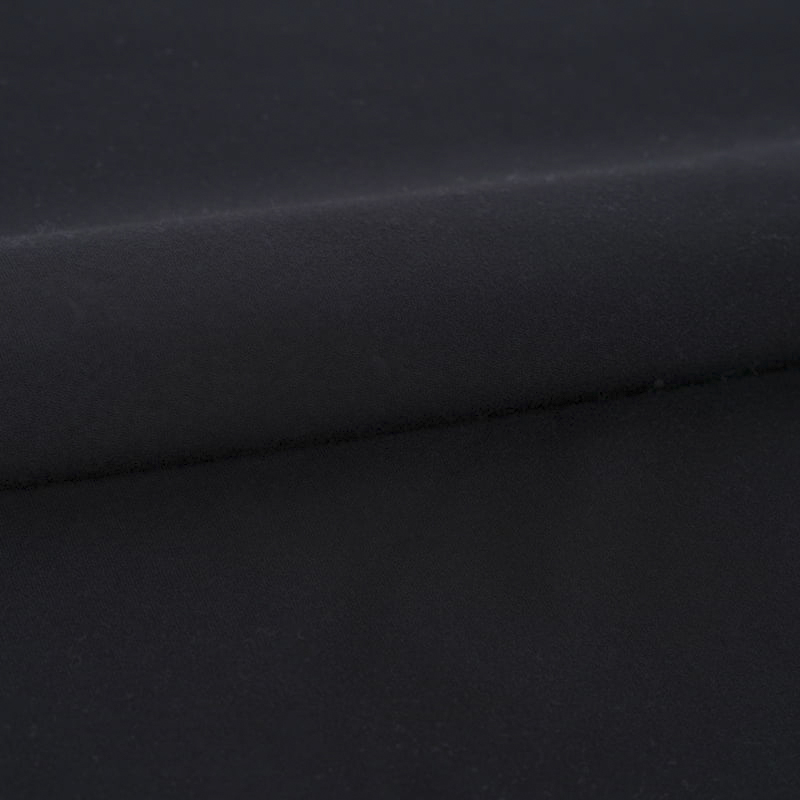
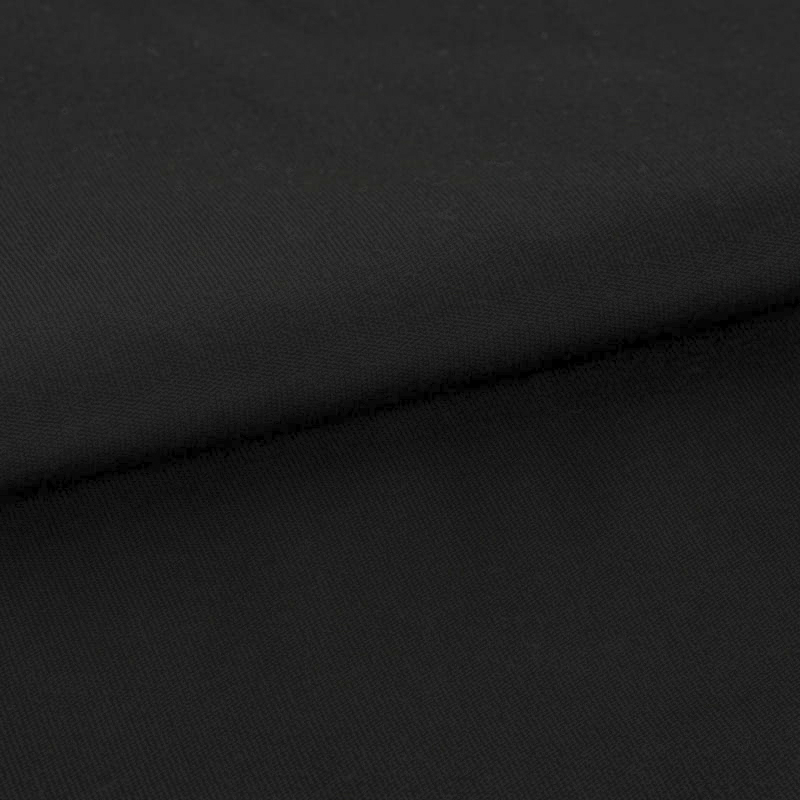
READ MOREBoth single-sided and double-sided fabrics have excellent touch. Single-sided fabrics are usually smooth and soft, suitable for skin-friendly wearing; while double-sided fabrics can be touched on both sides, bringing a double soft experience, especially suitable for clothing that requires higher touch comfort, giving the skin a more delicate enjoyment.
A pencil skirt that still hangs straight after a season of office wear, or a shift dress that comes out of the wash ready to put on — these are the jobs Ponte Roma fabric was engi...
READ MOREIf two swatches of the same modal-cotton knit land on your desk, and one feels like a T-shirt that has survived fifty laundering cycles while the other feels flat and stiff, the d...
READ MOREThe Weaving Method Behind Velvet's Texture Velvet fabric is traditionally woven on a double loom, where two layers of base cloth are constructed at the same time, one directly abo...
READ MOREThe performance of Single And Double-Sided Fabric is directly determined by its fiber composition, which forms the core of the material’s strength, flexibility, and comfort. Natural fibers like cotton, wool, and silk provide moisture absorption, breathability, and softness, while synthetic fibers such as polyester, nylon, and elastane contribute durability, elasticity, and dimensional stability. In advanced applications, blends of natural and synthetic fibers allow precise tuning of surface feel and mechanical performance. In single-sided fabric, the front face may incorporate finer or visually refined fibers, whereas the reverse face may use coarser or stronger fibers for internal support, ensuring the structure remains stable under tension or repeated use. In double-sided fabric, fibers are balanced or complementary to provide dual performance; for instance, one side may emphasize softness while the other emphasizes abrasion resistance. Coarse Needle Knit Fabric can be integrated into either side to add texture and structural reinforcement, improving impact resilience and tactile quality. By carefully controlling fiber alignment and distribution, we ensure that the fabric maintains consistent stretch, recovery, and dimensional stability even after prolonged stress. Shaoxing Keqiao Ruijue Textiles Co., Ltd. applies rigorous quality control in fiber selection and blending, ensuring that Single And Double-Sided Fabric retains consistent properties for both high-end fashion and industrial applications. The internal cohesion of fibers prevents unwanted distortion, curl, or sag, making the fabric adaptable for garments, home textiles, and technical uses.
| Parameter | Specification | Unit | Description |
|---|---|---|---|
| Fabric Type | Single And Double-Sided Fabric | – | Indicates whether the fabric is single-sided or double-sided |
| Material Composition | Cotton / Polyester / Blended / Wool | % | Fiber types used in fabric, defining comfort and durability |
| Weight | 180–450 | g/m² | Fabric density for different applications such as apparel or home textiles |
| Thickness | 0.4–1.5 | mm | Overall fabric thickness, includes single or double-sided construction |
| Yarn Count | 20–120 | Ne | Yarn fineness used in weaving or knitting, affecting surface smoothness |
The yarn used in Single And Double-Sided Fabric determines how fibers interact under mechanical stress and how the fabric behaves under bending, stretching, and abrasion. Single-sided fabric can utilize asymmetrical yarn configurations, placing higher-density or higher-twist yarns on the functional face to improve surface appearance or strength, while the back uses simpler or lighter yarns to maintain flexibility without affecting overall fabric thickness. Double-sided fabric often employs balanced or mirrored yarn arrangements, where both sides are designed to bear similar loads, maintain smoothness, and provide aesthetic value. Coarse Needle Knit Fabric contributes to this system by providing looped structures that enhance surface resilience, thickness, and thermal insulation while preventing quick wear of the top layer. Twist levels, fiber blends within yarns, and yarn alignment are carefully controlled to ensure uniform stress distribution across the fabric. Shaoxing Keqiao Ruijue Textiles Co., Ltd. specializes in creating yarn systems that optimize both mechanical performance and hand feel, enabling Single And Double-Sided Fabric to maintain form stability, reduce pilling, and provide long-term usability for garments and upholstery. This precise control over yarn design allows the fabric to resist stretching, maintain drape, and deliver consistent performance in both daily wear and industrial applications. Proper yarn configuration also ensures that moisture management, thermal insulation, and comfort properties are preserved in both single- and double-sided constructions, contributing to fabric versatility.
Fabric construction methods, such as weaving, knitting, lamination, and bonding, define the overall structure and functional differentiation of Single And Double-Sided Fabric. Single-sided fabrics are often constructed with front-face-focused techniques, enhancing aesthetic appeal, smoothness, or tactile response, while the reverse face provides structural reinforcement. Double-sided fabrics are engineered for balanced performance on both faces, ensuring that either side can serve functional or aesthetic purposes. Coarse Needle Knit Fabric is often incorporated as a structural reinforcement layer or surface texture enhancer, giving additional thickness, resilience, and thermal insulation without sacrificing flexibility. Construction methods such as double knitting, interlock knitting, or laminated weaving are commonly used to achieve this dual performance, allowing us to control weight, thickness, and breathability. Shaoxing Keqiao Ruijue Textiles Co., Ltd. integrates advanced machinery and skilled craftsmanship to produce complex Single And Double-Sided Fabric constructions, maintaining consistent pattern registration, smooth surface quality, and dimensional stability. The surface differentiation also allows design flexibility: one side may showcase bold prints, smooth finishes, or high-shine textures, while the reverse side provides softness, insulation, or grip. This enables the creation of multifunctional products, from reversible fashion apparel to high-performance upholstery, meeting diverse market demands.
| Parameter | Specification | Unit | Description |
|---|---|---|---|
| Surface Finish | Brushed / Sanded / Embossed | – | Type of surface finishing applied to enhance texture and appearance |
| Stretch & Recovery | 5–20 | % | Fabric elongation and recovery ratio under tension |
| Abrasion Resistance | 30,000–50,000 | Martindale cycles | Resistance to wear and pilling for long-term durability |
| Thermal Insulation | 0.03–0.06 | K·m²/W | Ability to retain heat, influenced by Coarse Needle Knit Fabric integration |
| Applications | Apparel / Upholstery / Home Textiles / Technical | – | Recommended end-use areas for Single And Double-Sided Fabric |
The surface characteristics of Single And Double-Sided Fabric are achieved through finishing processes such as brushing, sanding, embossing, dyeing, and coating. Single-sided fabrics usually focus finishing treatments on the main face to achieve desired aesthetic effects or functional properties, while the reverse side remains simpler but structurally supportive. Double-sided fabrics require more advanced finishing, often applying symmetrical or controlled asymmetric treatments to ensure both faces remain usable. Coarse Needle Knit Fabric layers can be integrated to enhance tactile comfort, visual texture, and structural integrity, especially in thicker applications. Additional functional treatments, such as water-repellent coatings, anti-pilling finishes, and anti-static properties, are commonly applied to the surface layers of Single And Double-Sided Fabric to improve usability in outdoor, sportswear, or industrial applications. Shaoxing Keqiao Ruijue Textiles Co., Ltd. ensures that finishing processes are optimized for durability and uniformity, maintaining surface appearance, hand feel, and performance over repeated use, washing, and environmental exposure. Layer design can also enable moisture management, thermal control, and tactile differentiation, offering a multi-functional experience for consumers while maintaining material efficiency and structural stability.
Dimensional stability in Single And Double-Sided Fabric ensures that the material maintains its intended shape, size, and performance under stress, laundering, and environmental changes. Single-sided fabrics often emphasize stability on the primary surface, with the reverse side providing support. Double-sided fabrics require symmetry in construction and finishing to prevent warping, curling, or distortion. Coarse Needle Knit Fabric can reinforce both surfaces, adding bulk and stability while maintaining elasticity and comfort. Shaoxing Keqiao Ruijue Textiles Co., Ltd. employs precise control over yarn tension, fabric density, and finishing parameters to maintain dimensional accuracy. Processes such as heat setting, controlled drying, and pre-shrinkage treatments stabilize fibers and yarns, ensuring Single And Double-Sided Fabric retains shape and size over time. This stability is essential for applications where fabric interacts with other materials, including garment linings, upholstery layers, and industrial protective layers, where excessive distortion could compromise performance and appearance. The careful combination of fiber selection, yarn design, and construction method allows the fabric to achieve long-term structural integrity without sacrificing flexibility or comfort, providing a balance between durability and usability in diverse markets.

 Address: Xinglian Village, Fuquan Street, Keqiao District, Shaoxing City, Zhejiang Province, China.
  Phone: +86-15958501675
  Email: [email protected]
For exclusive deals and latest offers, sign up by entering your email address below.
Coprright © Shaoxing Keqiao Ruijue Textiles Co., Ltd. All Rights Reserved. Cutsom Single And Double-Sided Fabric Suppliers
