Content
Sand wash silk is a term that comes up again and again in fabric sourcing, yet it is widely misunderstood. Some buyers assume it is a special breed of silk. Others think it is a synthetic imitation. In reality, sand wash silk is genuine silk - usually charmeuse, crepe de chine, or habotai - that has gone through a mechanical finish called sandwashing. The treatment gives the cloth a soft, matte, peach-skin hand and a quiet, understated luster, turning an inherently shiny material into something far more wearable.
Sandwashing is a finishing technique, not a weaving or knitting process. The silk fabric is loaded into large washing drums together with abrasive media, traditionally fine pumice stones. As the drum turns, the stones abrade the surface gently, lifting microscopic fibres and breaking up the smooth, reflective face that gives regular silk its gloss. The short nap that forms in its place scatters light differently, creating the signature dry, matte surface.
The technique became popular in the 1980s and 1990s, when designers were looking for ways to make silk feel less formal and more suitable for daytime wear. It has never really left fashion since. Today it appears in blouses, dresses, scarves, camisoles, and loungewear - anywhere the wearer wants silk's drape and breathability without the ballgown shine.
From a finisher's point of view, sandwashing is a balancing act. Fabric weight, abrasive size and hardness, tumbling time, and water level must all be tuned together. If the action is too gentle, the surface barely changes. If it is too aggressive, the silk loses strength or turns rough.
Most reputable mills start with sample lots and adjust the cycle until the hand is right. A well-executed sandwash produces a velvety softness, a matte face, and a light surface haze while leaving the fabric structure intact underneath. It is a completely different effect from the chemical smoothing used on many synthetics, and it feels as good as it looks.
For a closer look at the machinery and parameters involved, read our guide to how sand-washed fabric is made.
Once you have handled a yard of sand-washed silk, the characteristics are easy to recognise:
| Characteristic | Typical Property |
|---|---|
| Hand feel | Dry, velvety, similar to peach skin |
| Surface | Matte with a soft, diffused sheen |
| Drape | Fluid and full; the natural fall of silk is preserved |
| Breathability | Retained, because the silk base fibre is unchanged |
| Wrinkling | Lower than untreated silk, but not crease-free |
| Care | Gentle washing required; avoid harsh detergents |
Like every fabric, sand-washed silk comes with strengths and trade-offs that matter when you are planning a collection:
| Advantages | Limitations |
|---|---|
| Exceptionally soft and comfortable next to skin | Silk remains delicate; sharp jewellery can snag it |
| Matte surface works for both day and evening wear | The nap can flatten or change after repeated wear |
| Flows beautifully in unstructured silhouettes | Costs more than most knits and synthetics |
| Dye absorption is consistent with proper process control | Consistency depends heavily on the finisher's discipline |
Sand-washed silk suits blouses, dresses, skirts, wrap tops, pyjamas, and neck scarves. Its matte surface makes it practical for office wear and daytime occasions, where high-gloss charmeuse can feel overdressed. At the same time, the fabric keeps enough presence for evening pieces. It also works well as a lining, because the nap reduces clinging and gives the inside of the garment a smooth, airy feel.
When you move into production, note that sandwashed silk relaxes slightly after washing. Patterns, seam allowances, and pressing temperatures should be adjusted to account for this, and pre-shrunk yardage is the safest base for your first samples.
Sandwashing is not exclusive to silk. In our own mill, we apply the same finishing idea to rayon, modal, bamboo, and polyester blends, and the results come surprisingly close to sand-washed silk in look and touch. For buyers who want the matte, peach-skin hand without silk's price, fragility, or care demands, sandwashed knitted fabrics are a practical and attractive alternative.
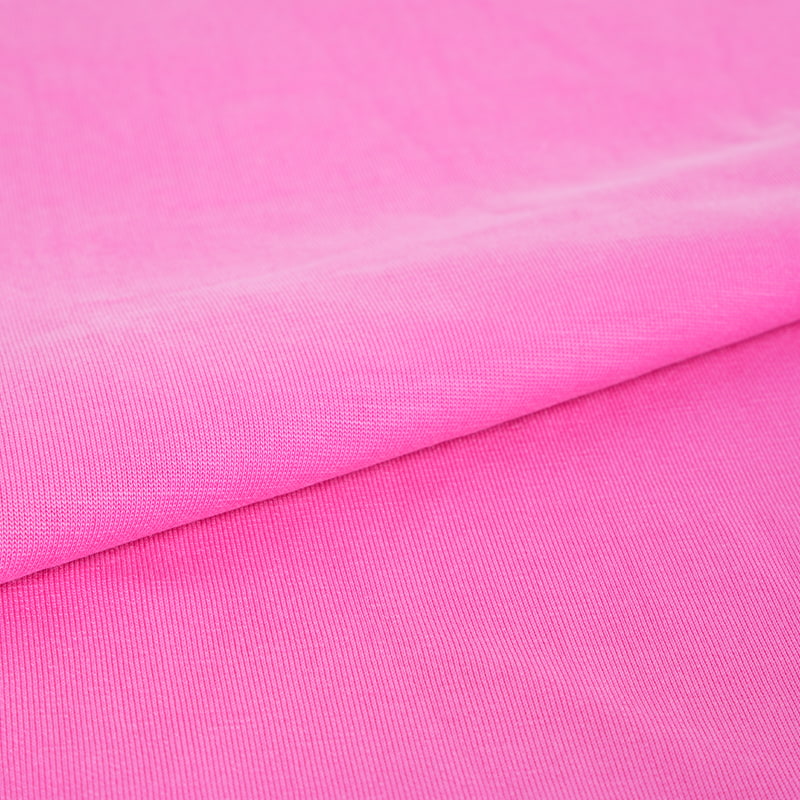
A good first option is our sandwashed bamboo jersey, which reproduces the fluid, soft character of sand-washed silk while adding knit stretch, easy machine washing, and a more accessible budget.
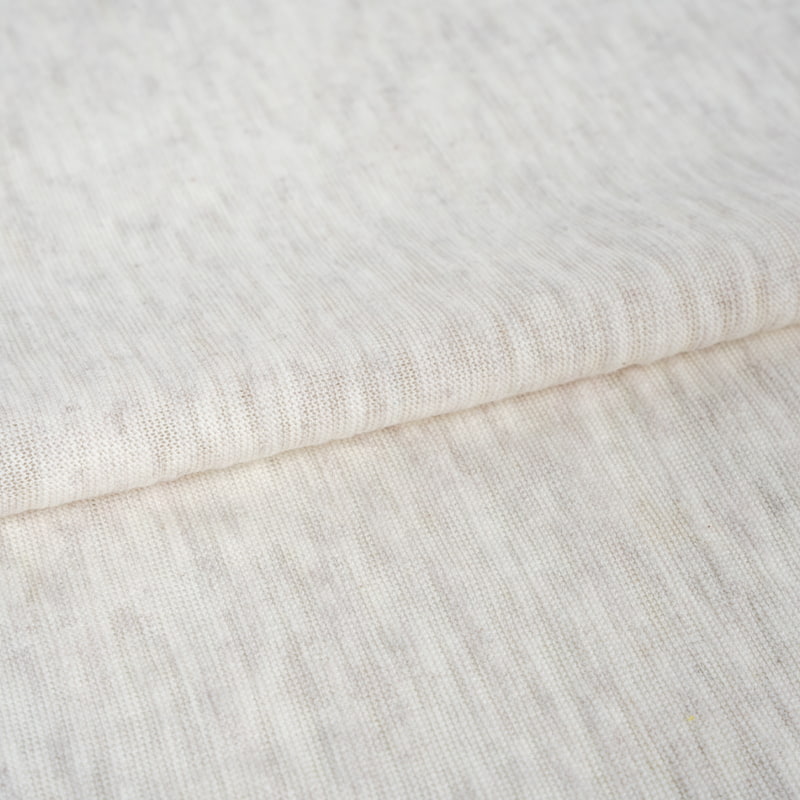 Sand-Washed Bamboo Jersey for Fluid, Breathable KnitsThis lightweight 150GSM knit offers a silk-like drape with stretch and easy care, making it a practical first choice for warm-weather apparel.View Product →
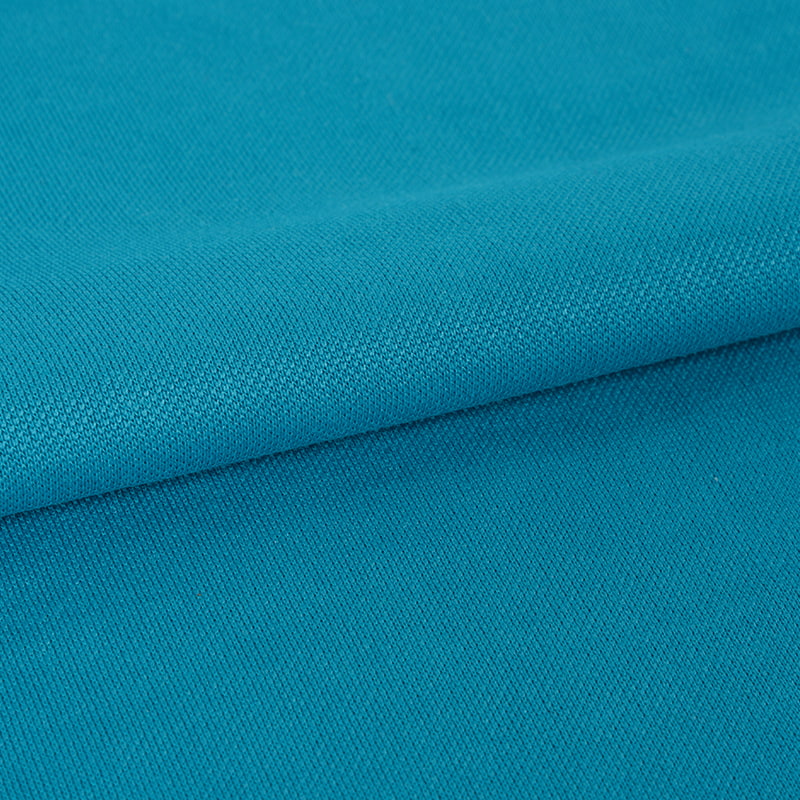
For structured pieces - cardigans, jackets, A-line dresses - the sandwashed pearl doublesided cloth delivers the same dry, matte touch with more body, opacity, and dimensional stability.
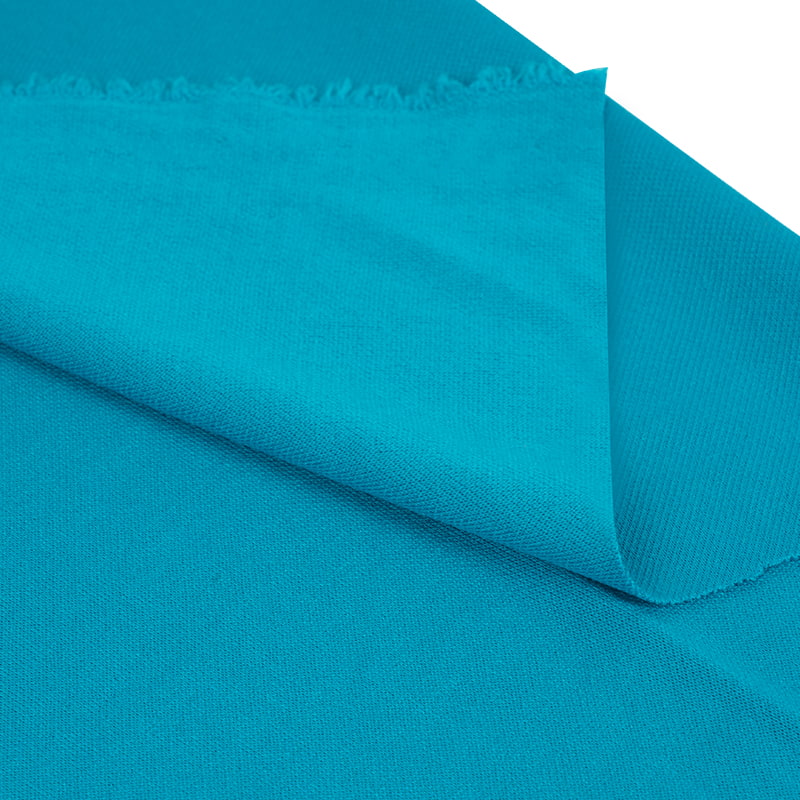 Sand-Washed Pearl Double-Sided Cloth for Structured GarmentsWith 180GSM weight and enhanced wear resistance, this modal-polyester cloth delivers a matte finish and stable body ideal for jackets and dresses.View Product →
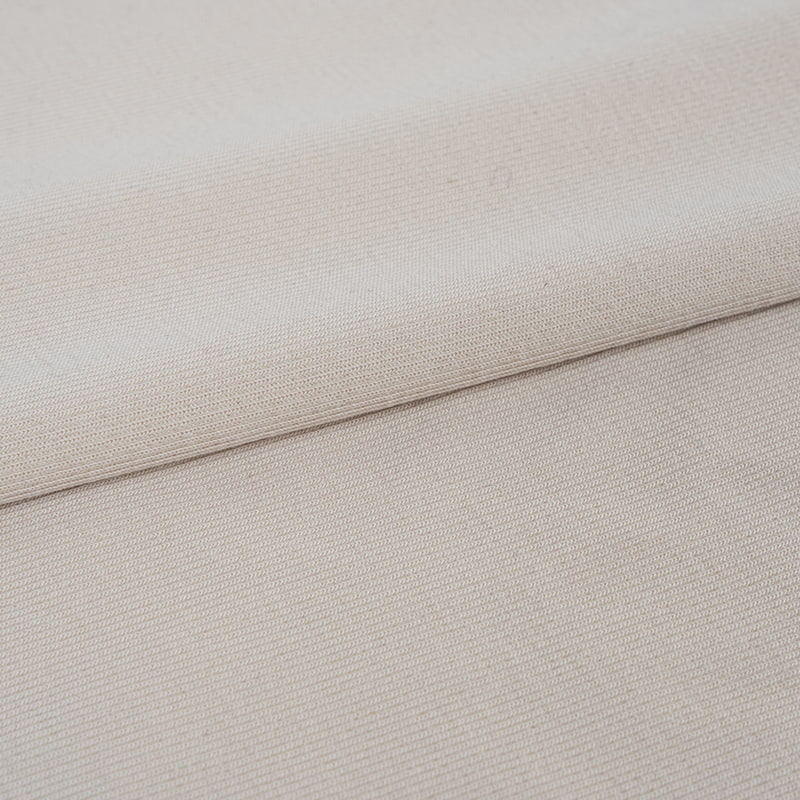
And if you are designing lightweight layering for the cooler months, the sand-washed modal-polyester air-layer fabric gives a silky, dry surface and an airy structure that regulates temperature without adding bulk.
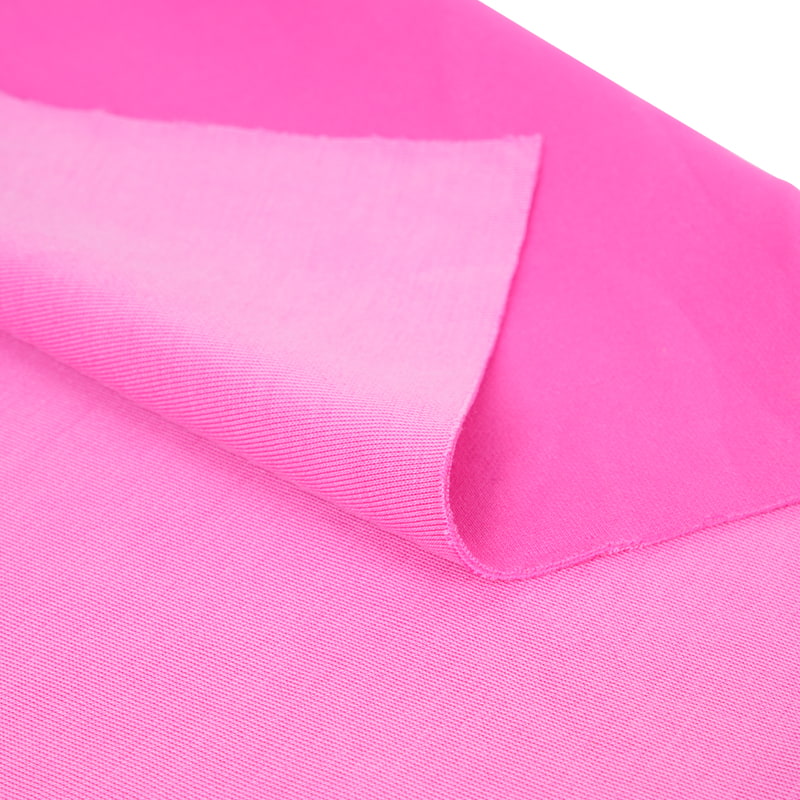 Sand-Washed Modal-Polyester Air Layer for Lightweight LayeringA 240-250GSM airy knit with a silky dry surface, designed to regulate temperature without bulk—suitable for sweatshirts, outerwear, and casual pants.View Product →
These knits are not meant to replace silk in a couture garment. They are simply another way to translate the sandwashed aesthetic into production-ready fabric, and they deserve a place in your sampling workflow alongside silk references.
Sand-washed silk is more forgiving than untreated silk, but it still needs respect. Hand washing in cool water with a mild detergent is the safest route. If a machine wash is unavoidable, use a mesh bag, a cold delicates cycle, and the lowest spin speed. Skip fabric softeners entirely - they leave a residue that dulls the nap. Dry flat, away from direct sunlight, and iron on the reverse side at a low temperature.
When you produce garments, a precise care label prevents more returns than almost any other quality step. We also recommend a wash test on a sample from the actual production lot, because sandwashing can expose subtle dye or construction problems that stay invisible before the finish is applied.
Because sandwashing is mechanical, batch consistency is the biggest challenge. Two rolls from the same mill can drift in hand feel if the finisher does not control the process tightly. When evaluating a supplier, ask about their abrasive media, cycle calibration, and wash-test routine.
Then test for yourself. Compare the hand feel of two separately finished rolls. Check shrinkage after a home-style wash. Check colour fastness to rubbing, since the raised surface of a sandwashed fabric can release dye more readily than a smooth satin. And always order a pre-production sample cut from the actual lot before bulk.
A supplier that can explain how sandwashing interacts with other finishes - brushing, compacting, softening - is worth more than one that simply quotes a price.
Sand wash silk has earned its place in apparel collections, and it is likely to stay there. It offers a rare combination of natural comfort, fluid drape, and a refined matte surface that works across seasons.
If your budget or performance targets push you away from silk, the same finish exists in sandwashed knits, often with easier care, better stretch, and a friendlier price per yard. Whichever route you take, the starting point is the same: understand the finish, test the fabric, and build the garment around the hand feel you want. And if you are assembling a new range and want a broader view of the textures available, our complete product catalogue is a useful starting point.

 Address: Xinglian Village, Fuquan Street, Keqiao District, Shaoxing City, Zhejiang Province, China.
 Phone: +86-15958501675
 Email: [email protected]
For exclusive deals and latest offers, sign up by entering your email address below.
Coprright © Shaoxing Keqiao Ruijue Textiles Co., Ltd. All Rights Reserved. Custom Jacquard Jersey Fabric Manufacturers



 English
 Español