Content
Jacquard fabric is one of those materials that immediately reads as special. The pattern is not printed on top; it runs through the cloth itself. When you look closely, you can see that the design is built from the yarns — a floral, a geometric repeat, or a subtle textured grid formed during weaving or knitting. Because jacquard fabric is defined by how it is constructed rather than by a single fiber, the name covers a surprisingly broad family of textiles.
We are a knit fabric manufacturer based in Shaoxing, China, and jacquard is one of the categories we work with most. Over the past decade we have helped buyers in garment and home textile production choose the right weight, blend, and pattern repeat for their market. This guide covers the basics of jacquard, what separates the main types, and what to check when you specify it for a new season.
Jacquard refers to a fabric with complex patterns created by controlling individual yarns during production. In woven jacquard, each warp thread is lifted independently so that the loom can create almost any design, from small geometric motifs to large pictorial repeats. In knit jacquard, the knitting machine selects yarns stitch by stitch, so two or more colors form the pattern within the fabric itself.
The name comes from Joseph Marie Jacquard, whose punched-card loom of 1804 allowed weavers to produce highly detailed patterns automatically. The punched-card system is often described as an early form of programming, and the principle still shapes how patterned textiles are made today, although the cards have been replaced by computer-controlled machinery.
Unlike printed fabric, where the design sits on the surface and can fade or crack, a jacquard pattern is part of the cloth. That makes it durable, and it also gives jacquard a slightly different hand feel — the pattern can create small variations in surface texture that prints cannot imitate.
Modern jacquard production follows a clear sequence, whether the fabric is woven or knitted:
Because jacquard requires specialized machinery and slower running times, it costs more than a printed equivalent. In return, you get a pattern that will not peel or wash off, and a fabric that typically holds its appearance through many washes.
In traditional woven textiles, terms such as brocade, damask, or matelassé describe specific jacquard constructions. In the knit trade, jacquard is usually described by the number of colors, the pattern repeat, and the fiber blend. For a garment buyer, fiber content and weight matter more than the historical name, but it helps to understand both sides.
| Category | Construction | Common Fibers | Typical End Uses |
|---|---|---|---|
| Brocade | Woven, raised pattern | Silk, polyester, viscose | Eveningwear, upholstery, ornamented garments |
| Damask | Woven, flat reversible pattern | Cotton, linen, silk, wool | Table linens, shirts, drapery |
| Matelassé | Woven, quilted or padded effect | Cotton, polyester blends | Bedding, jackets, decorative throws |
| Knit jacquard | Knitted, color or texture selection | T/R, polyester, polyamide, spandex, wool | Dresses, sweaters, cardigans, sportswear |
| Stretch jacquard | Woven or knitted with elastane | Polyester, polyamide, spandex | Fitted apparel, bodysuits, activewear |
For most apparel programs, the knit jacquard and stretch jacquard categories are the most relevant. They combine a decorative surface with the recovery and comfort that a garment needs, and they can be engineered to a specific weight and hand feel.
When you are sourcing jacquard for garments, four specifications usually decide whether the fabric will work:
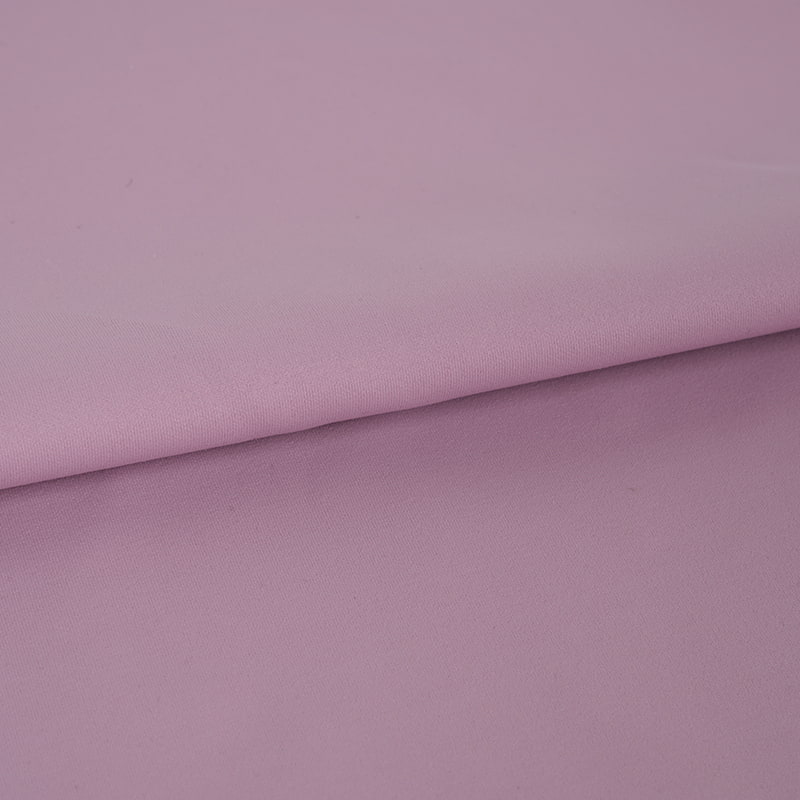
 254GSM Polyester-Spandex Elastic Jacquard Fabric with Natural LusterThis elastic jacquard blends polyester and spandex for drape and elegance, making it a strong choice when evaluating fabric specs for garment sourcing.View Product →
 Breathable Warm Jacquard Fabric with 98% Polyester and 2% SpandexWith air permeability, softness, and warmth retention, this 240GSM jacquard suits autumn and winter apparel, addressing key performance needs in fabric selection.View Product →
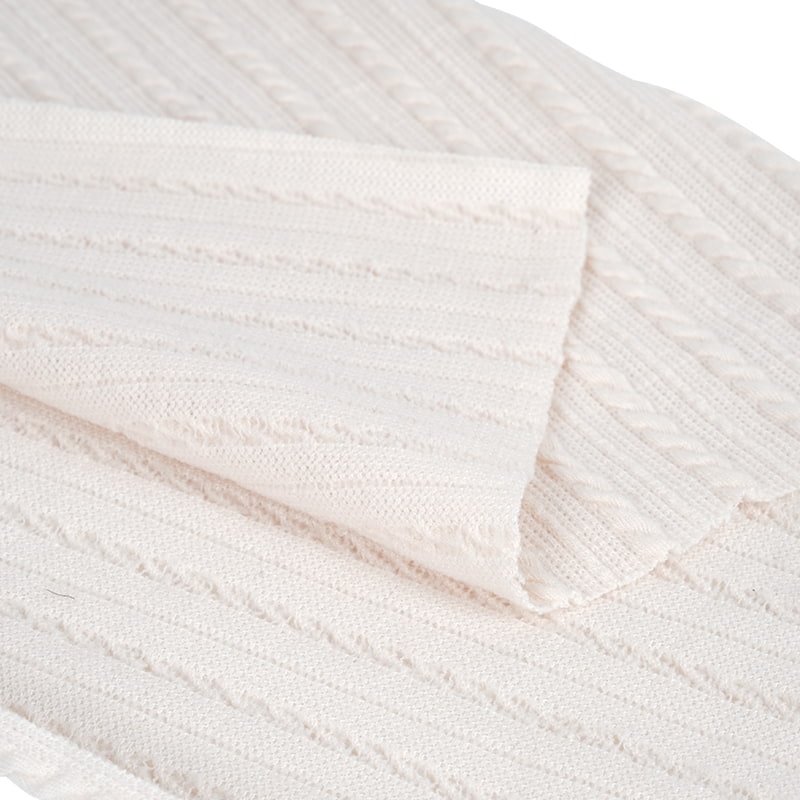
 Machine-Washable White Jacquard Fabric for Convenient CareThis 210GSM jacquard offers easy maintenance through machine washing, a practical feature to weigh when considering pattern repeat and fabric performance for garments.View Product →
Pattern repeat is another consideration. Large repeats create a more dramatic look but require more fabric to match across panels, while small or engineered repeats are easier to cut and more efficient for bulk production.
Jacquard is also a trusted construction in home textiles. Because the pattern is woven or knitted into the structure, jacquard upholstery and drapery fabrics resist the wear that printed home textiles often show. Cushion covers, throws, bedding, and table linens all benefit from the depth and texture of a jacquard surface.
For home programs, the key specifications change slightly: abrasion resistance matters for upholstery, lightfastness matters for curtains, and ease of care matters for bedding. Tell your supplier the end use early, because it changes the fiber blend and finish you need.
Jacquard itself is durable, but care instructions should follow the fiber content. A few general guidelines:
If easy care is a priority, look for jacquards labeled machine washable. They are finished with setting and anti-shrink treatments that keep the pattern crisp over many wash cycles.
The right supplier will do more than quote a price. Look for a mill that can show you a developed range in the weight and fiber family you need, and that can produce a custom pattern sample before you commit to bulk. Ask about pattern repeat capability, color matching, finishing options, and typical lead times.
At Ruijue Textiles, we have been developing and producing knit fabrics since 2015, including a dedicated jacquard line. Our factory in Shaoxing spans more than 12,000 square meters, we have around 200 staff, and our fabrics ship to customers in more than 35 countries. When you work with us, you are dealing directly with the manufacturer, which means faster samples, clearer communication, and full control over quality from yarn to finished roll.
You can explore our full fabric range on our product pages, or contact us with your pattern and target price. We will help you find a jacquard construction that performs as well in production as it does on the design board.
Jacquard is a construction method, not a single fiber, which is exactly why it is so versatile. It can be woven or knitted, crisp or soft, warm or breathable, dressy or casual. The finished quality depends on the yarn, the machine, and the finishing, so sourcing from an experienced manufacturer makes a real difference.
If you are planning a jacquard program — whether it is a stretch jacquard for fitted dresses, a warm knit jacquard for winter, or a machine-washable version for easy-care garments — we would be glad to send you swatches and discuss the details.

 Address: Xinglian Village, Fuquan Street, Keqiao District, Shaoxing City, Zhejiang Province, China.
 Phone: +86-15958501675
 Email: [email protected]
For exclusive deals and latest offers, sign up by entering your email address below.
Coprright © Shaoxing Keqiao Ruijue Textiles Co., Ltd. All Rights Reserved. Custom Jacquard Jersey Fabric Manufacturers



 English
 Español