Content
Some fabrics have to be handled gently. Crush crepe fabric is the other kind — the one that looks better after a long day, a long flight, and a week in a suitcase. That soft, finely crumpled surface is not a print and not a defect. It is built into the cloth itself.
Below we explain what crush crepe really is, how the crinkle is engineered rather than printed, how different fiber blends behave, and what to check before a bulk order. It is written from the floor of a working knit mill.
In textile language, crepe is a family of textures rather than a single fabric. A crepe surface is pebbled, grainy or crinkled, and it usually comes from one of three things: high-twist yarns that want to curl, a stitch structure that pulls the cloth out of flat, or a finishing step that shrinks part of the surface more than the rest.
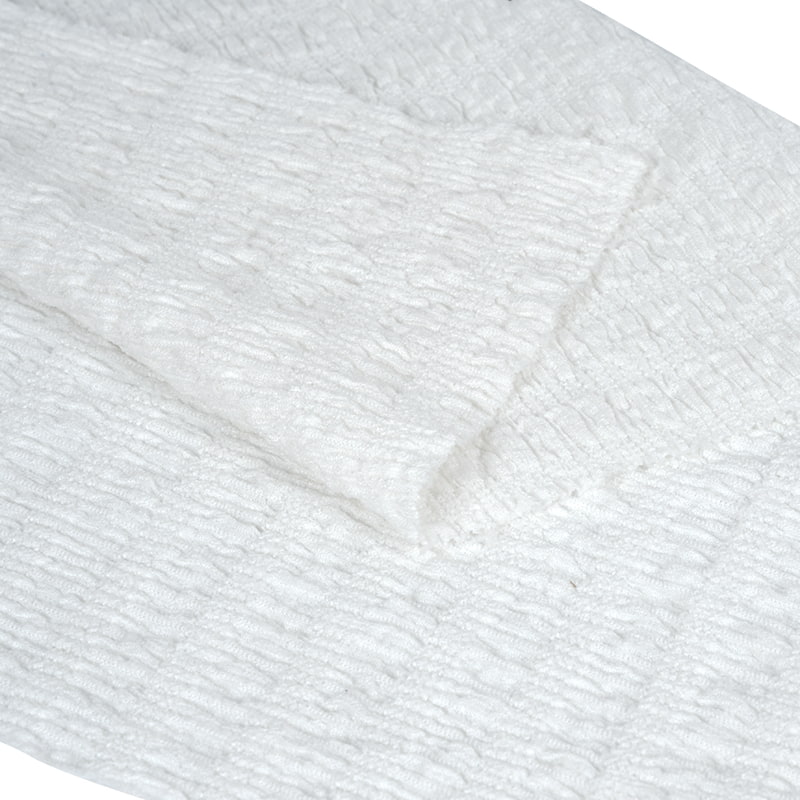
Crush crepe — also sold as crinkled crepe, crushed crepe or crinkle knit — is the version where the texture is random, all-over and permanent. The crinkle follows no fixed direction and repeats in no fixed pattern, and that irregularity is the point: the eye reads it as deliberate texture rather than as a crease that should have been pressed out.
It is worth separating from its neighbours:
There is no shortcut here and nothing glued on. A lasting crinkle comes from yarn, stitch and heat working together:
The consequence of step three matters more than any other detail. The crinkle is thermal, not mechanical, so pressing above the setting temperature flattens it permanently. When a buyer tells us a garment lost its crinkle, the answer is almost always an iron.
Constructions differ, too. A warp-knitted tricot crepe gives a dense, stable cloth with a fine surface and good opacity. A weft-knitted crinkle jersey is softer and stretchier, and feels more casual in the hand.
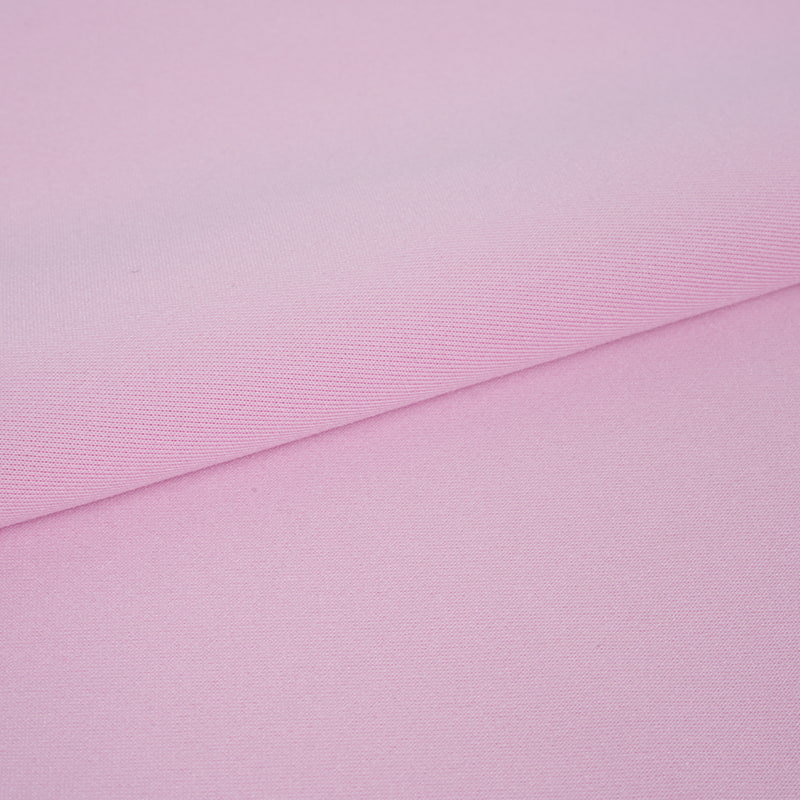
 Polyester-Spandex Warp Knitted Crepe FabricA warp-knitted crepe with 96% polyester and 4% spandex, offering controlled wrinkle effects and a stable, fine surface suitable for tailored garments.View Product →
Sand washing is one common route to a softer surface on these cloths; our note on how sand-washed fabric is made walks through the process step by step.
Because the crinkle lives in the structure and the heat set rather than in the fiber itself, almost any fiber can be used. What changes is the hand, the drape and how sharp the texture reads.
We keep a broad crinkled fabric range in production, so choosing between two blends usually means comparing real swatches rather than photographs.
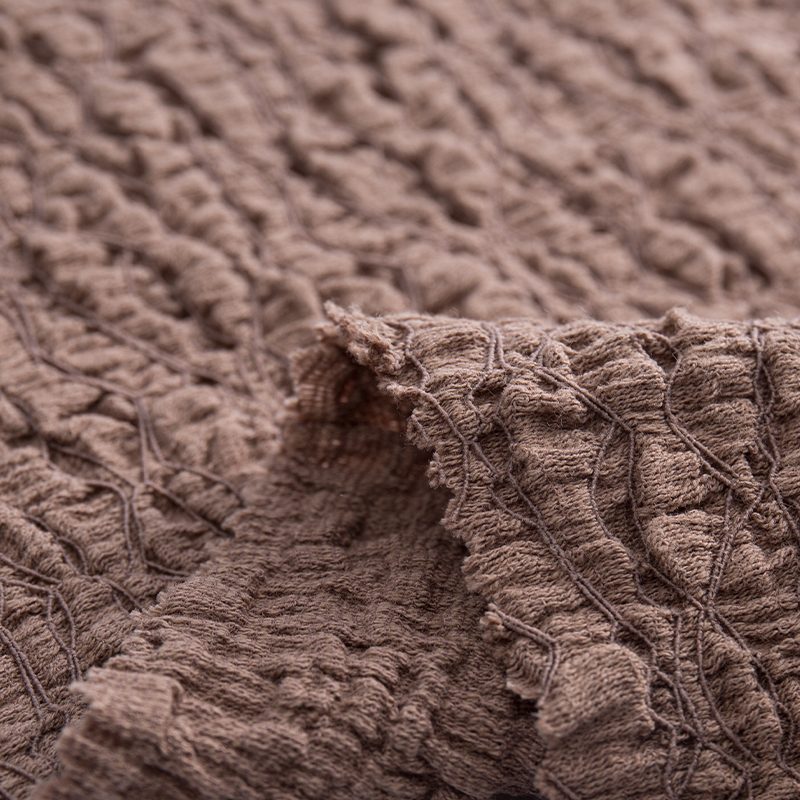 Stretch Cotton Nylon Crinkle FabricA natural crinkle fabric blending cotton, nylon, and spandex for softness, breathability, and stretch, ideal for dresses, shirts, and casual wear.View Product →
The table below sums up how these fabrics typically behave, and what each behaviour means once the cloth reaches a cutting table.
| Property | How it shows up | What it means for you |
|---|---|---|
| Surface | Fine, irregular crinkle across the full width | Travel creases and daily wear disappear into the texture |
| Stretch and recovery | Roughly 15 to 30 percent stretch that springs back | Comfortable on fitted dresses, tops and jumpsuits |
| Drape | Fluid, with a dry and slightly grainy hand | Skims the body instead of clinging to it |
| Weight range | About 120 to 260 gsm | Light weights for blouses, heavier ones for dresses and trousers |
| Shrinkage | Often 3 to 5 percent at the first relaxed wash | Wash a swatch before cutting, or allow for it in the pattern |
| Heat response | Crinkle flattens permanently above the setting temperature | Steam only; never press the surface flat |
Because the fabric looks after itself, it turns up wherever wrinkle resistance is worth more than a crisp finish:
A good example of the classic version is a black tricot crepe: dense enough to hang cleanly, fine enough to look tidy under a jacket, and completely indifferent to being folded.
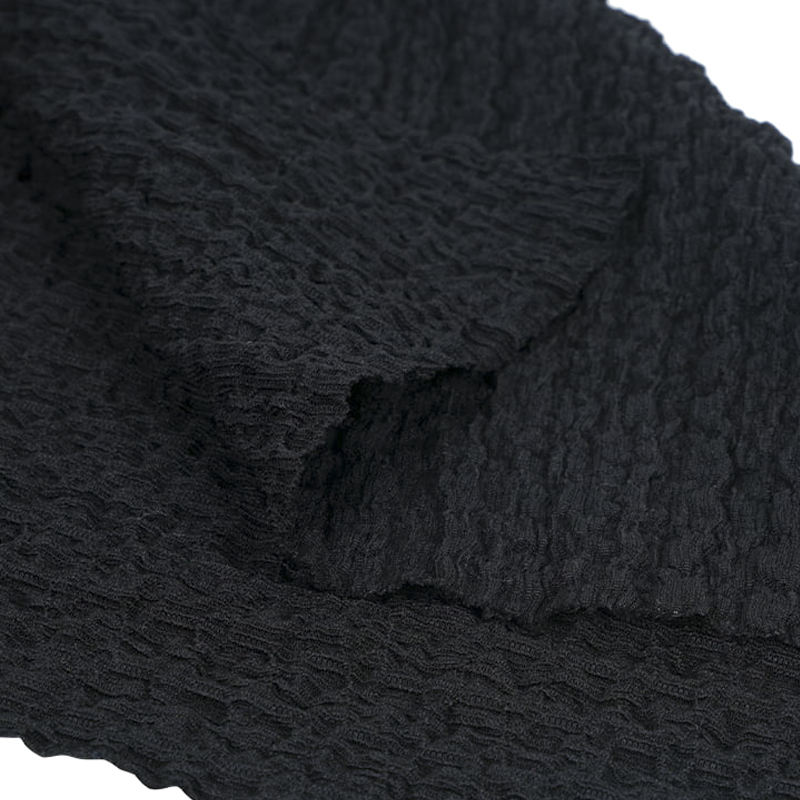 Classic Black Tricot CrepeA dense warp-knit tricot crepe in black, with a fine surface and clean drape, designed for a tidy look under jackets.View Product →
These are the points that decide whether the bulk matches the sample you approved:
Let the roll relax for a day before cutting, and cut single layer where you can, so a pattern weight does not pull the cloth out of shape.
Before a bulk order ships, these checks catch most of the problems we see in crepe knits:
Ruijue Textiles is a knit mill in Keqiao, Shaoxing, the dense knitting and dyeing district of eastern China. We have been running since 2015, work from around 12,000 square metres with a team of more than 200, and ship to customers in over 35 countries. Our daily work sits in air-layer, rib, jacquard, terry, ponte, waffle and crinkle knits, mostly for garment makers, brands and trading partners who need consistent rolls rather than one-off pieces.
What we are genuinely good at is development conversation: sending swatches you can feel, matching a crinkle scale you already sell, and flagging the finishing details that decide whether the fabric behaves in your factory.
Not if the fabric has been properly heat set and you keep heat away from it. A first wash may relax the cloth slightly, which is normal. What removes a crinkle is a hot iron, not a washing machine.
It folds like any knit, but the folds disappear into the texture, which is why travel clothing uses it so often.
Lighter polyester and T/R weights drape and breathe well in warm weather. For humid markets, ask for the lighter end of the range or for moisture-wicking versions.
If you are sourcing crush crepe fabric, the quickest way forward is a swatch and a short specification: weight, width, stretch, colour and the crinkle scale you have in mind. Send us a sample, or a photo of a garment you already like, and we will tell you honestly whether it can be matched, how long it takes and what it will cost. Texture is much easier to agree on in the hand than on a screen.

 Address: Xinglian Village, Fuquan Street, Keqiao District, Shaoxing City, Zhejiang Province, China.
 Phone: +86-15958501675
 Email: [email protected]
For exclusive deals and latest offers, sign up by entering your email address below.
Coprright © Shaoxing Keqiao Ruijue Textiles Co., Ltd. All Rights Reserved. Custom Jacquard Jersey Fabric Manufacturers



 English
 Español