Content
Ask five people in the textile trade whether cotton French terry is a good fabric and you will often get five different answers, usually depending on what they sewed last season. The honest answer is that it is excellent for a specific set of products and a poor fit for a few others. French terry sits in a useful middle ground between a light single jersey and a heavy brushed fleece, and the decision to use it almost always comes down to weight, fibre blend, and the finish applied to it. What follows is a plain walk through what cotton French terry does well, where it disappoints, and how to tell which side of the line your product falls on.
French terry is a weft-knitted fabric with a smooth, jersey-like face and a looped back. Those loops are the entire point of the structure. They are left intact rather than brushed or cut away, which is why the fabric stays comparatively light, drapes softly, and traps a thin layer of air inside its structure without becoming bulky.
Cotton French terry simply means cotton is the dominant fibre. That usually means 100% cotton, or a cotton-dominant blend carrying a small percentage of spandex, polyester, or rayon to improve recovery, durability, or cost. It is not fleece. Fleece frequently begins life as a similar knit and then goes through a brushing process that raises and cuts the loops, which makes it warmer, heavier, and a little less breathable. If you have ever wondered why two sweatshirts of matching weight feel completely different, the loop structure on the back is usually the reason.
Cotton takes up moisture readily, and the open loop back gives vapour somewhere to escape. The result is a fabric that feels comfortable against the skin without the clammy quality that synthetic fleece sometimes develops during wear. For sweatshirts, joggers, light hoodies, and casual loungewear, that balance is difficult to beat at the same price point.
The knit structure itself provides natural give, so even a 100% cotton version moves with the body. Adding two to five percent spandex improves recovery at the knees, elbows, and cuffs, but plenty of successful programs run on pure cotton and rely on rib trims for the stretch they need.
The face is smooth and dimensionally stable, so it cuts cleanly, generates less lint than fleece, holds screen prints and embroidery well, and survives garment dyeing and washing without the surface turning fuzzy. Cutting rooms tend to like it because the fabric does not shift as much as a heavily brushed fleece, and seam behaviour is more predictable across a run.
Being honest about the limitations is more useful than pretending they do not exist. A few things to plan around:
The table below is the shortcut version we give buyers who are choosing between knit structures for a sweatshirt or loungewear line. Weights are working ranges rather than fixed rules, because finishing and yarn count move the numbers around.
| Fabric | Surface | Warmth | Typical GSM | Common end use |
|---|---|---|---|---|
| Cotton French terry | Smooth face, looped back | Moderate | 240-320 | Sweatshirts, joggers, hoodies, loungewear |
| Brushed fleece | Raised or cut back | High | 280-400 | Winter hoodies, heavy sweatshirts |
| Single jersey | Smooth on both sides | Low | 140-200 | T-shirts, light tops, linings |
| Stretch micro terry | Smooth face, very short loops | Low to moderate | 180-240 | Activewear, fitted tops, sportswear |
If you are weighing terry against a smoother sweatshirt knit, it also helps to see how jersey-based sweat fabrics are constructed and where they perform differently.
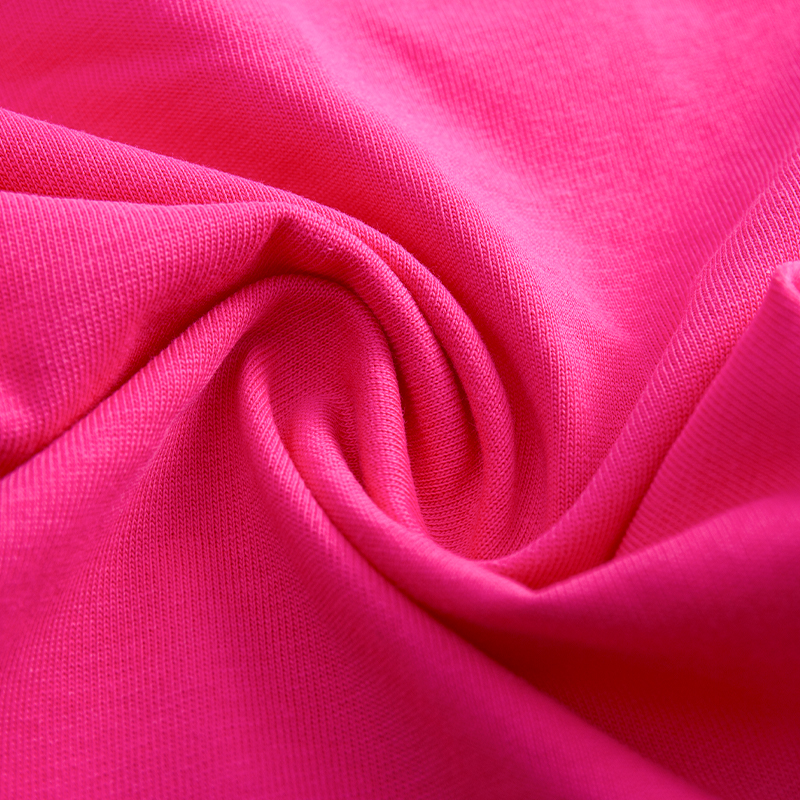 100% Cotton Jersey Sweat Fabric, 230 GSMA 185 cm wide, 230 GSM cotton jersey for hoodies and sweatshirts; useful when comparing smoother sweat knits with terry.View Product →
The same cotton terry recipe at 200 gsm and at 340 gsm are effectively two different fabrics. Lightweights around 180 to 220 gsm are drapey and work for summer-weight tops and childrenswear. The mid range of 240 to 280 gsm is the sweet spot for year-round sweatshirts and joggers. Anything from 300 gsm upward reads as premium and structured, which is what most heavyweight streetwear programs are chasing.
Blends shift the story just as much. A cotton and spandex blend adds recovery without much extra cost. A cotton and polyester blend dries faster, resists pilling, and holds up better to repeated industrial laundering. Recycled cotton and recycled polyester versions are increasingly requested by brands with published sustainability targets, and they perform well when the yarn specification is right. Sand washed and peached terry finishes soften the hand and give a matte, slightly faded look that photographs beautifully in lookbooks. You can read more about how that washing process works if you are considering it for a collection, and for moisture-wicking performance knits, our buyer's guide to sporty skin-friendly fabrics covers the fibre choices in detail.
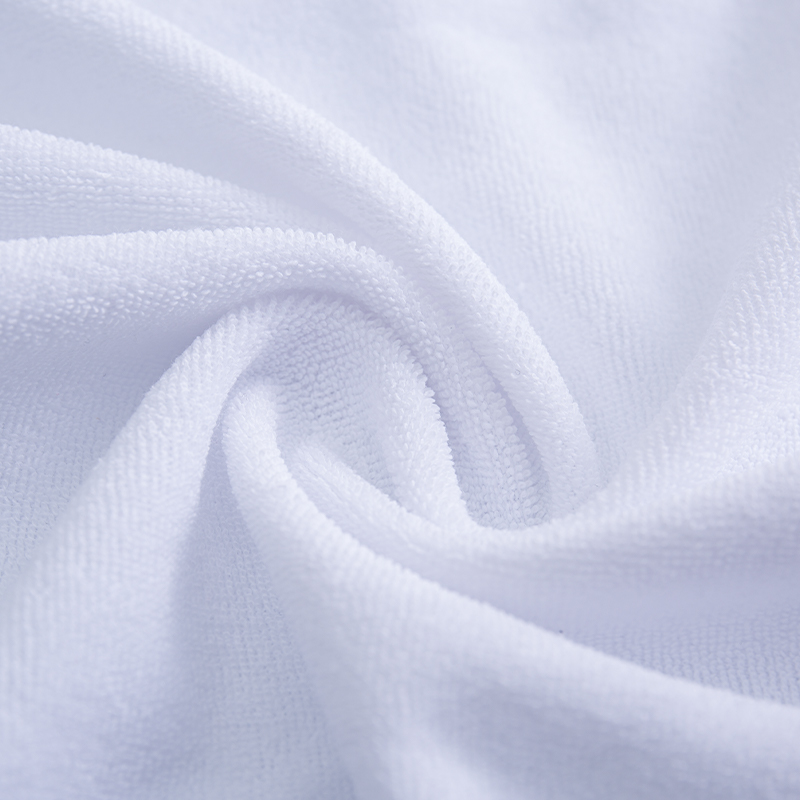 Cotton Blend Terry Fabric, 220 GSMA 72% cotton, 22% polyester terry at 220 GSM and 170 cm; offers absorbency for loungewear and casual apparel.View Product →
For lighter, more technical styles, short-loop micro terry with a small amount of spandex is often a better match than a classic cotton loop, because it moves, recovers, and wicks without losing the soft hand that terry is known for.
Most disputes over French terry trace back to something that was never specified rather than something that was made badly. Before confirming an order, work through these points with your supplier:
Lighter weights under about 220 gsm are perfectly usable for summer loungewear and light tops. Heavier terry is a cool-weather fabric, so match the weight to the season rather than the name.
Untreated cotton terry can shrink several percent on the first wash. Pre-shrunk, compacted, or garment washed versions shrink far less and are worth the small premium.
Cotton wins on breathability and hand feel. Blends win on durability, drying speed, and price stability. Neither is universally better, and many brands run both across a range.
The looped back is soft against the skin and the fabric does not trap heat the way brushed fleece can, which is one reason it shows up so often in childrenswear and loungewear.
We are a knitted fabric mill based in Keqiao, Shaoxing, and terry-family knits are part of what we produce every week alongside jacquards, ribs, air layers, and fleece. Cotton blends, recycled options, sand washed finishes, and short-loop micro terry in the 180 to 340 gsm range are all within our normal development span, and we ship to buyers in more than thirty-five countries.
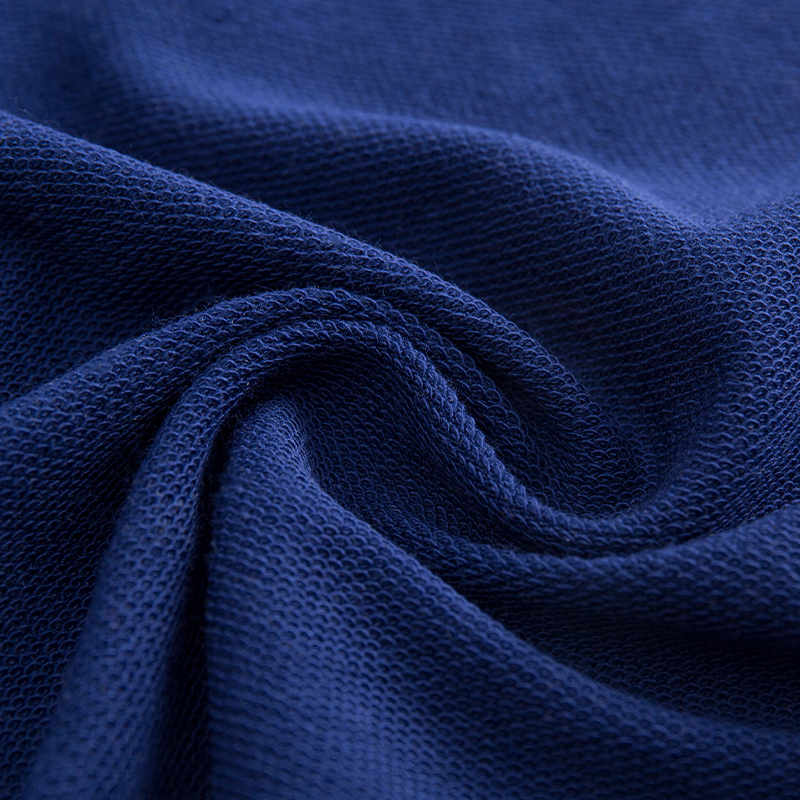 Recycled Stretch Micro Terry Fabric, 240 GSMA 62% polyester, 33% recycled, 5% spandex mini loop terry at 160 cm; relevant for casual wear needing stretch and shape retention.View Product →
If you are still narrowing down options, take a look at our full fabric range and tell us the weight, blend, and end use you have in mind. We will send swatches, shrinkage data, and a straightforward opinion on whether cotton French terry is genuinely the right choice for your product, or whether a different knit will serve you better.

 Address: Xinglian Village, Fuquan Street, Keqiao District, Shaoxing City, Zhejiang Province, China.
 Phone: +86-15958501675
 Email: [email protected]
For exclusive deals and latest offers, sign up by entering your email address below.
Coprright © Shaoxing Keqiao Ruijue Textiles Co., Ltd. All Rights Reserved. Custom Jacquard Jersey Fabric Manufacturers



 English
 Español