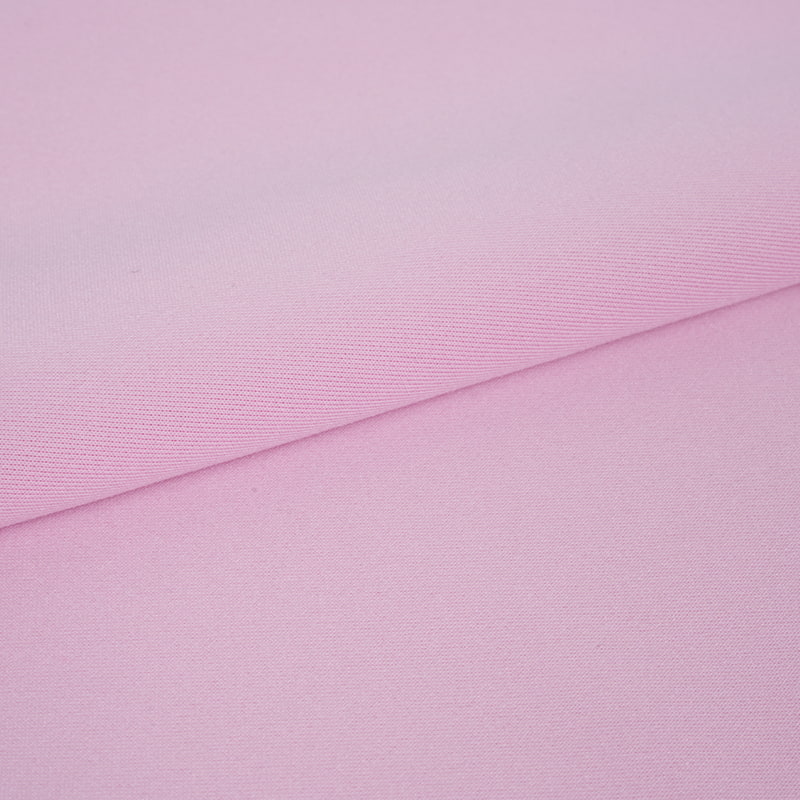
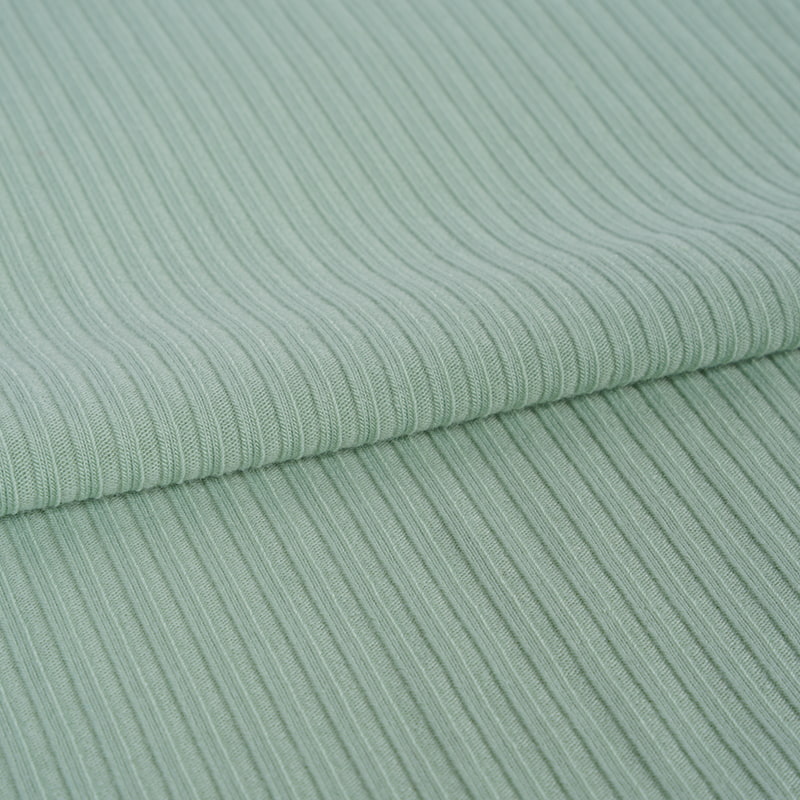
Content
Every season, buyers from our export markets ask us some version of the same question: how do we make activewear that performs during a hard workout yet still feels gentle on the skin hours later? It is a fair challenge. Customers no longer change clothes between a morning run and a coffee meeting, so a single garment has to manage sweat, stretch with the body, and stay comfortable through hours of constant skin contact. That is precisely the job of sporty skin-friendly fabric. We have been developing and supplying knitted fabrics from Keqiao, Shaoxing since 2015, and the lessons we keep learning all point to the same three levers: fiber choice, knit structure, and finishing.
The term bundles two promises into one material. The sporty half means the fabric performs: it pulls sweat away from the body, stretches through a full range of movement, keeps its shape after repeated washing, and dries quickly enough for back-to-back wear.
The skin-friendly half is about how the fabric behaves during all that contact. A skin-friendly knit feels smooth rather than scratchy, breathes so heat does not build up, moves over the skin with low friction, and avoids the rough textures or harsh residues that can trigger redness and itching, especially for customers with sensitive skin.
Neither promise can rescue the other. A high-performance polyester that chafes under the arms will get returned, and a beautifully soft cotton that turns heavy and clammy mid-workout will too. The fabrics that earn repeat orders sit comfortably at the intersection of the two.
When we review a new development with a client, we break skin comfort down into measurable properties rather than vague impressions. The table below summarizes the six factors we check first.
| Property | Why It Matters for Skin | What to Check When Sourcing |
|---|---|---|
| Moisture-wicking | Keeps sweat from sitting on the skin, reducing clamminess and friction | Wicking and quick-dry test reports, engineered polyester or blends |
| Breathability | Lets heat and humidity escape so skin stays cool | Open structures such as pique or mesh, air permeability |
| Soft hand feel | Lowers friction and irritation during repeated movement | Modal, rayon, combed cotton, sand-washed finishes |
| Stretch and recovery | Follows the body without digging in or sagging | Spandex content, recovery after repeated stretch |
| Thermal balance | Prevents overheating in summer and chills after sweat | Lightweight air layer for warmth, mesh knits for cooling |
| Colorfastness to sweat | Keeps dyes from migrating toward skin during wear | Perspiration colorfastness results, especially bright shades |
No single fabric maximizes all six at once, and that is normal. The goal is to prioritize the properties that matter most for your end use, then choose fibers and structures that deliver them together.
Modal, rayon, and T/R blends remain our most reliable answer when a customer describes skin that "gets angry easily." These cellulosic fibers absorb moisture into the fiber itself and present a naturally smooth surface, so they feel cool at first touch and stay comfortable as humidity rises. Bamboo viscose and milk silk sit in the same family and are popular for yoga wear and loungewear collections.
Polyester and nylon still dominate serious training wear because they dry fast and hold their shape. The important point is that fine-denier, wicking-engineered synthetics of today feel nothing like the stiff polyester of decades past. Paired with the right knit, they deliver genuine performance without a plastic hand.
Stretch is what turns a comfortable fabric into a sporty one. In our experience, roughly four to twelve percent spandex covers most activewear needs; below that the garment creeps, above it the fabric can feel tight and rubbery. Recovery matters as much as stretch, which is why we test how a knit bounces back after repeated elongation rather than trusting stretch alone.
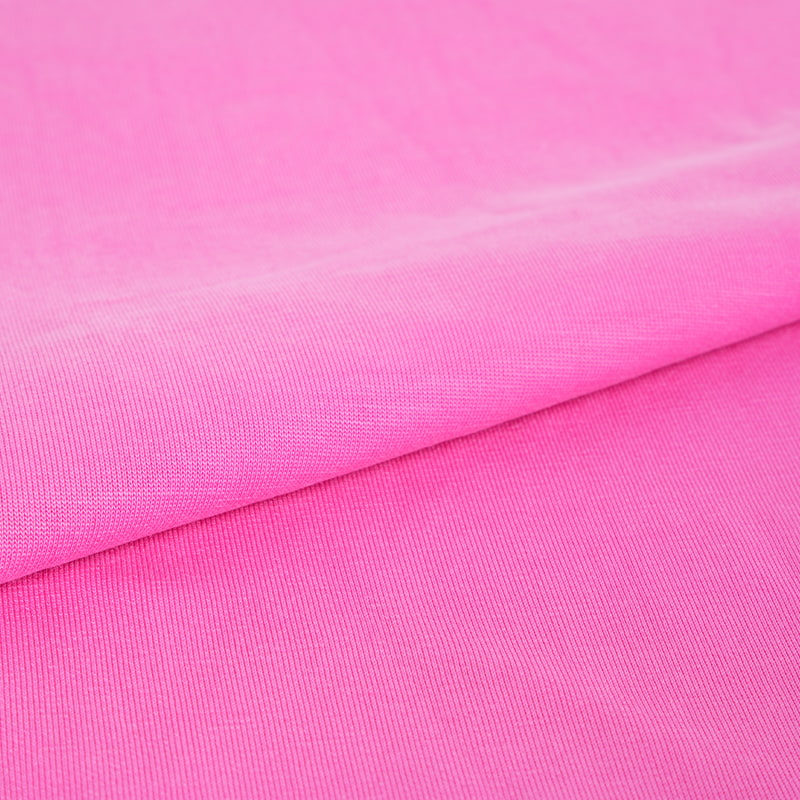
For everyday training tees and lightweight tops, one of the blends our clients reorder most often is our moisture-wicking polyester jersey, which pairs a dry, quick-drying surface with a surprisingly soft drape.
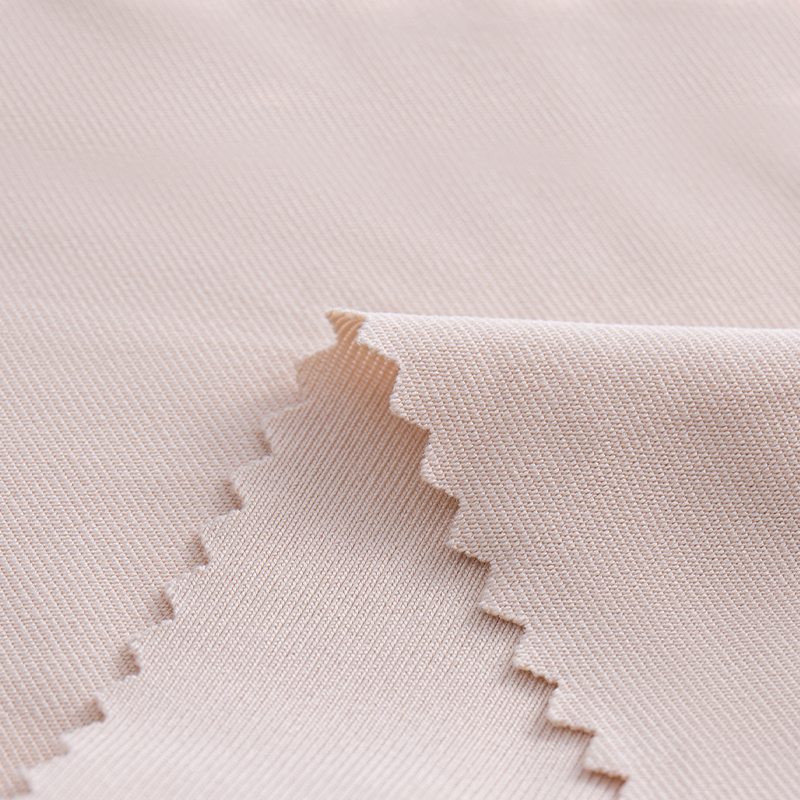 Moisture-Wicking Polyester Jersey FabricA 95% polyester 5% spandex jersey at 165 GSM with quick-dry moisture management and soft drape, well suited to the lightweight training tees discussed in the surrounding discussion of knit structure.View Product →
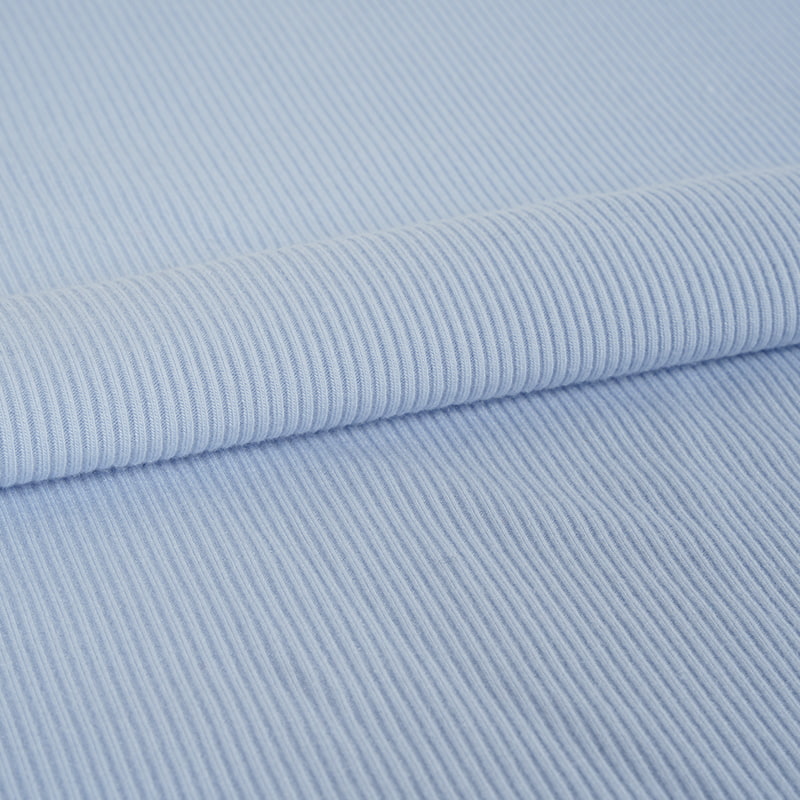
Fibers set the character of a fabric; structure decides how that character reaches the skin. Two fabrics with identical fiber content can feel completely different depending on how they are knitted.
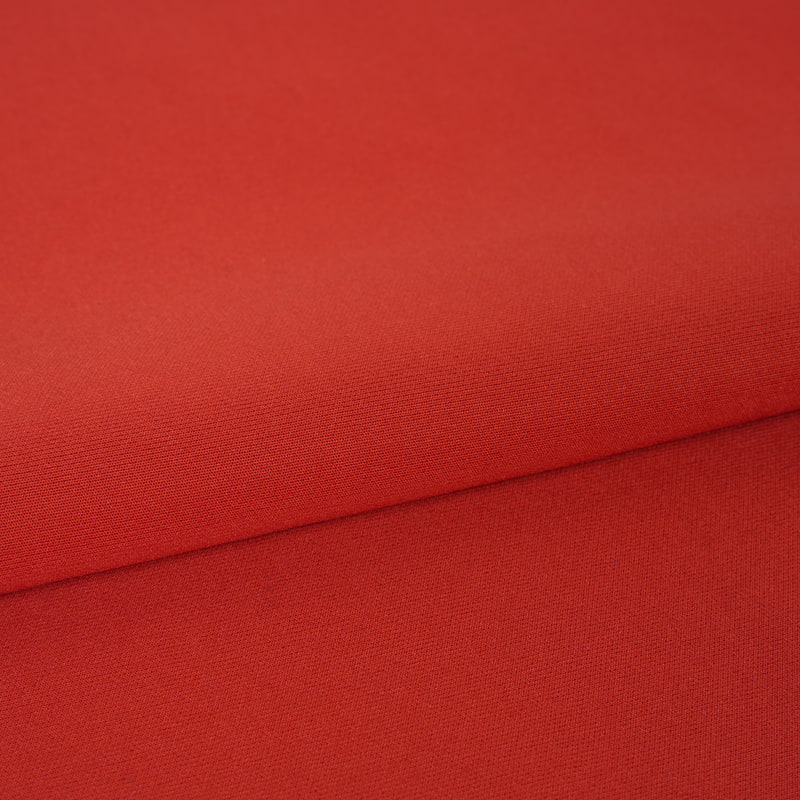
For high-stretch bottoms, we often point clients toward our double-sided nylon-spandex construction, which combines a soft interior with the compression and recovery that gymwear demands.
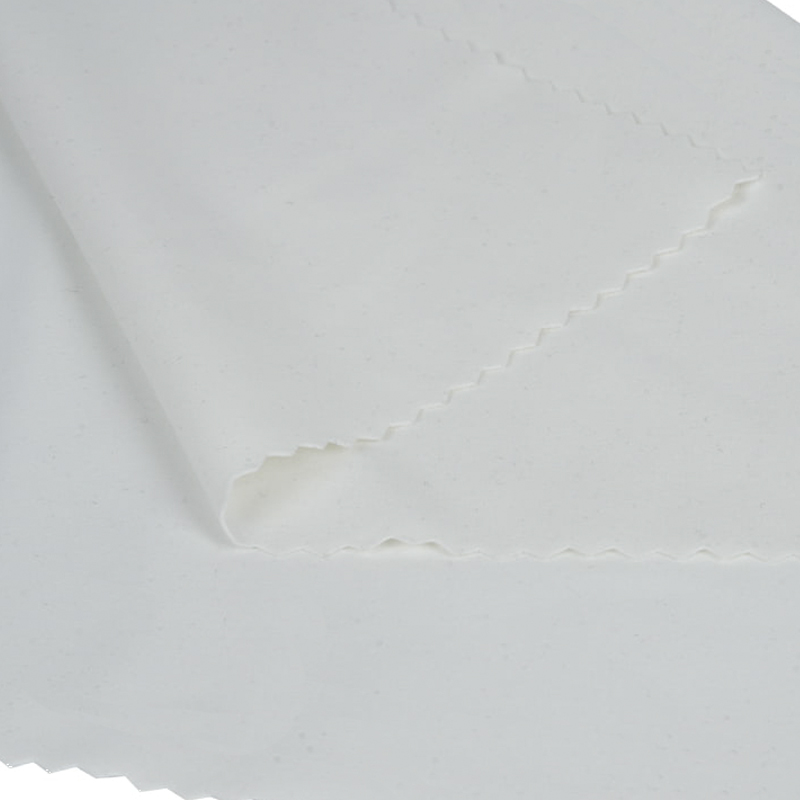 Nylon-Spandex Double-Sided Comfortable Lycra FabricThis double-sided nylon-spandex knit offers high elasticity, compression, and recovery with a soft interior, making it a strong choice for the high-stretch gymwear bottoms described in the preceding discussion.View Product →
The same greige knit can leave finishing either ordinary or memorable. Sand washing is the technique we rely on most when a client asks for skin-friendly softness with a lived-in feel. Tumbling the fabric in a gentle abrasive medium relaxes the yarn surface and raises a micro-fuzz that reads to the fingertips as velvet rather than new cloth.
If you want the full picture of how the process works, which fibers respond best to it, and what to watch for in production, we explain it step by step in our guide to sand-washed fabric.
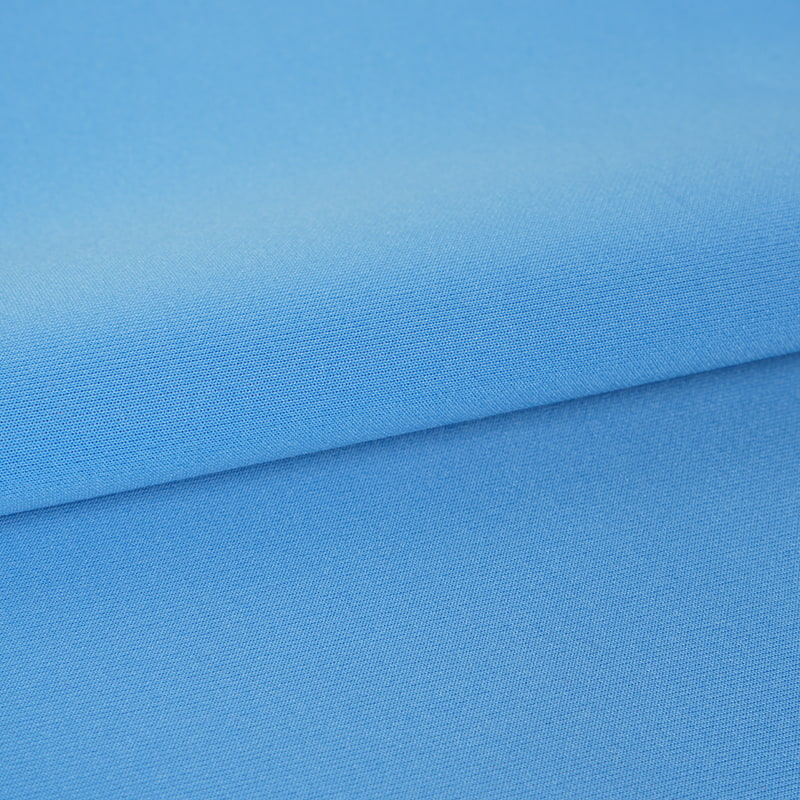
Applied to a modal-polyester air layer, sand washing softens the structured double face while keeping the trapped-air warmth that makes the construction special, which is why this combination works so well for autumn hoodies and relaxed training tops.
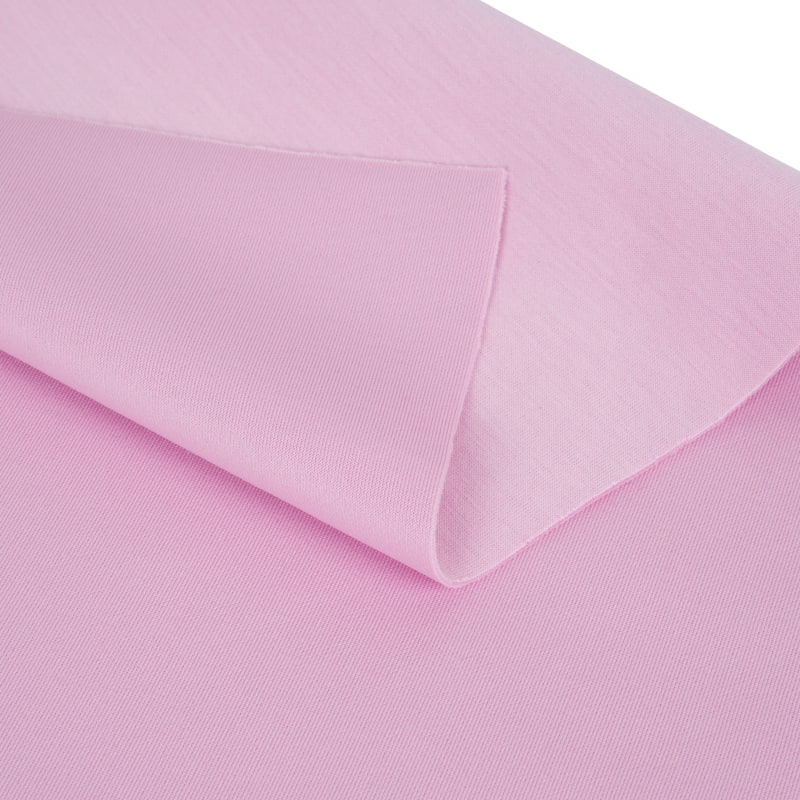 Modal Polyester Air Layer FabricA soft, wrinkle-resistant modal-polyester air layer knit whose trapped-air structure suits autumn hoodies and relaxed training tops, fitting the discussion of sand washing and double-face softness.View Product →
Across hundreds of development projects, the orders that go smoothly are the ones where the buyer tested the fabric the way a wearer will actually live in it. Before you confirm a bulk order of any sporty fabric, we recommend:
We started Ruijue Textiles in 2015 with a quality-first mindset, and today our team of over 200 people works from a 12,000-square-meter facility, exporting to more than 35 countries. What that means in practice is breadth: air layer, rib, pique, jersey, ponte roma, terry, velvet, and waffle structures in blends that run from modal and T/R to recycled polyester and wool mixes. It also means depth, because each season we develop against real buyer feedback rather than copying catalogs.
If you are building a collection around comfort-led activewear, browse our full range of knitted fabrics or send us your target weight, composition, and hand-feel references. We will come back with options, honest trade-offs, and swatches you can put straight onto skin.
Sporty skin-friendly fabric is not a single product but a discipline: choose fibers that respect the skin, engineer structures that manage heat and moisture, and finish everything with the hand feel your customers will notice first. Get those three decisions right, and the training top becomes the one they reach for on rest days too. That repeat pull from the drawer is, in our experience, the truest measure of a fabric done well.

 Address: Xinglian Village, Fuquan Street, Keqiao District, Shaoxing City, Zhejiang Province, China.
  Phone: +86-15958501675
  Email: [email protected]
For exclusive deals and latest offers, sign up by entering your email address below.
Coprright © Shaoxing Keqiao Ruijue Textiles Co., Ltd. All Rights Reserved. Custom Jacquard Jersey Fabric Manufacturers



 English
 Español