Content
Check patterns are everywhere: on the shirt in a meeting, the sofa in a hotel lobby, the blanket in the back of a car. Yet most people, including plenty of people who buy fabric for a living, can name only two or three of them. In mills and in tech packs, the word "check" gets used as a catch-all for everything from a hairline pin check to a full tartan.
That works in a showroom, but it becomes costly in a purchase order. The check pattern name you use quietly decides the repeat size, the colourway, the yarn dyeing plan and, in many cases, the price. This guide lists the check names you are most likely to meet, explains how they differ, and shares what we ask buyers to confirm before a check fabric goes into production.
Structurally, a check is two sets of bands crossing at right angles: one running along the warp, one along the weft. Where the bands cross, the yarns usually blend, so the centre of each square reads softer than its edges. The result is a symmetrical, repeating square or rectangular unit, which is why checks sit so comfortably alongside stripes in the same fabric family.
This is also where the terminology gets tangled. British English sometimes spells the pattern chequer, and heraldry calls the same arrangement dicing. American English often uses "plaid" for any check at all, while in Scotland plaid refers to a length of tartan cloth. The label rarely matters at the mood-board stage; it matters a great deal when you are specifying a repeat or a sett.
The table below gathers the names we hear most often from buyers, together with the feature that separates each one from its neighbours.
| Check name | Distinguishing feature | Common end uses |
|---|---|---|
| Gingham | Two colours on a white ground, even small squares | Shirting, dresses, table linen |
| Buffalo check | Three yarns, two colours plus a blend, in large bold blocks | Flannel shirts, blankets, outerwear |
| Checkerboard | Plain alternating squares, no blended yarns | Kidswear, home textiles, retro styling |
| Houndstooth | Broken check with jagged, pointed edges | Tailoring, coats, skirts |
| Puppytooth | Houndstooth at a much smaller scale | Suiting, trousers |
| Glen plaid | Layered checks with fine over-lines and low contrast | Suits, jackets, tailored dresses |
| Tartan | A named, registered sett with fixed colours | Kilts, scarves, winter apparel |
| Madras | Bright, slightly uneven checks that soften when washed | Summer shirting, casual wear |
| Tattersall | Widely spaced squares with a thin overcheck | Equestrian wear, shirts, menswear |
| Windowpane | Thin lines forming large open squares, no filled blocks | Suiting, lightweight knit tops |
| Pin check | The finest scale, one or two threads wide | Shirting, linings, fine knits |
| Graph check | Thin lines running both ways, like graph paper | Shirting, dresses |
| Shepherd check | Small alternating light and dark squares | Coats, wool knits |
| Argyle | Diamonds with contrast over-stitching | Sweaters, socks, golf wear |
| Ichimatsu | Two-tone, small chessboard-style check of Japanese origin | Modern apparel, home textiles |
A handful of pairs cause most of the confusion in sample rooms. These are the differences we point out when a buyer sends a photo and a name that do not quite match.
In woven fabric the check comes from dyed warp and weft yarns. In knitted fabric there are three main routes: yarn-dyed jacquard, where the pattern is knitted in stitch by stitch; printing, which is faster and cheaper but can distort on stretchy grounds; and engineered feeders, which build small checks from alternating yarns. If structure interests you, it is worth reading about how jacquard fabric is made before you choose a route.
The ground structure matters as much as the pattern. A 1x1 rib, an interlock and a pique will each pull the same repeat into a slightly different shape, and a brushed or sand-washed finish will fuzz the edges of fine checks until they almost merge. That is why we prefer to know the end use before quoting a check knit.
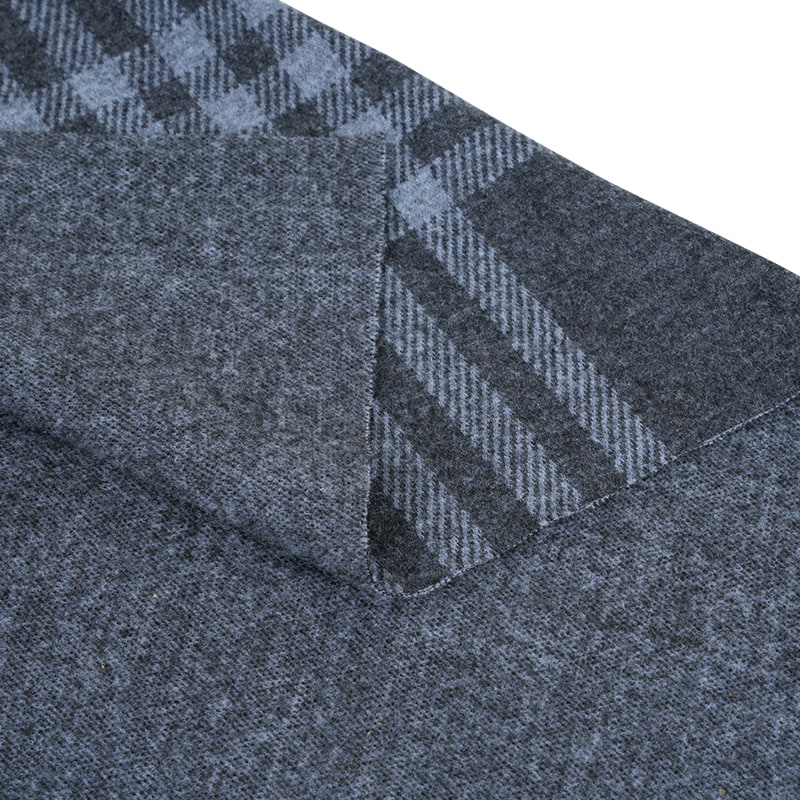 Plaid Jacquard BrushedThe combination of jacquard technology and napping treatment makes the plaid texture more three-dimensional and rich, presenting a unique texture. The napping treatmen...View Product →
Checks are unforgiving. A stripe can hide a small fault; a check shows every fault twice, once going and once coming. These are the points worth locking down before bulk production.
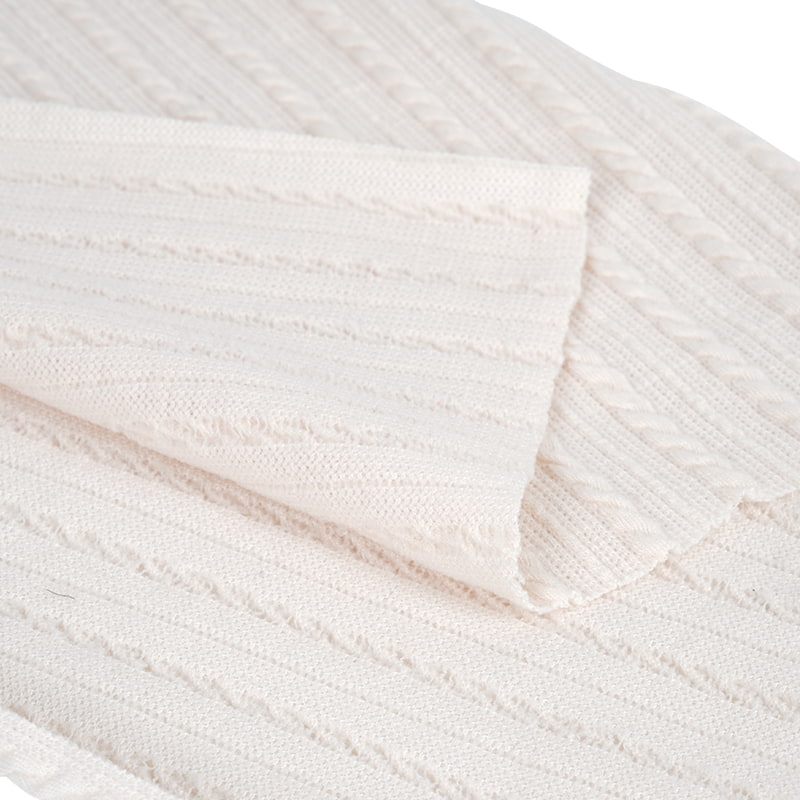 254GSM Polyester-Polyamide Elastic Jacquard FabricThe surface of the fabric has a natural luster, which is soft and long-lasting, and can enhance the overall texture and grade of the fabric. For example, jacquard sati...View Product →
Once the name is agreed, the scale and fibre still have to suit the product. Our rule of thumb, built up over years of sampling, looks like this.
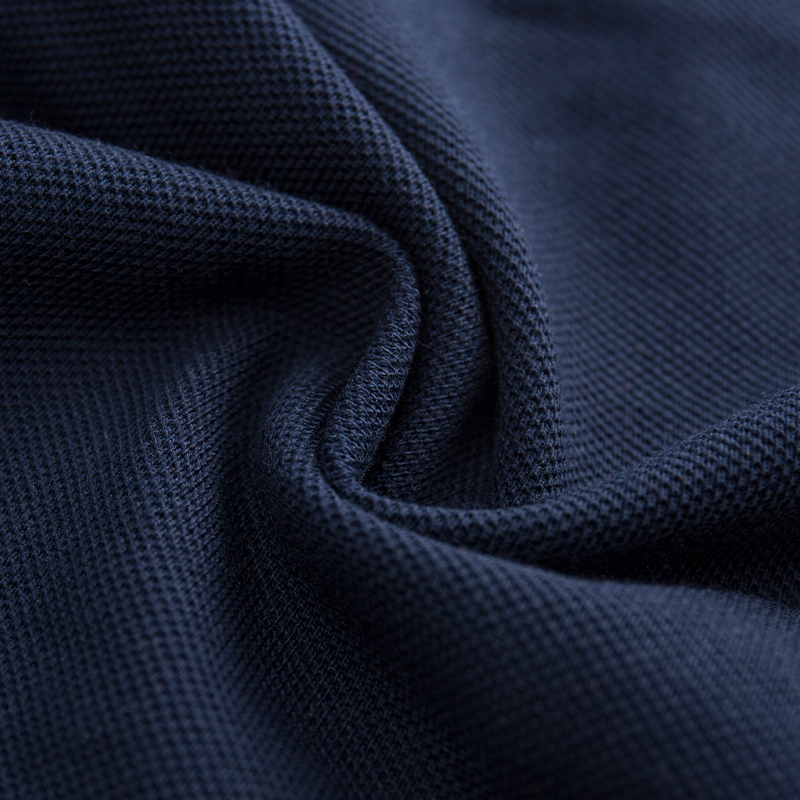 100% Cotton Pique Fabric100% Cotton Pique Fabric is a breathable and durable knitted textile featuring a distinctive textured surface structure. Made from high-quality pure cotton yarn, this ...View Product →
Descriptions travel badly. A photo helps, but a photo cannot tell a mill the repeat, the colour tolerance or the weight. The orders that run smoothly tend to arrive with four things: a physical swatch or lab dip reference, a Pantone TCX code for every colour, the repeat measured in centimetres with a tolerance, and a clear statement of end use and target weight.
We are a knit fabric supplier working from Keqiao, Shaoxing, and we keep our fabric collections organised by structure, from air layer and rib through jacquard, pique, waffle and fleece. That way a buyer can start from a construction they already trust and adjust the check from there, rather than beginning again with every colourway. If a check needs to be developed from scratch, send the reference and we will work from the repeat outward.
Check pattern names are a shared vocabulary, and like any vocabulary they save time when both sides use them the same way. Learn the dozen or so that cover most of the market, from gingham and buffalo through houndstooth, glen plaid, tartan, madras, tattersall, windowpane, pin check, graph check, shepherd check and argyle, and you can describe almost any check you will meet. For everything in between, send a swatch. We would rather ask one question than re-dye a thousand metres.

 Address: Xinglian Village, Fuquan Street, Keqiao District, Shaoxing City, Zhejiang Province, China.
  Phone: +86-15958501675
  Email: [email protected]
For exclusive deals and latest offers, sign up by entering your email address below.
Coprright © Shaoxing Keqiao Ruijue Textiles Co., Ltd. All Rights Reserved. Custom Jacquard Jersey Fabric Manufacturers



 English
 Español