Content
Bamboo fabric has earned a reputation as one of the most versatile materials in modern textiles, yet the term "bamboo" covers a range of fibers with noticeably different performance. For a garment maker or brand, the relevant question is not simply whether bamboo is soft or sustainable, but what bamboo fabric properties actually deliver in knitted garments. We work with bamboo-based knits every day at our mill in Shaoxing, and this guide reflects what we have learned about fiber processing, fabric behavior, and sensible sourcing. What began as a premium novelty has become a mainstream category in loungewear, activewear, and childrenswear, and buyers today ask for more detail before they commit to a cloth.
Bamboo fabric is a textile made from the pulp of bamboo grass. Because the plant grows quickly and regenerates without heavy chemical input, bamboo has attracted attention as a renewable raw material. In commercial apparel, however, the fiber you touch is almost always a regenerated cellulose fiber, commonly sold as bamboo viscose, bamboo rayon, or bamboo lyocell. A smaller amount of bamboo textile is made by mechanically crushing and combing the plant, producing a stiffer, linen-like fiber that rarely appears in knitwear.
The distinction is not just technical. The manufacturing route determines the fiber diameter, surface smoothness, strength, and dye behavior, and those variables become the bamboo fabric properties you can actually feel and measure. For this reason, we begin every sourcing conversation by asking which type of bamboo the buyer has in mind.
When tested objectively, bamboo fiber performs well in several categories that matter for clothing. The table below summarizes the properties most often considered by our customers in the apparel and home textile industries.
| Property | What It Means for the Fabric | Common Applications |
|---|---|---|
| Softness | Smooth fiber surface creates a gentle, silky hand feel | Underwear, babywear, loungewear |
| Breathability | Open structure allows air flow and heat release | Summer tops, shirts, activewear |
| Moisture wicking | Absorbs perspiration and moves it to the surface to evaporate | Base layers, sports clothing |
| Thermal comfort | Helps regulate body temperature in changing conditions | Year-round knitwear |
| Low static | Builds up less static charge than most synthetics | Dresses, scarves, linings |
| UV resistance | Provides a degree of natural ultraviolet protection | Summer outerwear, childrenswear |
| Drape | Flows well in lightweight jersey constructions | Dresses, blouses, skirts |
Two properties deserve particular attention. The first is moisture management. Bamboo viscose absorbs moisture and releases it quickly, which keeps the wearer comfortable during activity. The second is the balance of thermal comfort and drape. Bamboo knits tend to feel cool against the skin at first contact, yet they also work well in warmer mid-layer garments because of their breathable structure.
One property that is often overstated is antimicrobial activity. The bamboo plant contains a natural antimicrobial substance, but most of it is lost during viscose and lyocell regeneration. Buyers who require genuine antimicrobial performance should specify a treated finish or consider mechanically processed bamboo fiber, which is available only in small volumes.
From a sustainability standpoint, bamboo's rapid growth makes it an appealing renewable source, and lyocell processing reduces chemical waste considerably. The final environmental footprint, however, depends on yarn quality, dyeing and finishing practices, and the supplier's willingness to share production details.
Bamboo textile production begins with harvested bamboo culms, which are cut, crushed, and processed to extract cellulose. There are three main routes, and each one produces a different type of fiber.
From a manufacturer's point of view, the viscose and lyocell routes are the practical ones for apparel fabrics. They produce a fiber that blends well with cotton, modal, polyester, and spandex, and that performs reliably on modern knitting machines. It is worth confirming the processing route with your supplier, because fiber quality, dye fastness, and shrinkage behavior all depend on it.
Bamboo fiber shows its best qualities in jersey and interlock constructions. A bamboo jersey fabric has a fluid drape that suits dresses, blouses, and relaxed loungewear, while a bamboo-rich interlock delivers enough body for T-shirts and lightweight casual tops. The knitted structure holds moisture close to the skin only briefly, which is why bamboo-based jerseys have become a favorite for activewear brands.
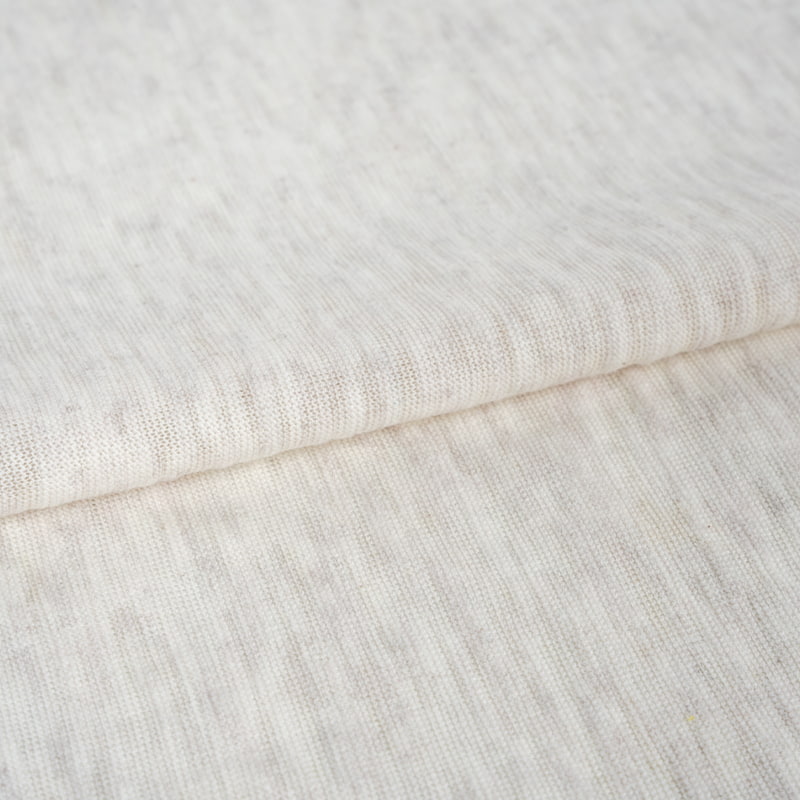 Sand-Washed Bamboo Jersey for Spring and SummerThis 150GSM bamboo jersey features a sand-washed finish for a soft, matte peach-skin touch, enhanced with spandex and modal for stretch and durability, ideal for casual and minimalist apparel.View Product →
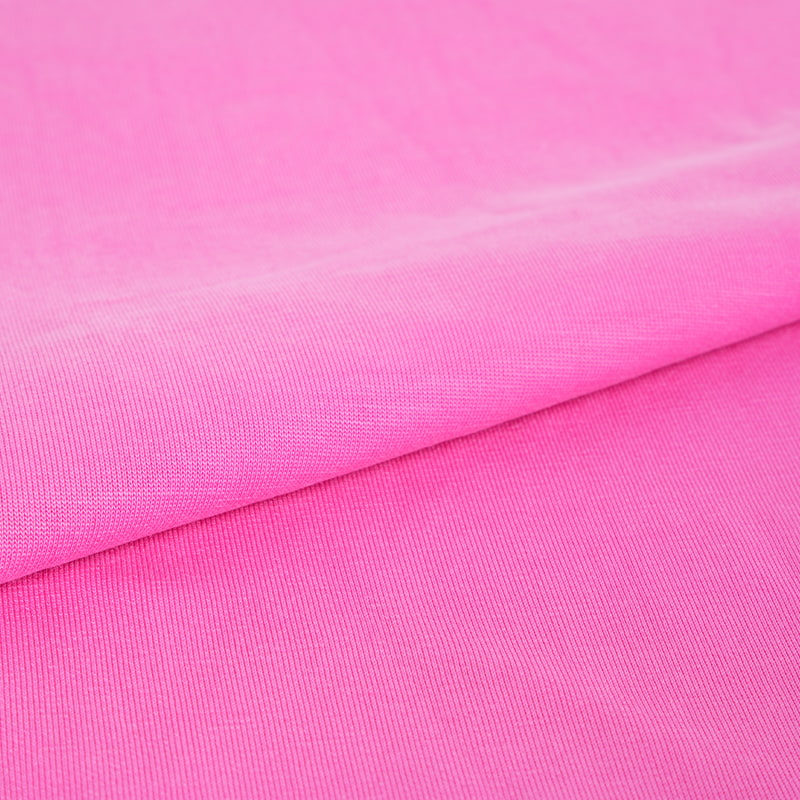
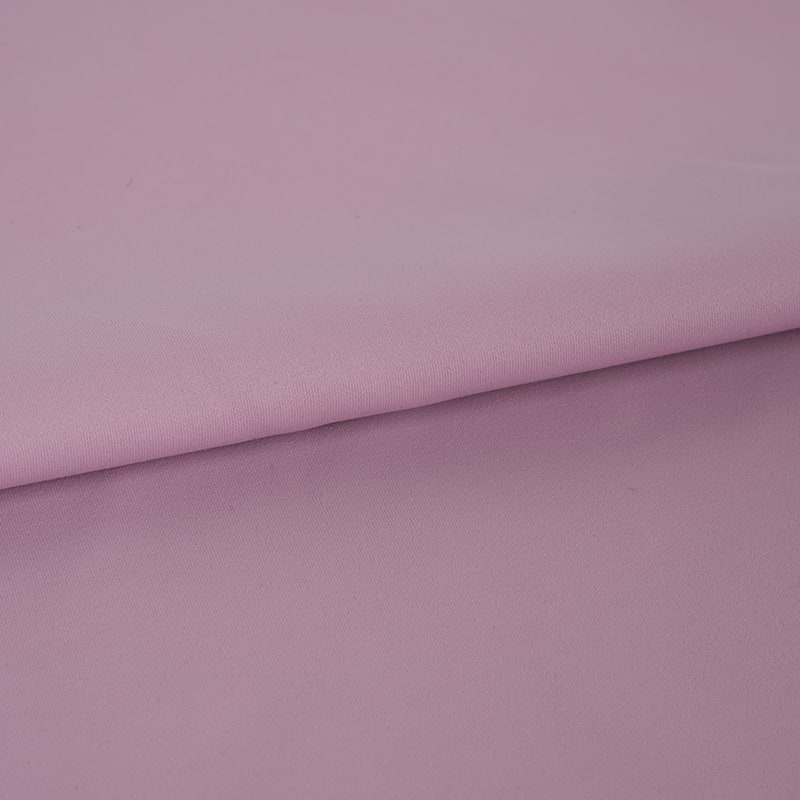
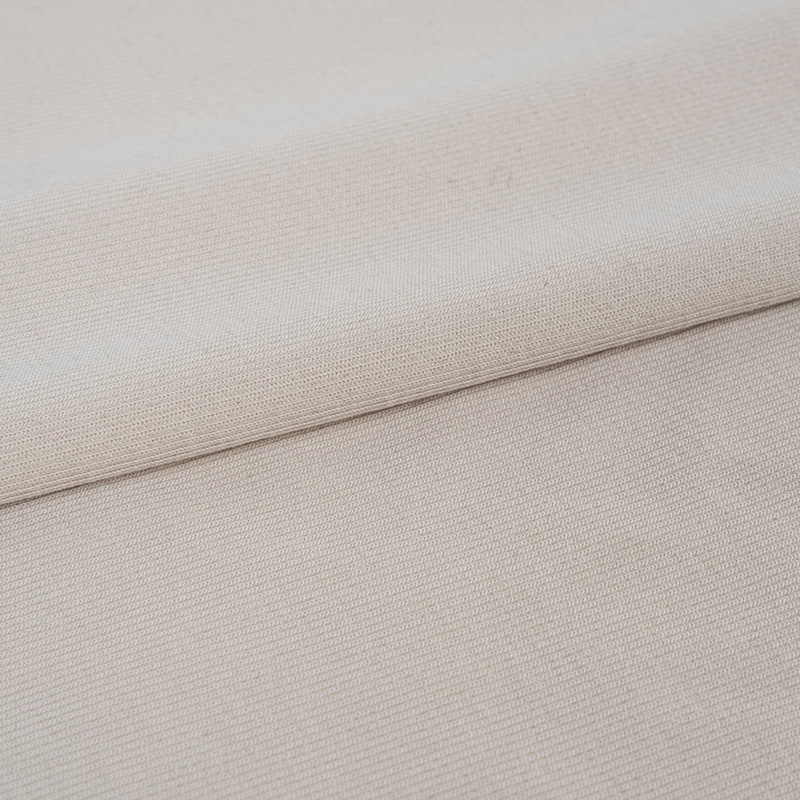
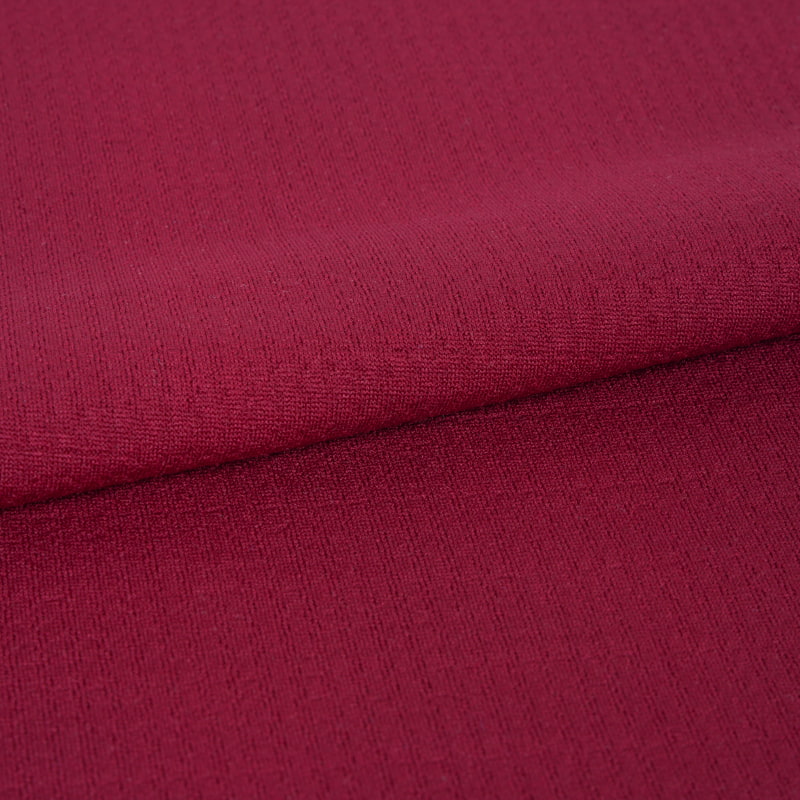
In our own production, bamboo performs best when it is paired with a well-chosen blend and a thoughtful finish. Adding spandex brings elastic recovery; blending with modal improves strength; and a sand-washed finish softens the surface and develops a matte, peach-skin touch. We apply this combination in a sandwashed bamboo jersey that is already used internationally for casual and minimalist fashion. It offers the natural advantages of bamboo while maintaining the dimensional stability and clean stitch definition that garment factories rely on.
Bamboo fabric wears well when the care routine is aligned with the fiber. Bamboo viscose is less resistant to wet abrasion than cotton, and it can shrink if dried with excessive heat. These characteristics do not make bamboo difficult to use, but they do mean the care label should be honest and specific.
These simple habits keep bamboo garments soft, stable, and colorfast across many wash cycles. When we develop a fabric for a customer, we provide care recommendations together with the specification so that the end consumer's experience matches the product promise.
Not every fabric labeled bamboo performs the same way. The fiber content may be 100 percent bamboo viscose or a blend with polyester, modal, or spandex. The blend ratio, yarn count, knitting structure, and finishing all influence the final hand feel and stability. A clear specification protects the buyer from disappointing surprises.
Working with a mill that develops knit fabrics, not merely resells them, shortens this process considerably. At our textile company, we have been producing knitted fabrics since 2015 and exporting to more than 35 countries. We are glad to adjust bamboo blends, fabric weight, and finishing according to your target market.
Bamboo fabric properties are genuinely useful for modern apparel: softness, breathability, moisture management, low static, and an attractive drape. The key is to treat bamboo as a technical fiber rather than a marketing phrase. Choose the correct processing route, confirm the blend, evaluate the knit structure, and test the fabric under realistic conditions. When those steps are done well, bamboo rewards you with consistent comfort, distinctive surface character, and a credible sustainability story for today's consumers.

 Address: Xinglian Village, Fuquan Street, Keqiao District, Shaoxing City, Zhejiang Province, China.
  Phone: +86-15958501675
  Email: [email protected]
For exclusive deals and latest offers, sign up by entering your email address below.
Coprright © Shaoxing Keqiao Ruijue Textiles Co., Ltd. All Rights Reserved. Custom Jacquard Jersey Fabric Manufacturers



 English
 Español