Content
Every spring our inbox in Keqiao fills with the same question from buyers: which fabrics will actually keep people cool once the temperature climbs past 35°C? After more than ten years of knitting, dyeing and finishing fabric for customers in over 35 countries, we have learned that breathability is never the work of a single fiber. It is a conversation between fiber, yarn, knit structure, weight and finish.
This guide covers the fabrics that genuinely breathe in hot weather, where each one performs best, and what to check before you commit to a bulk order.
Before comparing cotton with polyester, it helps to be precise about what "breathable" means. Two things happen at once: air passes through the cloth, and moisture leaves the skin. A fabric can be good at one and poor at the other, which is why some light synthetics feel cool but clammy while some heavy naturals feel fresh but slow to dry.
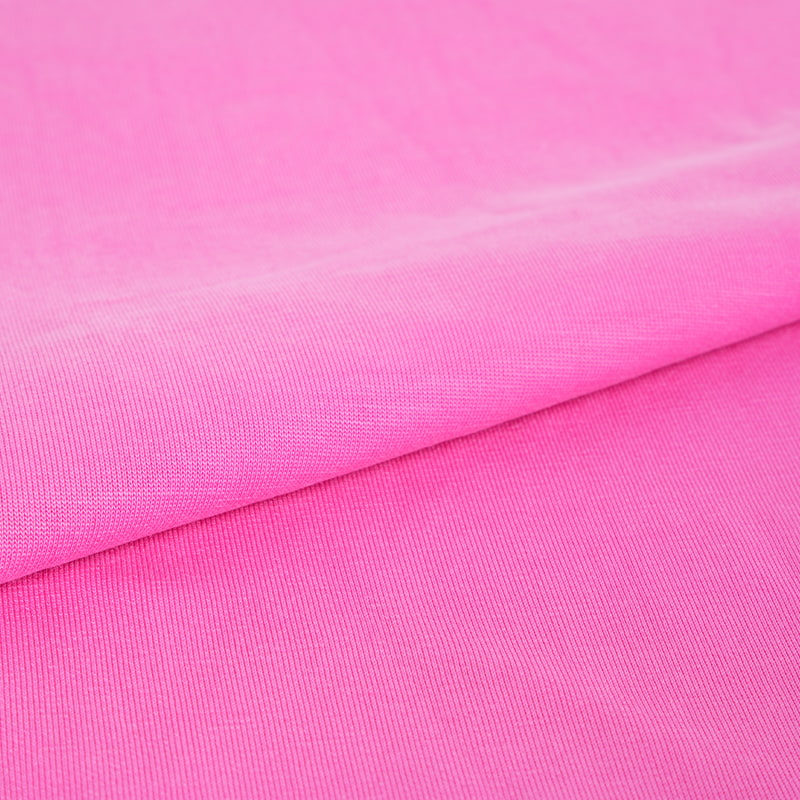
Cotton remains the most requested summer fiber, and for good reason: its cellulose structure absorbs moisture, it feels soft against the skin, and it is easy to dye, print and wash. Combed or long-staple cotton gives the best balance of softness and strength, and a light mercerising treatment adds sheen while reducing shrinkage. For summer tops, a 160 to 180 gsm cotton/spandex jersey is a dependable baseline, while 100% cotton pique is what gives polo shirts their crisp, airy hand.
The trade-offs are familiar: cotton dries slowly, wrinkles easily and can cling when soaked with sweat. Blending it with a little spandex improves recovery, and blending with rayon improves drape.
Flax yarns are irregular and lightly twisted, so the cloth is full of tiny gaps that let air through. Linen absorbs water quickly, dries faster than cotton and feels noticeably cool on the skin. It wrinkles, and that is part of its character. Pure linen can be harsh at first and expensive, so many mills blend it with cotton, rayon or lyocell to soften the hand.
Hemp behaves like a stronger linen and softens with every wash. Ramie is crisp and holds shape well in structured summer shirts. Silk is among the most breathable natural fibers, but it is costly and needs gentle care.
If you want the coolness of cotton with a softer drape, this family is where we send most customers. All of them come from wood or bamboo pulp, and all absorb moisture well.
These fibers blend beautifully with cotton and spandex. A modal/cotton or bamboo/spandex jersey often feels noticeably cooler than a pure cotton fabric of the same weight.
Plain polyester has a poor reputation in summer, and it is only partly deserved. Standard polyester does not absorb water, so sweat stays on the skin and the fabric feels clammy. Moisture-wicking polyester is engineered differently: the yarn is shaped with capillary channels or a modified cross-section that spreads sweat over a wider surface, where it evaporates quickly. It also dries far faster than cotton, which matters in tropical markets and for garments worn all day.
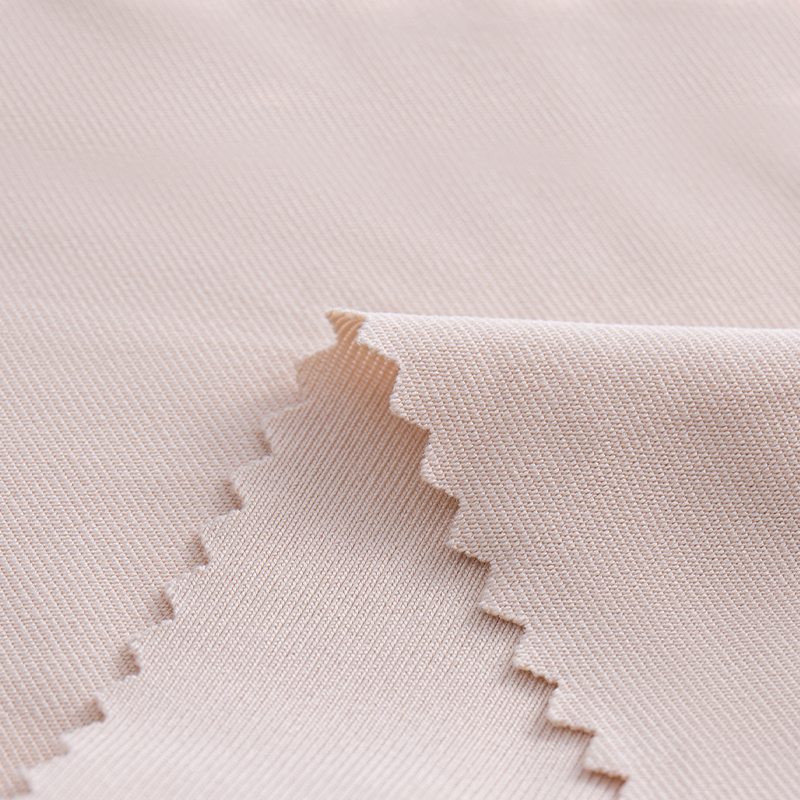 Moisture-Wicking Polyester Spandex Jersey Fabric 165 GSMThis 165 GSM moisture-wicking single jersey includes 5% spandex for hot-weather T-shirts and base layers needing stretch and recovery.View Product →
For hot-weather programmes we usually suggest a 140 to 170 gsm moisture-wicking single jersey for T-shirts and base layers, and the same yarn family in pique or mesh for polos. Adding 5 to 10% spandex improves recovery without hurting breathability, and blending polyester with rayon softens the hand so the fabric does not feel plasticky.
Fiber gets the attention, but knit structure decides how much air actually moves. A single jersey is the lightest and most open of the common knits: one smooth face, one looped back, plenty of passage for air and vapour. It is the natural choice for T-shirts, summer dresses and light base layers.
Pique is the classic polo structure. The raised, textured surface lifts the cloth slightly away from the skin and creates channels for air to circulate, while a little bulk keeps the shirt from clinging. We explain the mechanics in more detail in our guide to why pique fabric performs so well in summer.
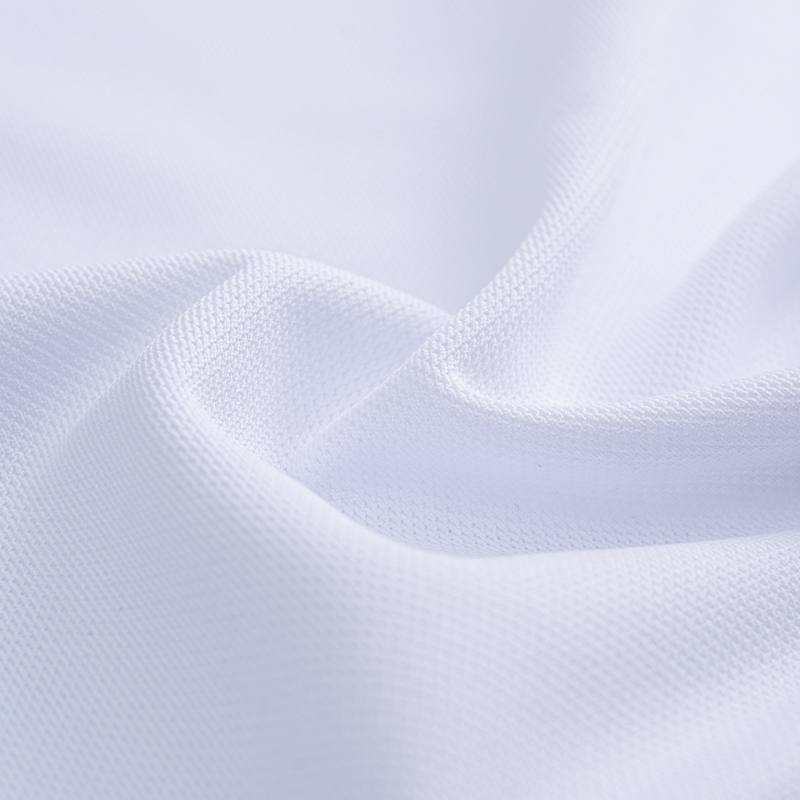 Moisture-Wicking Polyester Pique Fabric 200 GSMA breathable 200 GSM moisture-wicking pique with structured texture, suited to performance polos and activewear that need airflow and dryness.View Product →
Waffle knits work on the same principle at a larger scale, with a grid of raised cells that traps air and adds surface area for evaporation. A lightweight 1x1 rib also makes a comfortable summer tank, even though heavier 2x2 ribs are better kept for cuffs and trims.
Crinkle and seersucker fabrics get their uneven surface from high-twist yarns, heat setting or a special finishing route. The puckered texture means the cloth touches less of the skin, and the small air pockets between the ridges support both ventilation and evaporation. They also resist creasing, which is a real advantage for travel and for garments that are washed constantly.
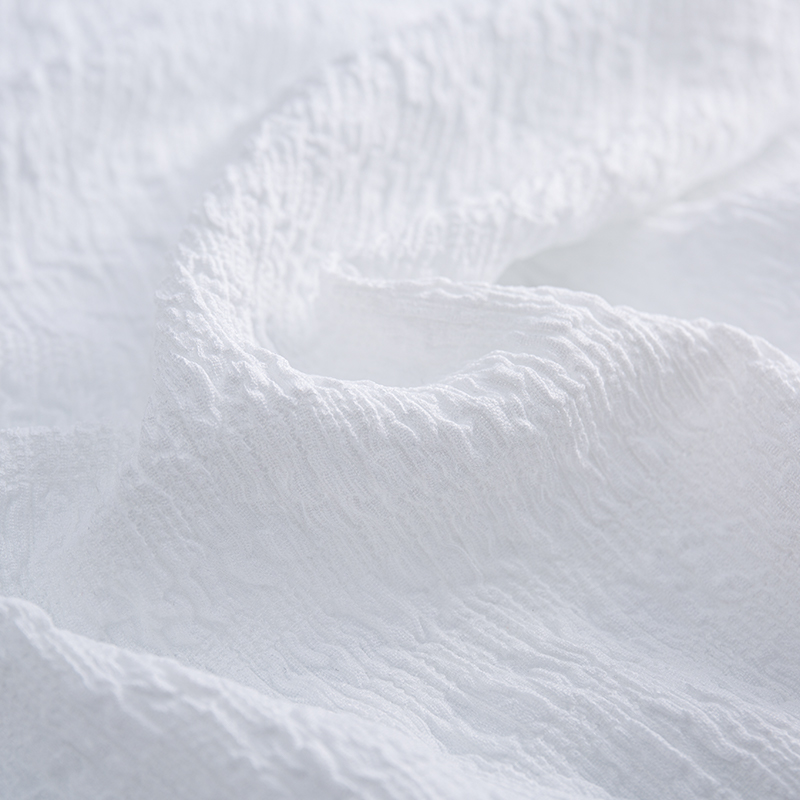 Stretch Warp-Knitted Crinkle Fabric with SpandexA soft 205 GSM crinkle knit with 3% spandex offers textured stretch and shape recovery for dresses, skirts, tops, jackets and activewear.View Product →
Mesh and hole-knit structures take the idea further with openings built into the fabric itself. They work well for linings, sports panels and breathable summer outerwear, especially when combined with a smooth jersey where the skin is sensitive.
The table below summarises how the most common options behave. The ratings are relative to one another, and weight, structure and finishing can shift the picture for any single fiber.
| Fabric | Breathability | Moisture Behaviour | Best For | Watch Out For |
|---|---|---|---|---|
| Cotton | High | Absorbs, dries slowly | T-shirts, polos, shirts | Wrinkles, stays damp |
| Linen | Very high | Absorbs, dries fast | Shirts, dresses, trousers | Creases easily, costly |
| Hemp | High | Absorbs, dries fast | Casual shirts, home textiles | Stiff at first |
| Rayon (viscose) | High | Absorbs, moderate drying | Blouses, dresses, linings | Weak when wet, shrinks |
| Modal | High | Absorbs, moderate drying | Tops, underwear, jersey | Pricier than viscose |
| Lyocell | High | Absorbs, dries fast | Sportswear, shirts, jersey | Higher cost, needs care |
| Bamboo | High | Absorbs well | Sleepwear, underwear, tops | Shrinkage, test first |
| Silk | High | Absorbs, regulates heat | Premium shirts, linings | Delicate, expensive |
| Moisture-wicking polyester | High | Wicks, dries very fast | Sportswear, workwear, polos | Can hold odour |
| Fine merino wool | Medium to high | Absorbs vapour, regulates | Travel wear, base layers | Cost, careful washing |
A breathability claim means little if the fabric behaves differently after washing or fades under strong sunlight. When we develop a summer quality with a customer, these are the points we go through:
If you would like to compare options directly, you are welcome to browse our knit fabric range or ask us for swatches of the qualities mentioned above.
There is no single best breathable fabric for summer. The right answer depends on whether you are chasing maximum airflow, fast drying, soft drape or a predictable price. Cotton and linen still set the standard for natural comfort; rayon, modal, lyocell and bamboo add drape and softness; moisture-wicking polyester is hard to beat when sweat management and durability come first. Structure, whether jersey, pique, waffle, crinkle or mesh, decides how all of it feels on a hot afternoon.
If you are planning a summer range and want to test a few directions side by side, send us your end use, target weight and market. We will put together a swatch set and tell you honestly what will work and what will not.

 Address: Xinglian Village, Fuquan Street, Keqiao District, Shaoxing City, Zhejiang Province, China.
  Phone: +86-15958501675
  Email: [email protected]
For exclusive deals and latest offers, sign up by entering your email address below.
Coprright © Shaoxing Keqiao Ruijue Textiles Co., Ltd. All Rights Reserved. Custom Jacquard Jersey Fabric Manufacturers



 English
 Español