Content
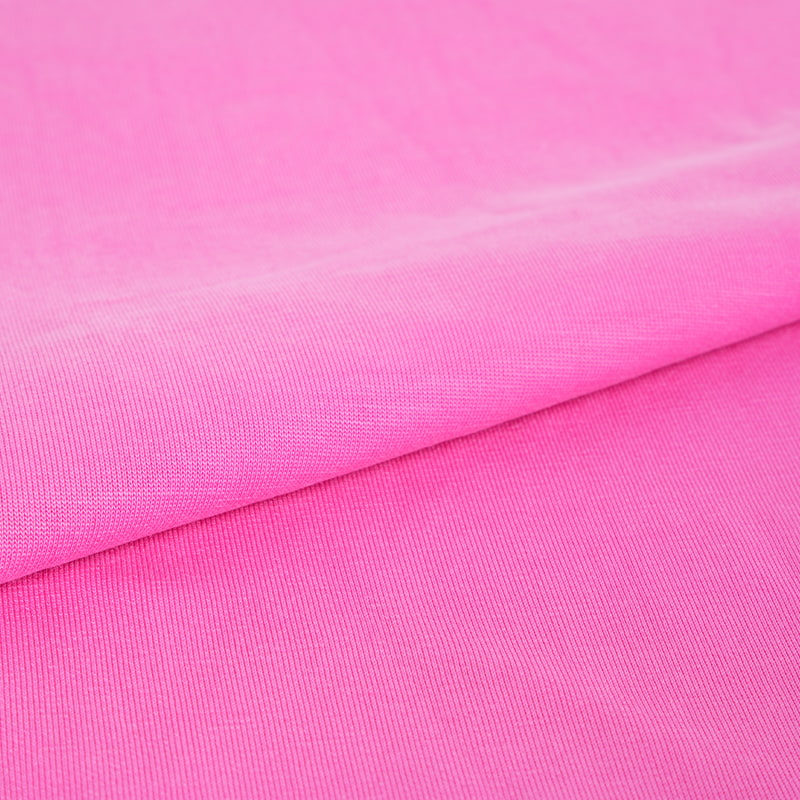
A pencil skirt that still hangs straight after a season of office wear, or a shift dress that comes out of the wash ready to put on — these are the jobs Ponte Roma fabric was engineered for. In plain terms: Ponte Roma is a heavy, stable double knit, typically 200-350 gsm, knitted as two interlocked layers on a double-bed machine. It offers the composure of a woven fabric with more comfort and stretch than a standard single knit, which is why it anchors so many structured dress, skirt, and workwear programs.
The catch is that "ponte" describes a construction family, not a guaranteed quality level. Two rolls can both carry the ponte di Roma name and behave very differently on the cutting table, in the wash, and after a month on the rail. Knowing what the double-knit structure does, which fiber blends matter, and which specifications to demand is what separates a fabric that holds a silhouette from one that bags out at the knee.
The name is Italian. Ponte di Roma translates roughly as "Roman bridge," and the fabric was first developed by knitters in Italy before the label spread through the global trade. Today the term covers any double knit built on this two-layer principle, although composition and finishing quality vary considerably from mill to mill.
Ponte is knitted on a double-bed circular machine, where two sets of needles work in tandem to form two separate loop layers that interlock back to back. Unlike jersey, which is a single layer with a distinct technical face and back, finished ponte looks and feels similar on both sides. The result reads less like a T-shirt knit and more like a light suiting woven that happens to stretch.
The two-layer architecture explains nearly every advantage buyers notice in the hand and on the cutting table:
Surface character varies within the family as well. A slub yarn, a melange spin, or a textured face changes how the fabric reads on the body without sacrificing stability, which is why textured ponte variants have become a staple for brands that want visual interest from an otherwise plain knit. One representative construction:
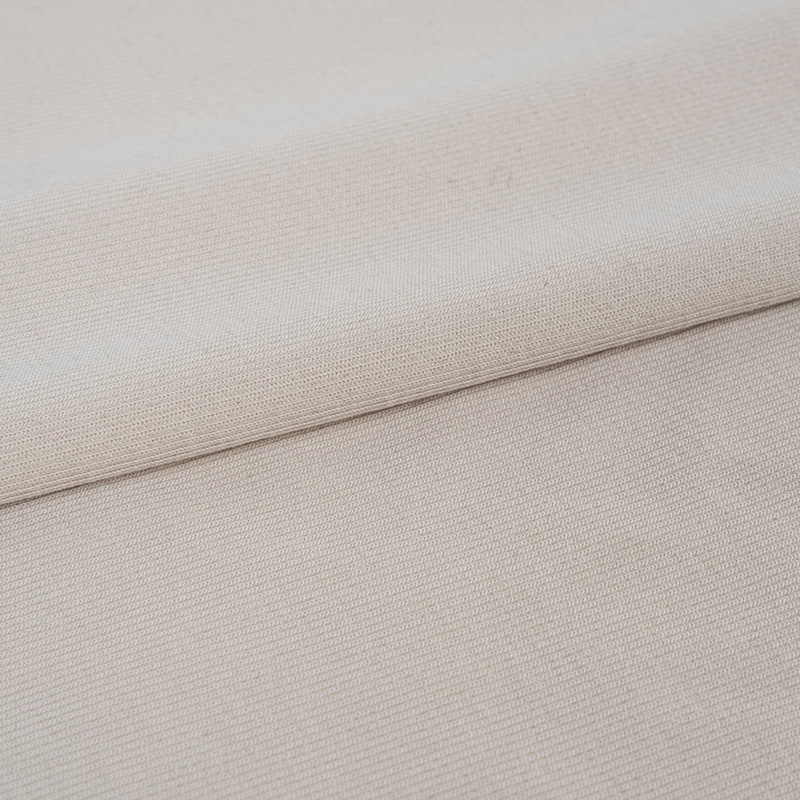
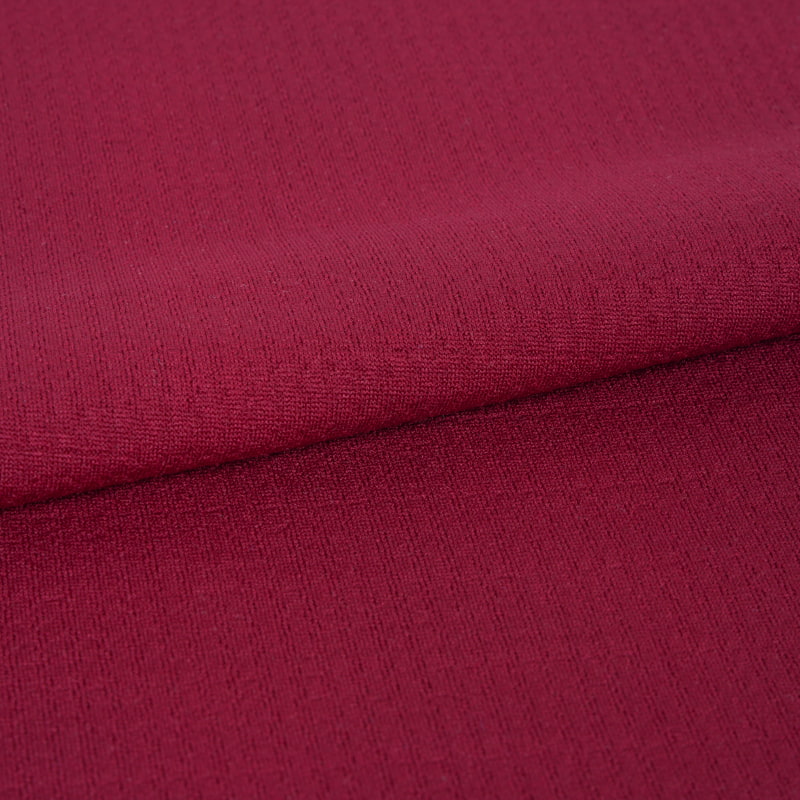
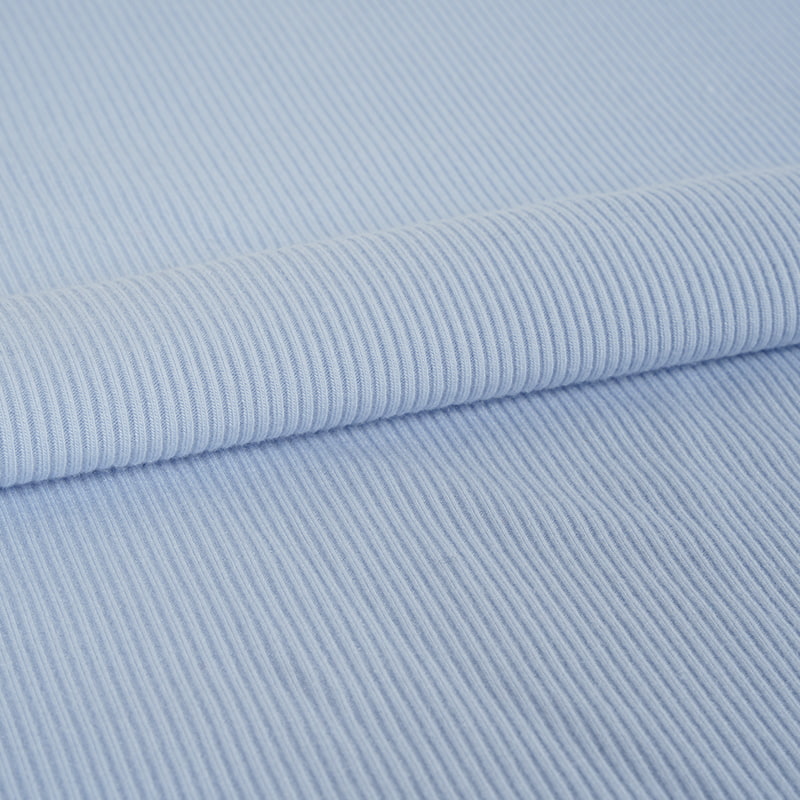
 Blended Textured Ponte Roma FabricThis 74% cotton, 26% polyester textured ponte shows how surface character adds visual interest while keeping stability. At 220 GSM and 165 cm wide, it suits dresses, skirts, and tailored tops.View Product →
Most commercial ponte is a three-part blend: a resilient synthetic backbone, a soft cellulosic fiber for hand and drape, and 2 to 8 percent spandex for stretch and recovery. The proportions drive both the price and the performance envelope.
| Blend family | Typical composition (%) | Main strengths | Points to watch |
|---|---|---|---|
| Rayon / polyester / spandex | 65 / 30 / 5 | Soft hand, good drape with body, comfortable against skin | Rayon-rich face can pill under friction |
| Nylon / rayon / spandex | 45 / 45 / 10 | Abrasion resistance, smooth surface, high recovery | Higher spandex content needs strict heat-setting control |
| Polyester / spandex | 95 / 5 | Lowest cost, best wash durability, minimal shrinkage | Less breathable and can feel synthetic |
Spandex content deserves its own decision. Around 2 percent gives modest comfort stretch suited to pencil skirts and A-line dresses; 5 percent and above supports close-fitting blocks, but it raises the stakes on elastane quality and heat setting, because a poorly set spandex relaxes and leaves knees and elbows bagged out within weeks. Recovery failure rarely shows up in a first fitting, so it is worth reviewing how soft knits differ in stretch fatigue resistance before locking a pattern block around a high-elastane ponte.
A representative nylon-rayon-spandex option balances abrasion resistance against a soft cellulosic hand:
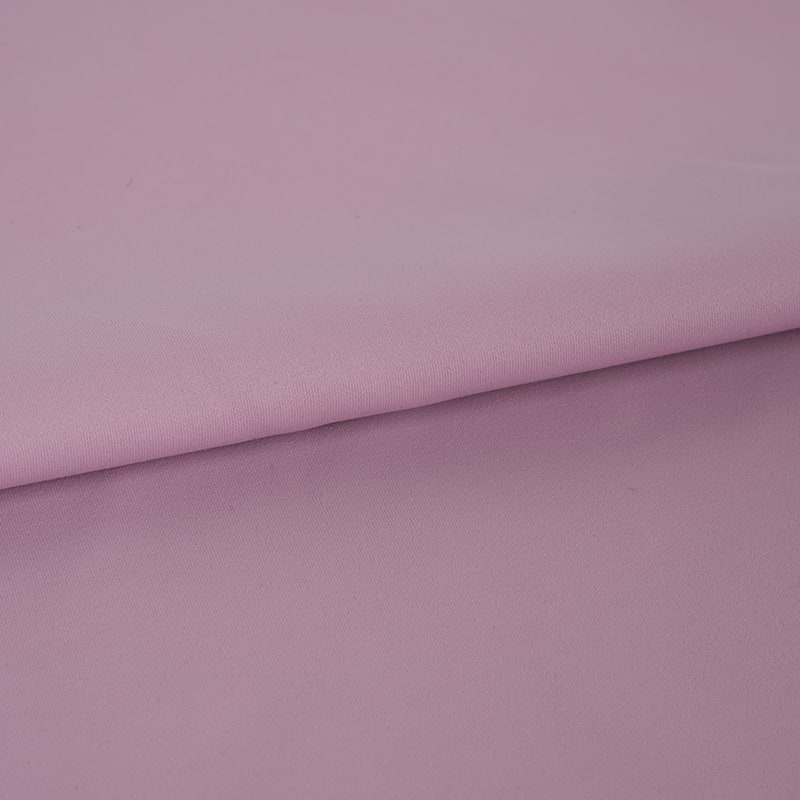
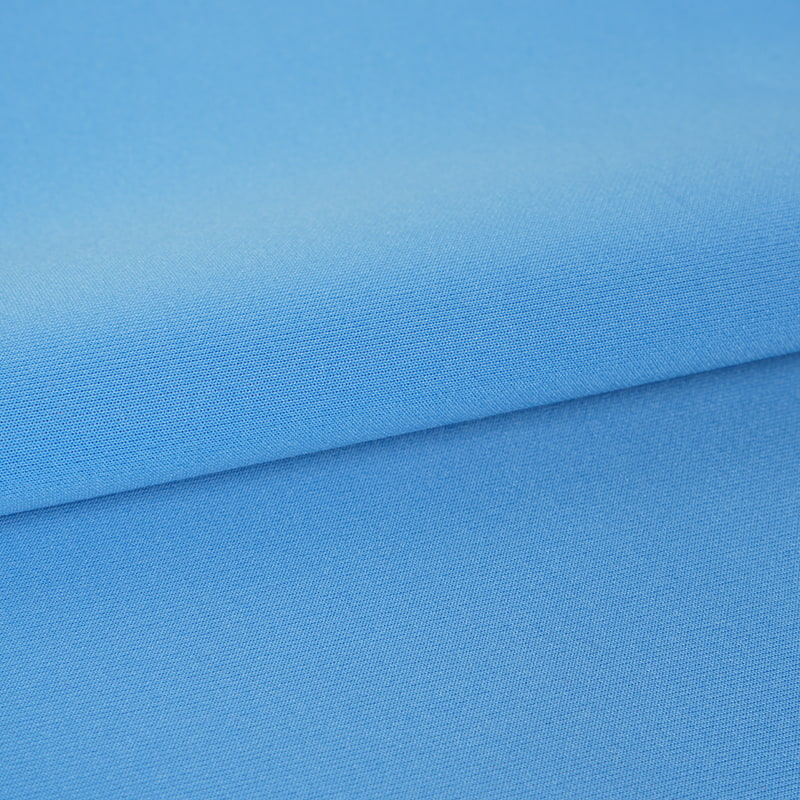
 Nylon Rayon Spandex Ponte Roma FabricA three-part blend balancing nylon's abrasion resistance with rayon's soft hand and spandex stretch. At 260 GSM and 160 cm, it offers shape retention and drape for dresses, pants, and skirts.View Product →
Placement decisions get much easier when ponte is set against the knits it usually competes with:
| Attribute | Ponte Roma | Jersey | Interlock |
|---|---|---|---|
| Knit structure | Double knit, two interlocked layers | Single knit, one layer | Double knit, plain face on both sides |
| Typical weight | 200-350 gsm | 120-200 gsm | 160-250 gsm |
| Cut edge | Lies flat, no curl | Curls toward the back | Largely stable |
| Stretch and recovery | Moderate stretch, strong recovery | High stretch, weaker recovery | Moderate stretch, fair recovery |
| Typical end use | Structured dresses, skirts, blazers | T-shirts and soft drape styles | Tees, babywear, underwear |
The practical takeaway is straightforward. Jersey wins on lightness and drape but will not hold a tailored line; interlock is stable yet usually softer and lighter than ponte; Ponte Roma is the specification when the garment has to keep its shape through a full day of wear and a full season of washing.
The same properties that make ponte easy to sew make it valuable across a wide set of end uses:
That last application surprises some apparel buyers. Dense roman cloth in heavier constructions is specified both for garments and as an embroidery and cross-stitch ground, and it holds its place in home decor settings where a lighter knit would sag between fixing points:
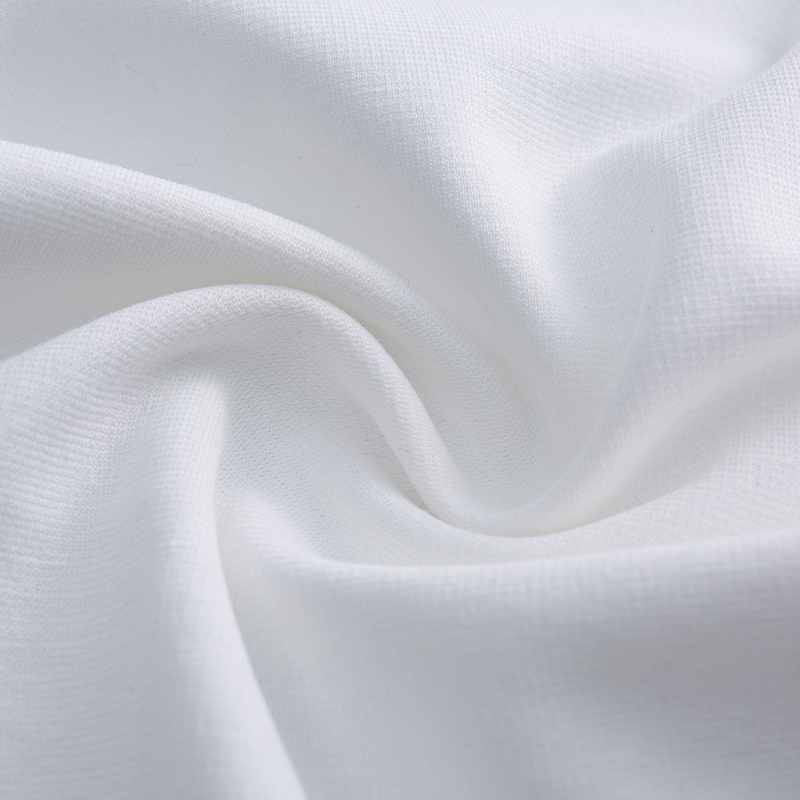
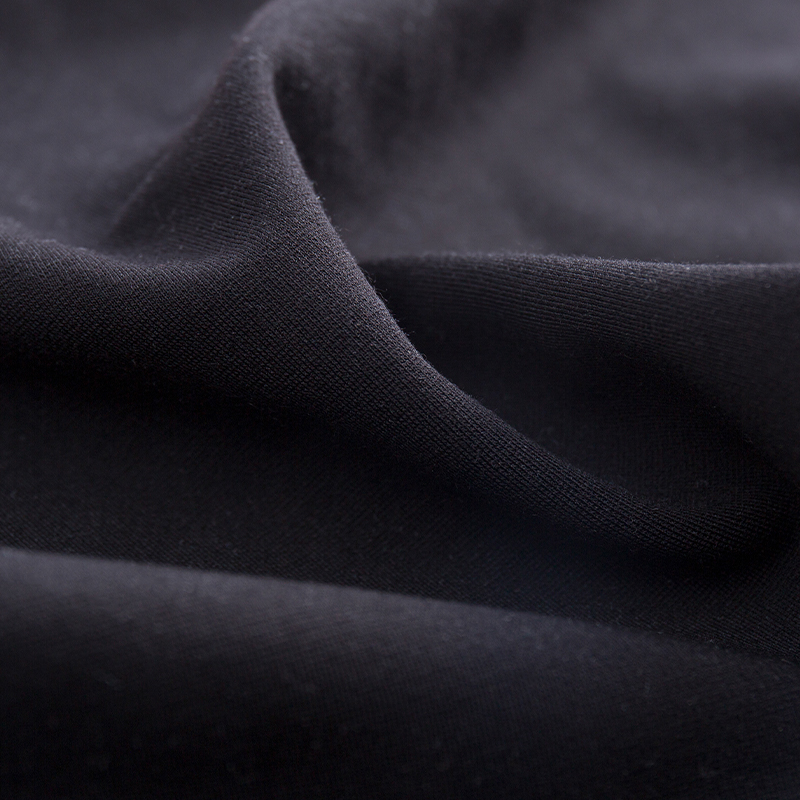
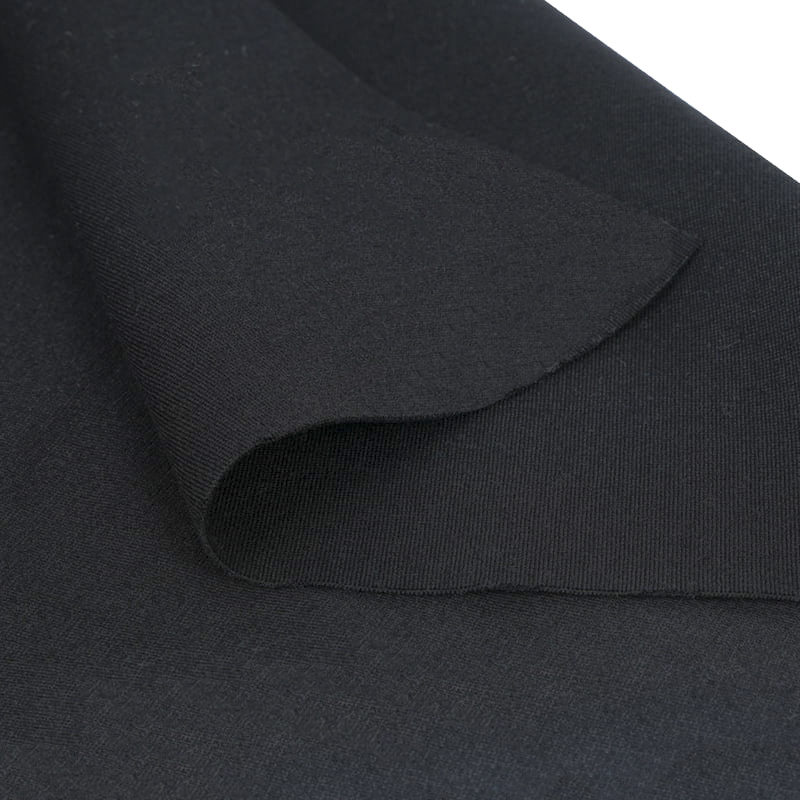 Black 40s Roman Cloth for Embroidery, Cross Stitch, Apparel, and Home DécorDense, medium-heavy roman cloth at 380-400 GSM holds its shape between fixing points, making it suitable for embroidery grounds, cross-stitch work, structured garments, and home décor uses.View Product →
Because ponte is not a standardized grade, treat every roll as unproven until it is tested. Six checks catch most of the failures behind fabric returns:
A supplier who answers those six points with test data rather than assurances is generally one worth sampling with, and asking for the same data across two or three candidate blends is the fastest way to compare them on equal footing.
The summary for anyone specifying this fabric: Ponte Roma is the knit to choose when a garment must keep its line. It is stable, washable, wrinkle-resistant, and comfortable enough for all-day wear, but its real-world performance is a direct function of blend, gsm, and spandex quality. Specify those numbers, test against them before bulk, and work with a knit fabric manufacturer that can document composition and finishing, and most of the common ponte failures can be designed out before a single meter is cut.

 Address: Xinglian Village, Fuquan Street, Keqiao District, Shaoxing City, Zhejiang Province, China.
  Phone: +86-15958501675
  Email: [email protected]
For exclusive deals and latest offers, sign up by entering your email address below.
Coprright © Shaoxing Keqiao Ruijue Textiles Co., Ltd. All Rights Reserved. Custom Jacquard Jersey Fabric Manufacturers



 English
 Español