Content
Sustainable high-performance single and double-sided fabrics are redefining what modern textiles can achieve, combining environmentally responsible material sourcing with advanced construction techniques that deliver superior comfort, durability, and functional performance. From activewear and outdoor apparel to home textiles and technical uniforms, these fabrics are engineered to meet demanding performance requirements while significantly reducing the environmental impact traditionally associated with textile manufacturing. This article explores what single and double-sided fabrics are, how sustainability is integrated into their design and production, and why this category of textile has become central to the future of responsible fashion and functional apparel.
The textile industry has historically been one of the most resource intensive and polluting sectors of global manufacturing, consuming vast quantities of water, energy, and raw fiber while generating significant chemical waste through dyeing and finishing processes. Sustainable high-performance fabrics represent a direct response to this challenge, using recycled and responsibly sourced fibers, water saving production methods, and low impact dyeing technologies, all while maintaining or improving the functional characteristics that consumers and brands demand, such as moisture management, thermal regulation, stretch recovery, and long term durability.
Sustainable Textiles Double-Sided Fabric Performance Apparel Recycled Fiber Technical KnitsThe distinction between single-sided and double-sided fabric refers primarily to how a textile is knitted or woven, and specifically whether the fabric presents a single functional surface or two distinct functional surfaces.
Single-sided fabrics, sometimes called single jersey or single face fabrics, are constructed with one primary technical face and one reverse face, typically produced on a single set of needles in circular or flat knitting, or through a single layer weave structure. The technical face is usually engineered for a specific function, such as smooth moisture wicking contact with the skin, while the reverse face may have a different texture, such as a looped or brushed surface for insulation. Single-sided constructions are generally lighter in weight, more breathable, and more flexible, making them well suited to base layers, t-shirts, and lightweight activewear.
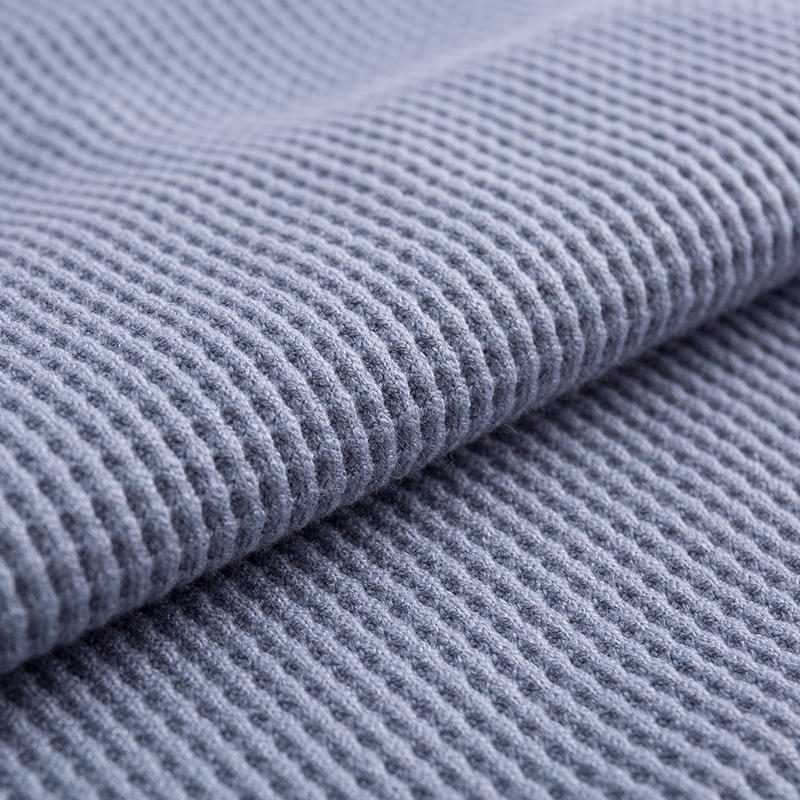
Double-sided fabrics, also referred to as double face or double knit fabrics, are constructed using two sets of needles or two woven layers that are interlocked or bonded together, creating a fabric with two distinct, fully finished faces, each of which can be engineered with different fiber content, texture, or functional properties. This construction allows a single fabric to combine two performance characteristics that would otherwise require separate garment layers, such as a moisture wicking inner face paired with a wind resistant or insulating outer face, all within one integrated textile.
Choosing between single-sided and double-sided construction is a fundamental design decision that affects weight, breathability, insulation, drape, and the number of separate garment layers needed to achieve a desired performance outcome, making this one of the first specifications a designer or brand must define when developing a new performance apparel product.
High performance in textile terms refers to a fabric's ability to deliver measurable functional benefits beyond basic coverage and appearance, addressing specific needs related to comfort, protection, and durability under active or demanding conditions.
Many high-performance fabrics are engineered with fiber cross sections or surface treatments that actively draw moisture away from the skin and spread it across a larger fabric surface area, where it can evaporate more quickly. In double-sided constructions, this is often achieved by pairing a hydrophobic inner face that pushes moisture outward with a hydrophilic outer face that absorbs and disperses it for faster evaporation.
Fabric structure significantly influences how effectively a textile traps or releases body heat. Double-sided fabrics are particularly well suited to thermal regulation applications, since one face can be engineered with a denser, insulating structure while the opposite face remains open and breathable, allowing a single fabric to provide warmth without excessive bulk or overheating during activity.
The inclusion of elastane or other stretch fibers, combined with specific knit structures, allows high-performance fabrics to stretch significantly during movement and then return to their original shape, a property essential for activewear, athleisure, and fitted technical garments.
High-performance fabrics are typically engineered and tested for resistance to pilling, abrasion, and repeated washing, ensuring the textile maintains its functional properties and appearance over an extended service life rather than degrading quickly under regular use.
Many performance fabrics incorporate natural antimicrobial fiber properties, such as those found in certain plant based fibers, or apply sustainable finishing treatments designed to reduce the buildup of odor causing bacteria, extending the time a garment can be worn comfortably between washes.
The sustainability credentials of a high-performance fabric begin with the raw fiber used in its construction, and manufacturers now draw from a growing range of environmentally responsible fiber options.
| Fiber Type | Sustainability Characteristic | Common Performance Role |
|---|---|---|
| Recycled Polyester | Made from post consumer plastic bottles or textile waste, reducing reliance on virgin petroleum | Moisture wicking outer or inner face |
| Recycled Nylon | Derived from reclaimed fishing nets and industrial waste, diverting material from landfill or ocean pollution | Durability and abrasion resistance |
| Organic Cotton | Grown without synthetic pesticides or fertilizers, reducing soil and water contamination | Soft handfeel, breathability |
| Tencel or Lyocell | Produced from sustainably harvested wood pulp using a closed loop solvent recovery process | Moisture absorption, smooth drape |
| Recycled Wool | Reclaimed from post industrial or post consumer wool textiles, reducing new fiber demand | Natural insulation and odor resistance |
| Bio Based Elastane | Manufactured partly from renewable plant derived feedstocks rather than entirely fossil fuel sources | Stretch and recovery |
In many sustainable double-sided fabrics, different fiber types are strategically paired on each face to combine sustainability with function, such as a recycled polyester technical face for moisture management bonded to an organic cotton or Tencel face for skin comfort, allowing designers to optimize both environmental impact and performance characteristics simultaneously.
Beyond fiber selection, the processes used to knit, weave, dye, and finish a fabric have a substantial impact on its overall environmental footprint.
Conventional textile dyeing is among the most water intensive stages of fabric production. Sustainable manufacturers increasingly use technologies such as dope dyeing, in which color pigment is added to the fiber solution before it is spun into thread, eliminating the need for a separate water intensive dyeing bath entirely, or waterless dyeing systems that use pressurized carbon dioxide or minimal water volumes to achieve color saturation.
Where wet dyeing remains necessary, sustainable fabric producers favor low impact dyes formulated to achieve high fixation rates, meaning more of the dye bonds to the fiber and less is released as wastewater, along with the use of chemical inputs verified against restricted substance lists that exclude harmful substances commonly associated with conventional textile processing.
Modern circular knitting machines and weaving looms used in double-sided fabric production have become significantly more energy efficient over recent years, with manufacturers increasingly powering production facilities with renewable electricity sources to further reduce the carbon footprint associated with fabric formation.
Finishing treatments, such as those applied to enhance moisture wicking, water repellency, or softness, are increasingly formulated to require less water for application and rinsing, and some manufacturers have adopted closed loop water recycling systems that treat and reuse process water within the facility rather than discharging it after a single use.
A growing focus within sustainable high-performance fabric development is designing textiles that can be more easily recycled or biodegraded at the end of their useful life, rather than contributing to landfill waste.
Some sustainable double-sided fabrics are engineered using a single fiber type across both faces, rather than blending multiple fiber types, since mono material textiles are significantly easier to mechanically or chemically recycle than blended fabrics, which often cannot be separated into their component fibers using current recycling technology.
Certain fabric and apparel manufacturers now operate take back programs that collect worn out garments made from their fabrics, processing them into recycled fiber that can be reintroduced into new fabric production, creating a more closed loop material system.
For applications where synthetic performance properties are less critical, fabrics constructed from natural fibers such as organic cotton, hemp, or Tencel offer the additional benefit of biodegrading under appropriate conditions at the end of a garment's life, reducing long term textile waste accumulation.
Sustainable high-performance single and double-sided fabrics are used across a broad range of product categories, each drawing on different combinations of the fabrics' functional and environmental properties.
Running apparel, yoga wear, and general athletic clothing rely heavily on single-sided moisture wicking fabrics for lightweight base layers, while double-sided constructions are commonly used in outerwear layers that need to combine insulation with breathability during variable intensity exercise.
Hiking, mountaineering, and cold weather apparel frequently use double-sided fabrics that pair a wind and water resistant outer face with a soft, insulating inner face, allowing a single fabric layer to replace what would otherwise require multiple separate garment layers, reducing overall pack weight and material use.
The growing athleisure category, which blends athletic performance characteristics with everyday casual styling, relies extensively on double-sided knit fabrics that offer a polished, structured outer appearance combined with a soft, comfortable inner face suitable for all day wear.
Beyond apparel, sustainable double-sided fabrics are increasingly used in home textile applications such as blankets and upholstery, where the ability to combine two different textures or colors within a single reversible fabric offers both design flexibility and material efficiency.
Industries requiring durable, easy care uniforms benefit from high-performance fabrics that resist staining, wrinkling, and wear while offering the moisture management and comfort needed for long shifts, increasingly specified with sustainable fiber content as organizations pursue corporate sustainability commitments.
| Factor | Single-Sided Fabric | Double-Sided Fabric |
|---|---|---|
| Weight | Generally lighter | Generally heavier due to combined layers |
| Breathability | Typically higher | Variable, depending on face density and structure |
| Functional Layers | One primary technical face | Two independently engineered faces |
| Design Flexibility | Simpler, more limited surface design options | Greater flexibility to combine colors, textures, and functions |
| Typical Applications | Base layers, t-shirts, lightweight activewear | Outerwear, reversible garments, insulated apparel |
| Recyclability | Easier when made from a single fiber type | More complex if the two faces use different fiber types |
Neither construction is inherently more sustainable than the other in isolation, since the environmental impact of each depends heavily on the specific fibers, dyeing methods, and finishing treatments used. Designers and brands typically select between single and double-sided construction based primarily on the functional requirements of the intended application, then apply sustainable sourcing and processing principles within whichever construction best serves the product's performance goals.
Because sustainability claims in the textile industry can vary widely in rigor, independent certifications provide buyers and brands with verified assurance regarding a fabric's environmental and social performance.
When evaluating a sustainable high-performance fabric supplier, requesting documentation for these or comparable certifications provides a more reliable basis for sustainability claims than marketing language alone.
High-performance fabrics intended for demanding applications typically undergo standardized laboratory testing to verify functional claims before they are approved for use in finished garments.
Despite significant progress, several challenges remain in balancing sustainability with the demanding functional requirements of high-performance textiles.
Some of the most effective performance enhancing treatments and fiber blends, particularly those combining natural and synthetic fibers for optimal moisture management, can make a fabric more difficult to recycle at end of life, creating an ongoing engineering challenge to achieve both high function and circularity simultaneously.
Recycled and certified sustainable fibers, along with low impact dyeing and finishing technologies, often carry a higher production cost than conventional alternatives, which can present pricing challenges for brands seeking to offer sustainable performance apparel at accessible price points.
Verifying the full sustainability profile of a fabric requires transparency across a complex, often multi country supply chain spanning fiber production, spinning, knitting or weaving, dyeing, and finishing, making robust supply chain traceability systems an ongoing area of investment for manufacturers committed to genuine sustainability claims.
The category continues to advance rapidly as fiber science, manufacturing technology, and consumer demand for verified sustainability converge.
Ongoing development of synthetic fibers derived partly or entirely from renewable biological feedstocks, rather than petroleum, aims to retain the performance characteristics of conventional synthetics while reducing reliance on fossil fuel derived raw materials.
Emerging chemical recycling technologies are being developed to break down blended fiber textiles into their base chemical components, potentially solving the long standing challenge of recycling mixed fiber fabrics that mechanical recycling methods cannot effectively process.
Advanced digital knitting and weaving technologies allow manufacturers to produce fabrics with greater precision and less material waste during production, while digital sampling reduces the physical material historically consumed during the product development and approval process.
As consumers and regulators place growing emphasis on verified sustainability claims, blockchain based and other digital traceability systems are increasingly being adopted to provide transparent, auditable records of a fabric's journey from raw fiber to finished product.
Sustainable high-performance single and double-sided fabrics demonstrate that environmental responsibility and functional excellence are not competing priorities but complementary goals that modern textile engineering can achieve together. Through thoughtful fiber selection, water and energy efficient manufacturing processes, and design strategies that support circularity, these fabrics deliver the moisture management, thermal regulation, durability, and comfort that performance apparel and technical textiles demand, while significantly reducing the environmental footprint traditionally associated with textile production. As fiber science, recycling technology, and supply chain transparency continue to advance, sustainable high-performance fabrics are positioned to become the standard expectation rather than a premium niche within the global textile industry.
For brands and product developers evaluating fabric options, understanding the functional trade offs between single and double-sided construction, alongside verified sustainability certifications and transparent supply chain practices, provides the foundation needed to select a fabric that delivers genuine performance and genuine environmental accountability in equal measure.

 Address: Xinglian Village, Fuquan Street, Keqiao District, Shaoxing City, Zhejiang Province, China.
  Phone: +86-15958501675
  Email: [email protected]
For exclusive deals and latest offers, sign up by entering your email address below.
Coprright © Shaoxing Keqiao Ruijue Textiles Co., Ltd. All Rights Reserved. Custom Jacquard Jersey Fabric Manufacturers



 English
 Español