Content
Stripe fabric pattern is one of those subjects that looks simple from a distance and becomes detailed as soon as you touch the cloth. A stripe can be a narrow pinstripe on a smooth jersey, a soft two-color line in a rib, or a bold, slightly irregular band running through a heavy sweater knit. The same visual idea behaves differently depending on the base fabric, the yarn, and the way the color is placed into the structure.
At our mill, stripe work usually starts with a practical conversation: Will the stripe run vertically or horizontally? Does it need to match at the seam? How wide is the repeat? Will it be garment panels, cuffs, or a home textile? Those answers shape the construction more than the word "stripe" suggests. This guide walks through the main stripe routes in knit fabrics, what to check in sampling, and how to write a clearer sourcing brief.
In woven fabrics, stripes often come from colored yarns in the warp or weft. In knits, the logic is similar but the vocabulary changes. A vertical stripe usually follows the wales, the columns of loops that run down the fabric. A horizontal stripe runs across the courses. Because knit loops can stretch and shift, a stripe that looks crisp on the roll may behave differently when cut, sewn, or washed.
The term also covers several different pattern families. Balanced stripes have an even repeat and consistent stripe width. Irregular stripes vary in width, spacing, or color order. Engineered stripes are built into the knit structure, while printed stripes sit on the surface. Some stripe fabrics use only two colors; others use three, four, or a tonal sequence. The best choice depends on the look, the hand feel, and the performance target, not on the stripe name alone.
The table below compares the routes we see most often in apparel, accessories, and home textile programs. It is a starting point rather than a rulebook, because a single base fabric can carry more than one stripe method.
| Stripe route | Typical base | How the pattern is made | Good fit |
|---|---|---|---|
| Balanced yarn-dyed stripe | Single jersey, interlock, pique | Colored yarns arranged in a fixed course or wale sequence | T-shirts, dresses, kidswear, lightweight tops |
| Engineered rib stripe | 1x1, 2x2, 4x2 rib | Alternating yarn colors, knit and purl columns, or both | Cuffs, neckbands, body panels, fitted tops |
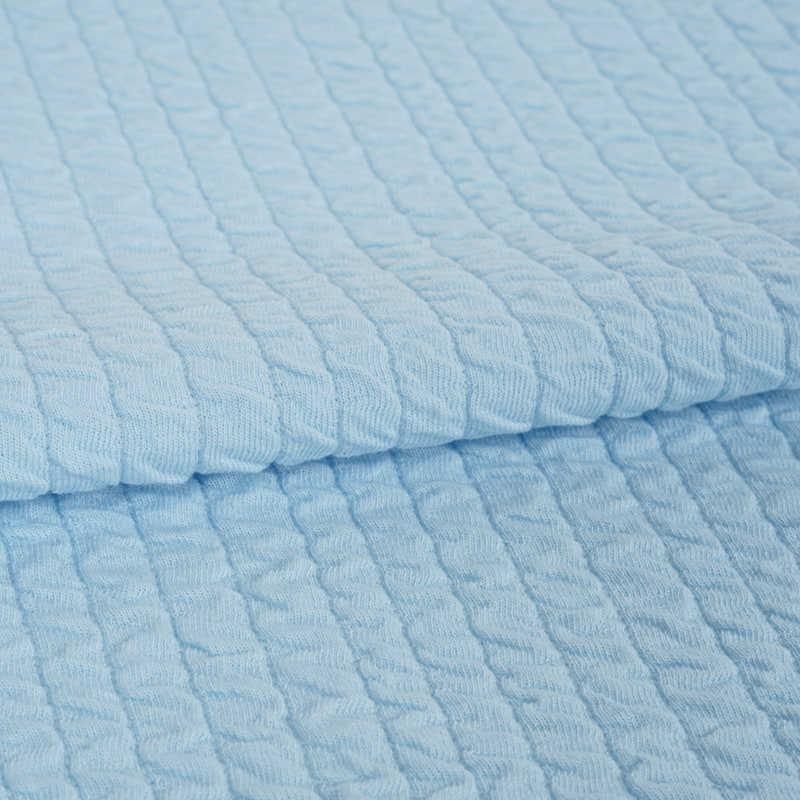
| Jacquard stripe | Jersey, ponte, coarse knit | Needle selection builds stripes with texture, waves, or zigzags | Statement panels, outerwear, home textiles |
| Printed stripe | Jersey, ponte, air layer | Print applied after fabric formation | Fast color changes, fine artwork, seasonal designs |
| Coarse-gauge stripe | Thick needle knit, terry, fleece | Colored yarns plus a larger stitch structure | Sweaters, blankets, craft projects, bags |
Yarn-dyed stripes generally offer strong color continuity because the color is in the yarn, not on the surface. They can take longer to develop and require careful yarn planning, but the result is often more stable through washing and wear. Printed stripes move faster through sampling and can reproduce fine artwork, yet registration and distortion become the main risks on stretchy or textured bases. Jacquard stripes sit in between: the pattern is part of the structure, so texture and color can be engineered together.
For a simple reference point in single jersey, a clear color-stripe style helps teams compare repeat, ground shade, and hand feel before moving into development.
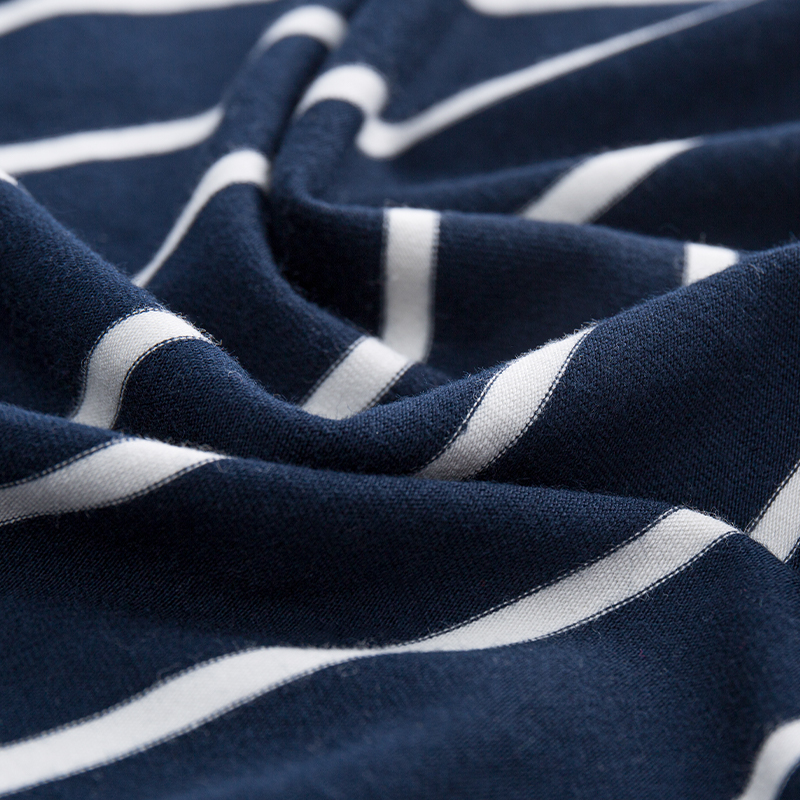 Yarn-Dyed Color Stripe Jersey FabricA 95% rayon/5% spandex yarn-dyed stripe jersey at 275 GSM and 170 cm width, suited as single-jersey reference for repeat, ground shade and hand feel.View Product →
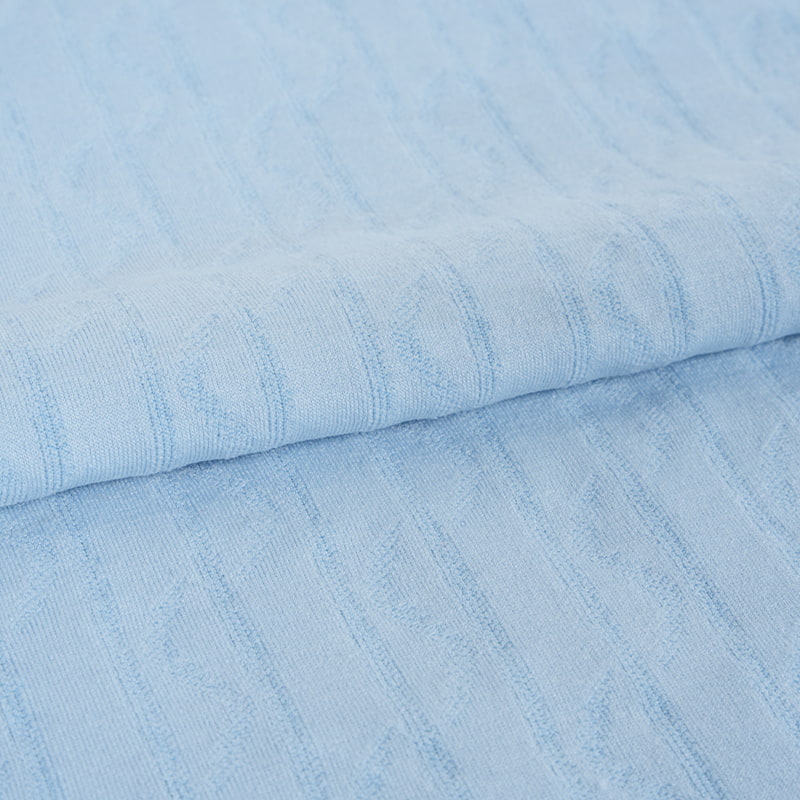
Rib programs need a different reference because the stripe has to live with stretch and recovery. A 5x4 elastic rib with pastel stripes is useful for checking how color blocks behave as the rib opens and returns.
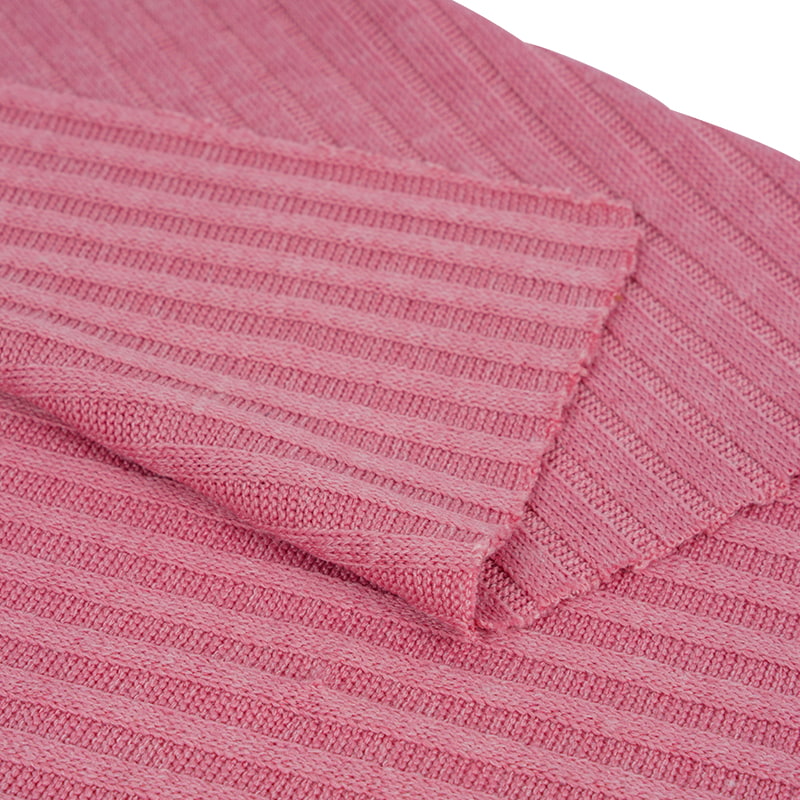 Pastel Color Stripe 5x4 Elastic Rib FabricAn 85/T, 10/R, 5/SP stretch rib at 168 cm and 220 GSM, useful for checking pastel stripe blocks behave as the rib opens and recovers.View Product →
Yarn-dyed stripes begin before knitting. The mill plans a color sequence, arranges yarns on the machine, and knits the repeat into the fabric. On a jersey, the repeat is measured across the width and along the length; on a rib, the stripe may be reinforced by the rib structure itself. This route is usually preferred when the buyer needs the stripe to remain part of the fabric through repeated washing, or when the color order must be consistent from roll to roll.
Printed stripes are applied to greige or finished fabric. They allow quick changes and detailed artwork, but the printer has to control registration, ink penetration, and the way the print follows the grain of a knit. Jacquard stripes use needle selection to create the pattern during knitting. The result can be a clean vertical line, a wavy line, or a stripe blended with a textured ground. For a closer look at how blended jacquard stripes behave in real programs, see this guide to jacquard stripe fabrics for blending.
Each route creates a different sampling question. With yarn-dyed stripes, ask about color continuity and repeat accuracy. With prints, ask about registration on the base and how the pattern distorts when stretched. With jacquard, look at the needle line, the hand feel, and whether the stripe edge remains clean after finishing.
A stripe can pass a visual approval and still create problems in cutting or after laundering. The checks below are the ones we treat as basic discipline for stripe programs.
Stripes are flexible enough to move across several product types. In apparel, balanced jersey stripes suit casual tops, dresses, and kidswear, while engineered rib stripes are common at cuffs, neckbands, waistbands, and fitted body panels. In activewear, the stripe often needs to work with stretch, moisture management, and recovery, so the base fabric matters as much as the color order. In home textiles, jacquard and coarse-gauge stripes can add visual rhythm to throws, cushions, and decorative panels without relying on a print.
Coarse-gauge stripes deserve their own category. The larger stitch and heavier hand can make a simple two-color line feel more like a texture than a pattern. A heavy color-stripe coarse needle knit can lean toward sweaters, blankets, bag panels, or craft-led projects, but the sampling focus shifts to weight, surface irregularity, and seam bulk.
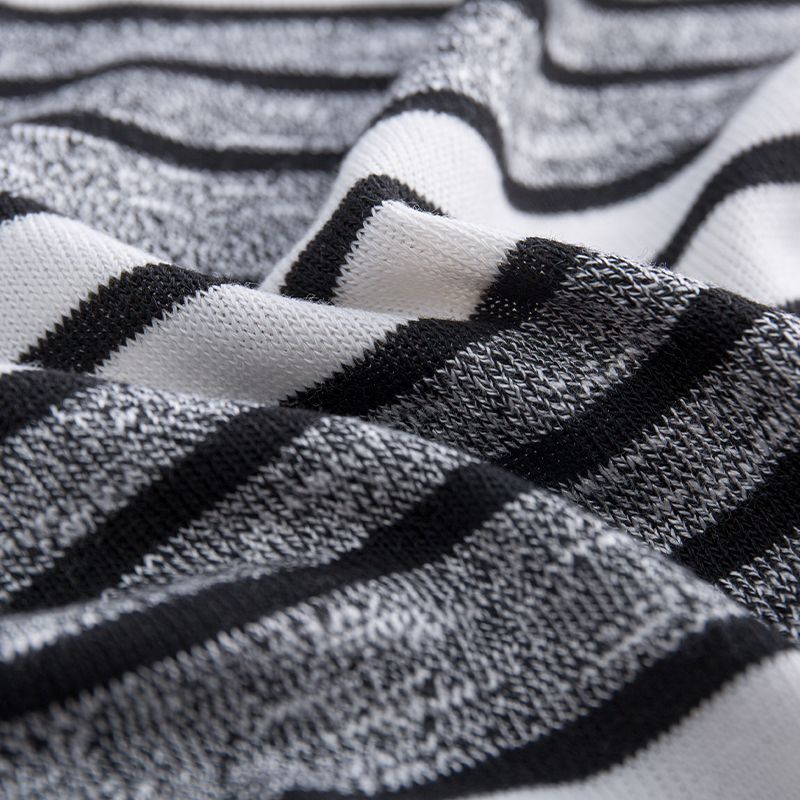 Color Stripe Coarse Needle Knit FabricA 70% polyester/25% recycled/5% spandex coarse-needle stripe knit at 155 cm and 234 GSM, relevant for assessing stitch scale, surface texture, and seam bulk.View Product →
For accessories and trim, narrow stripes can be used at cuffs, collars, and pocketing. For home and craft buyers, the same stripe may be judged on panel width, pattern placement, and how the fabric behaves when folded or quilted. The common thread is not the end product; it is the need to define the stripe in the context of the base cloth.
A useful stripe brief gives the mill enough information to recommend the right route. We prefer to see the following points in one place, even if some are still open for discussion.
If the brief is still early, a small cut panel or a photo with a ruler can be more helpful than a verbal description. Stripe words like "narrow," "wide," or "regular" can mean different things to different teams. A measured repeat removes most of that ambiguity.
Stripe fabric pattern is ultimately a design decision backed by construction discipline. The same stripe can be soft and casual in a jersey, crisp and elastic in a rib, or richly textured in a jacquard. What makes it work in production is a shared understanding of direction, repeat, color, and the way the base fabric will be cut, sewn, and finished.
We enjoy working through those details with buyers and product teams because the small choices are usually what decide whether a stripe looks consistent across the whole program. If you are building a stripe fabric for apparel, accessories, or home textiles, start with the base cloth and the end use, then let the pattern follow.

 Address: Xinglian Village, Fuquan Street, Keqiao District, Shaoxing City, Zhejiang Province, China.
 Phone: +86-15958501675
 Email: [email protected]
For exclusive deals and latest offers, sign up by entering your email address below.
Coprright © Shaoxing Keqiao Ruijue Textiles Co., Ltd. All Rights Reserved. Custom Jacquard Jersey Fabric Manufacturers



 English
 Español