Content
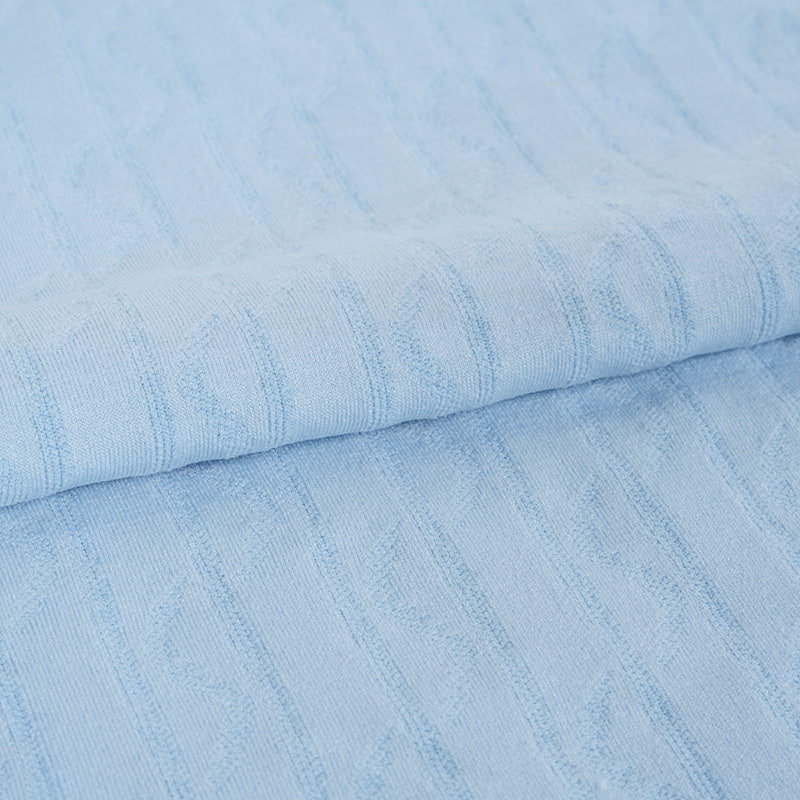
Jacquard stripe fabric achieves its balance of intricate patterning and structural strength because the design is woven directly into the fabric structure rather than printed or embroidered onto the surface afterward. This distinction matters mechanically, since a pattern formed by the interlacing of warp and weft yarns becomes part of the fabric's underlying architecture, which means the design cannot peel, crack, or fade the way a surface-applied print eventually can with repeated washing and wear. The weaving process relies on individually controlled warp threads, each raised or lowered according to a programmed pattern, allowing the loom to produce detailed motifs such as wave patterns, florals, or geometric stripes with clear definition on both the front and back of the cloth.
A jacquard loom controls each warp yarn independently through a punched or digitally programmed mechanism, allowing thousands of individual thread lifts per pattern repeat rather than the limited number of harnesses used in simpler weaving methods. This level of control is what separates jacquard construction from dobby or plain weaving, where pattern options are constrained by a smaller set of repeating shed movements. Because every thread position is dictated by the pattern program, jacquard weaving can render curved lines, shading effects, and layered motifs that would be difficult or impossible to achieve through printing alone while still working within the constraints of a woven structure.
The resulting fabric carries its pattern through variations in weave density and thread float length rather than through added pigment, which is part of why jacquard textiles tend to show a slightly raised or textured surface where the pattern sits, giving the cloth a dimensional quality that flat prints do not replicate.
Many jacquard stripe fabrics rely on a fiber blend such as polyester combined with rayon and a small percentage of spandex, a composition that balances the structural stability needed for a woven jacquard pattern with enough stretch and drape for garment applications. Polyester contributes tensile strength and resistance to shrinking, which helps the fabric hold its woven pattern shape through repeated laundering. Rayon adds a softer hand feel and improved dye uptake, supporting the color depth that makes jacquard patterns appear more distinct against the fabric ground. A smaller spandex content, often in the range of a few percent by weight, introduces recovery stretch without compromising the crispness of the woven design.
Fabric weight also factors into durability, with jacquard stripe textiles commonly falling in a mid-weight range suited to structured garments. A grammage around 210 grams per square meter, for example, provides enough body for tailored shirts and jackets while remaining workable for softer applications like dresses when paired with a looser garment construction.
| Specification | Typical Value | Relevance To Use |
|---|---|---|
| Fiber Composition | Polyester, rayon, spandex blend | Balances strength, drape, and stretch recovery |
| Fabric Width | Around 150 cm | Standard width for efficient garment pattern cutting |
| Fabric Weight | Around 210 GSM | Suited to structured garments like shirts and jackets |
A wavy jacquard pattern, formed through alternating warp float sequences, produces a rippling visual effect that shifts subtly under changing light, an outcome that comes from the interplay of raised and recessed weave sections rather than from color contrast alone. This structural approach to pattern-making is part of why jacquard fabrics tend to read as more dimensional than printed textiles when viewed up close, since the pattern edges follow the natural boundaries of the weave rather than sitting flat on a single surface plane.
Both the front and reverse sides of a jacquard fabric typically display a version of the pattern, though the reverse often shows an inverted or negative version of the design due to how the warp floats are distributed. This double-sided character occasionally gets used intentionally in garment construction, where a designer might expose the reverse side of the fabric as a design feature on cuffs, collars, or panel inserts.
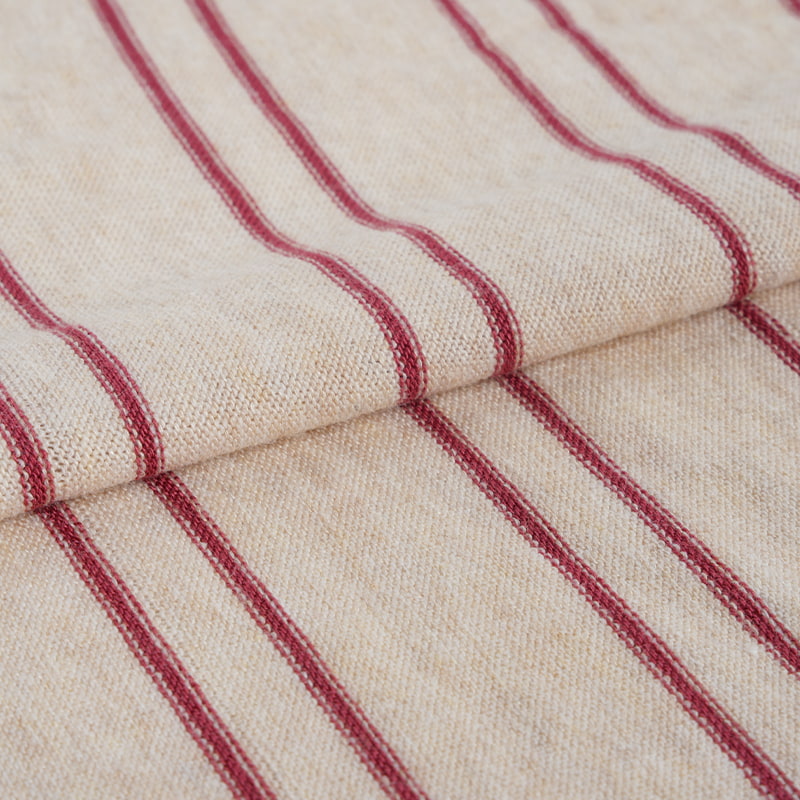
Jacquard stripe fabric appears across a fairly wide range of garment categories, largely because the fabric's structural pattern and moderate weight suit both tailored and relaxed silhouettes. In women's wear, the fabric shows up in dresses, blouses, and jackets, where the woven pattern provides visual interest without needing additional surface decoration. Men's shirts, suiting fabrics, and casual jackets also use jacquard stripe constructions, taking advantage of the fabric's durability and pattern consistency across larger cut pieces such as shirt fronts and jacket panels.
Children's clothing, including dresses, shirts, and light jackets, uses jacquard fabric as well, though typically in lighter weight variations that balance the textured pattern against the softer hand feel expected in garments worn by younger children. Across these categories, the woven pattern's resistance to fading through washing is a practical advantage over printed alternatives, particularly for garments that see frequent laundering.
Because the pattern is embedded in the weave structure, jacquard fabrics generally tolerate machine washing better than heavily printed textiles, though care labels still tend to recommend cooler wash temperatures and gentle cycles to protect the spandex content from heat-related elasticity loss over time. Turning garments inside out before washing helps reduce surface abrasion on the raised pattern areas, which can otherwise flatten slightly with repeated friction against other items in the wash.
Hanging structured jacquard garments such as jackets rather than folding them helps maintain the fabric's shape, since the woven pattern relies on consistent thread tension that can be disrupted by prolonged creasing along fold lines. For softer garments like dresses, folding along natural seam lines rather than through pattern areas helps minimize visible crease marks in the woven design.

 Address: Xinglian Village, Fuquan Street, Keqiao District, Shaoxing City, Zhejiang Province, China.
  Phone: +86-15958501675
  Email: [email protected]
For exclusive deals and latest offers, sign up by entering your email address below.
Coprright © Shaoxing Keqiao Ruijue Textiles Co., Ltd. All Rights Reserved. Custom Jacquard Jersey Fabric Manufacturers



 English
 Español