Content
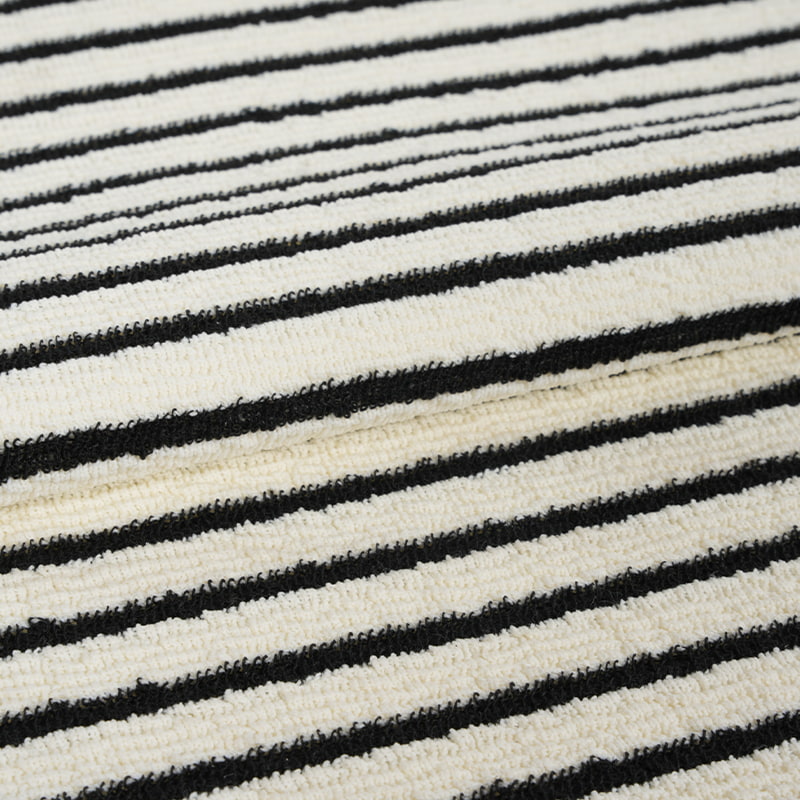
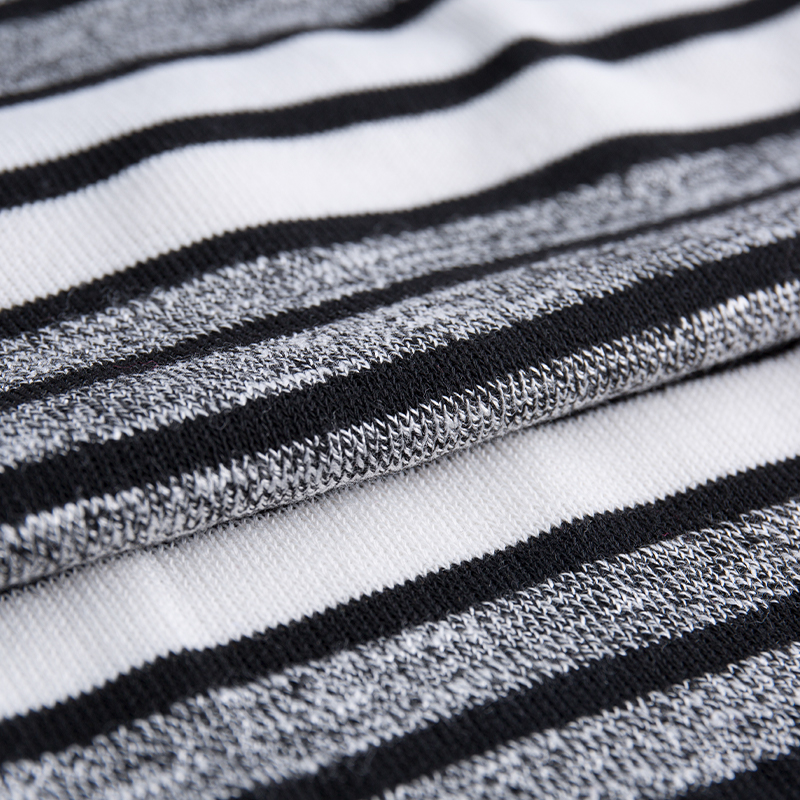
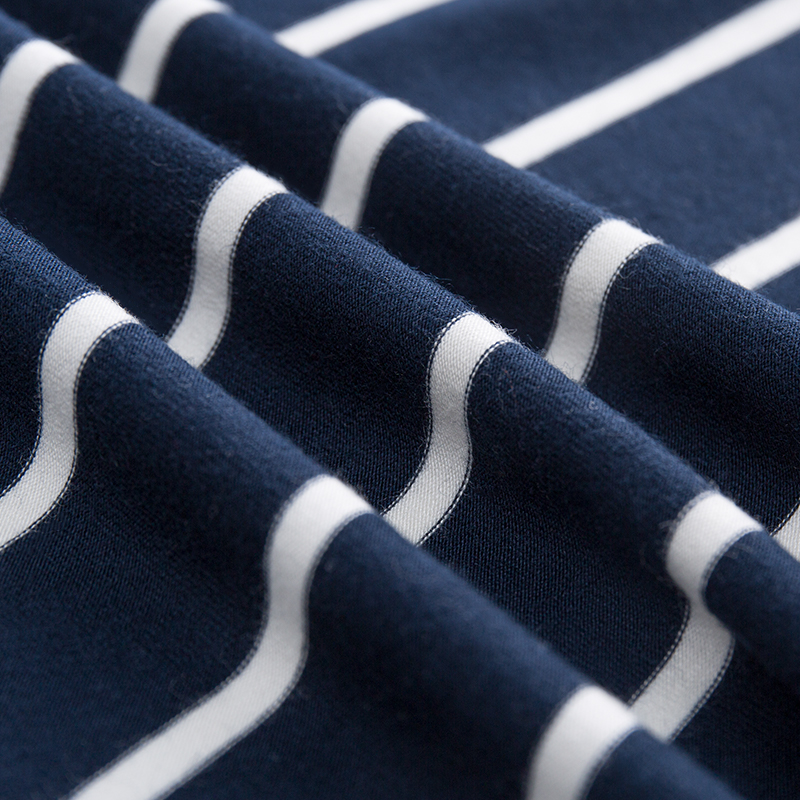
Sustainable jacquard stripe fabrics are reshaping modern textile design standards by combining an intricate, loom-woven pattern technique with fiber sourcing and dyeing methods that reduce environmental impact. The pattern itself is created directly within the weave structure rather than printed onto the surface, which means the stripe design remains visible and intact even after years of washing and wear. This structural durability, paired with a growing shift toward recycled and responsibly sourced yarns, is what allows the fabric category to meet both aesthetic and environmental expectations that designers and manufacturers increasingly prioritize.
Jacquard weaving relies on a specialized loom mechanism that individually controls each warp thread, allowing complex patterns, including layered stripes, geometric motifs, and tonal variations, to be built directly into the fabric structure rather than applied afterward through screen printing or digital transfer. Because the pattern forms through the interlacing of colored or textured yarns, the design carries the same physical presence on both the front and back of the cloth, and it resists the fading or cracking that surface-printed patterns can develop after repeated laundering.
This weaving approach also allows for subtle dimensional texture, since stripe sections can alternate between different weave densities or yarn thicknesses, producing a tactile ridge or raised effect that flat printing cannot replicate. Designers working with jacquard stripe fabric often use this dimensional quality to add visual depth to garments and home textiles without introducing additional embellishment or embroidery.
The sustainability credentials of jacquard stripe fabric depend heavily on the fiber content selected before weaving even begins. Recycled polyester derived from post-consumer plastic bottles has become a common substitute for virgin synthetic yarn, offering comparable strength and colorfastness while diverting plastic waste from landfills. Organic cotton, grown without synthetic pesticides and using less irrigation water than conventional cotton in many growing regions, frequently appears in blended jacquard constructions where natural fiber softness is combined with the durability of recycled synthetic yarns.
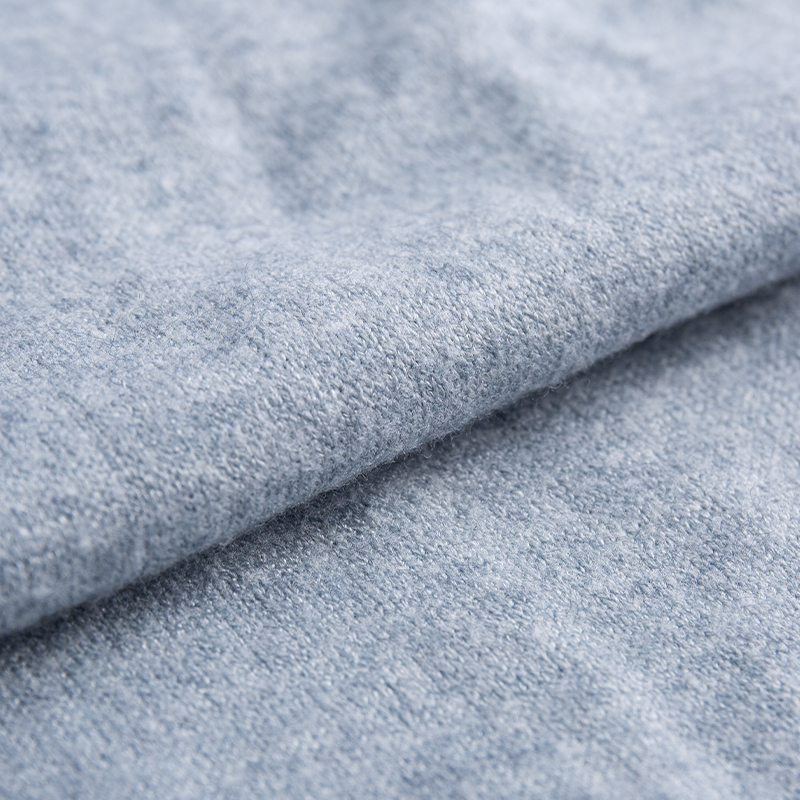
Many jacquard stripe fabrics use blended yarns, such as a cotton-polyester or cotton-modal combination, to balance breathability with dimensional stability during the weaving process. A blend containing around 60 percent cotton and 40 percent recycled polyester, for example, tends to hold its shape well through the jacquard loom's tension while still offering the moisture absorption associated with natural fibers.
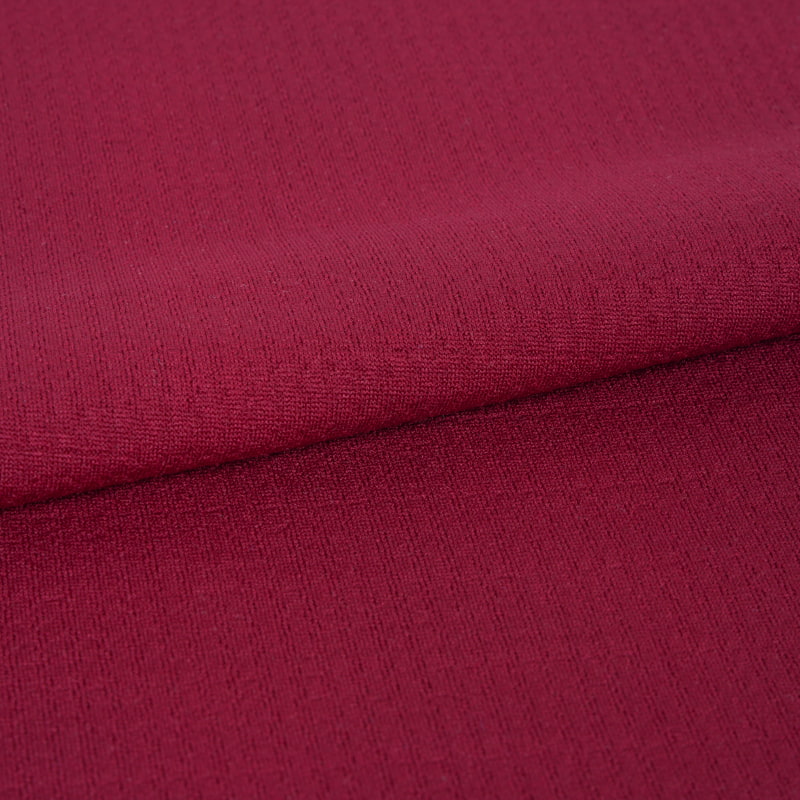
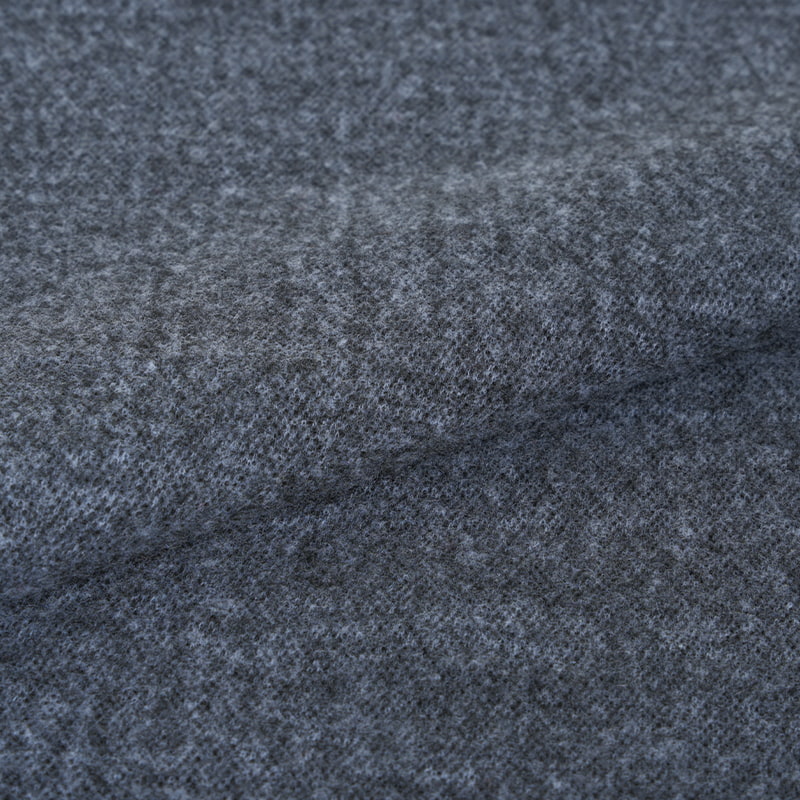
A polyester-spandex jacquard construction offers a different balance, favoring stretch recovery and dimensional stability over natural fiber softness. A typical cable knit jacquard in this category runs around 95 percent polyester and 5 percent spandex, producing a fabric weight near 232 grams per square meter and a usable width close to 163 centimeters. The added spandex content allows the raised jacquard texture to flex with body movement rather than resisting it, which is part of why this fiber combination appears frequently in structured knitwear, fitted outerwear panels, and upholstery-adjacent home textile applications where both pattern definition and stretch recovery matter.
Because jacquard patterns are typically created using pre-dyed or yarn-dyed threads rather than piece-dyed fabric, the dyeing stage occurs earlier in production and can use significantly less water per unit of finished cloth compared to overdyeing an entire woven length. Some mills further reduce water consumption by adopting closed-loop dyeing systems that recycle process water, along with low-impact or GOTS-certified dye formulations that limit the release of heavy metals and other residual chemicals into wastewater streams.
Understanding how jacquard weaving compares to other common textile construction methods helps clarify why it remains a preferred technique for stripe patterns that require both visual complexity and structural longevity.
| Production Method | Pattern Formation | Durability of Design | Typical Water Use in Coloring |
|---|---|---|---|
| Jacquard Weaving | Built into weave structure | High, resists fading and wear | Lower, yarn-dyed before weaving |
| Screen Printing on Woven Base | Applied to fabric surface | Moderate, may crack or fade | Higher, per-design ink application |
| Dobby Weaving | Built into weave, simpler patterns | High, similar to jacquard | Lower, yarn-dyed before weaving |
| Piece Dyeing After Weaving | Solid color, stripes added separately | Moderate, depends on finishing | Higher, full fabric length dyed |
Fashion and home textile designers working within sustainability-focused collections often gravitate toward jacquard stripe fabric because it allows a single material choice to satisfy both pattern complexity and environmental sourcing requirements without relying on separate printing or finishing steps. A jacquard stripe shirting fabric, for instance, can carry a certified organic cotton content alongside a woven pattern that would otherwise require additional print processing if made from a plain woven base cloth.
This efficiency also extends to production planning, since yarn-dyed jacquard fabric requires fewer downstream finishing stages compared to piece-dyed or printed alternatives, which can shorten overall production timelines and reduce the number of chemical treatment steps a fabric passes through before reaching a cutting room floor.
Jacquard stripe fabric appears across a wide range of finished products where its combination of pattern durability and tactile texture adds value. In apparel, it commonly shows up in tailored shirting, structured blazers, and knitwear collars where the raised stripe texture provides visual interest without additional trim work. Activewear brands sometimes incorporate stretch-blended jacquard stripe panels into leggings or performance tops, using the woven structure to add compression zones or ventilation patterns that align with the fabric's stripe geometry.
Within home textiles, jacquard stripe fabric is frequently used for upholstery, curtain panels, and bedding sets, where its resistance to surface wear makes it suitable for high-touch furniture applications such as sofa cushions and dining chair covers. Hospitality and hotel furnishing projects also draw on jacquard stripe textiles for their combination of visual richness and long-term durability under frequent laundering cycles required in commercial settings.

 Address: Xinglian Village, Fuquan Street, Keqiao District, Shaoxing City, Zhejiang Province, China.
  Phone: +86-15958501675
  Email: [email protected]
For exclusive deals and latest offers, sign up by entering your email address below.
Coprright © Shaoxing Keqiao Ruijue Textiles Co., Ltd. All Rights Reserved. Custom Jacquard Jersey Fabric Manufacturers



 English
 Español