Content
Matte soft-touch air layer fabric occupies a precise position in the advanced textile market: it delivers the understated surface aesthetics of premium deadstock fabrics, the thermal and cushioning performance of engineered spacer constructions, and a tactile quality that conventional woven and single-jersey knits cannot replicate. Understanding how it is built, how it performs, and where it is correctly specified is essential for anyone designing or sourcing technical apparel, accessories, or interiors at a quality level where surface hand and structural performance must coexist.
Air layer fabric is a three-dimensional knit or woven structure in which two face layers are connected by a network of intermediate pile yarns, monofilaments, or loop structures that hold them apart and create a stable air-filled interior zone. The term differentiates these fabrics from laminated composites, where two separate fabrics are bonded by adhesive. In a true air layer construction, the three-dimensional geometry is integral to the textile: the connecting structure is knit or woven simultaneously with the face layers, producing a single unified fabric with no adhesive layer that can delaminate, stiffen, or fail over time.
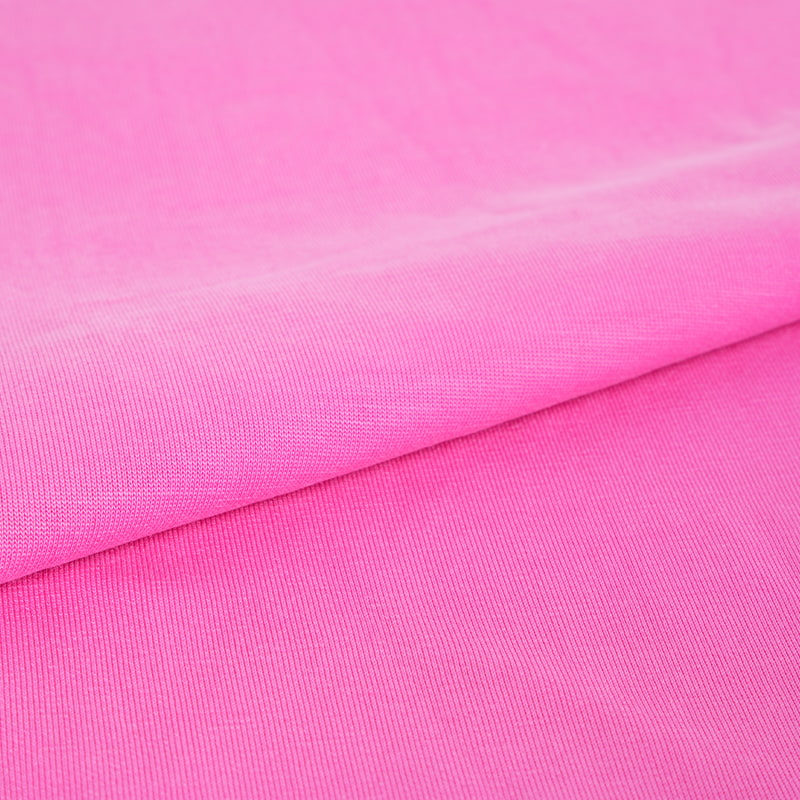
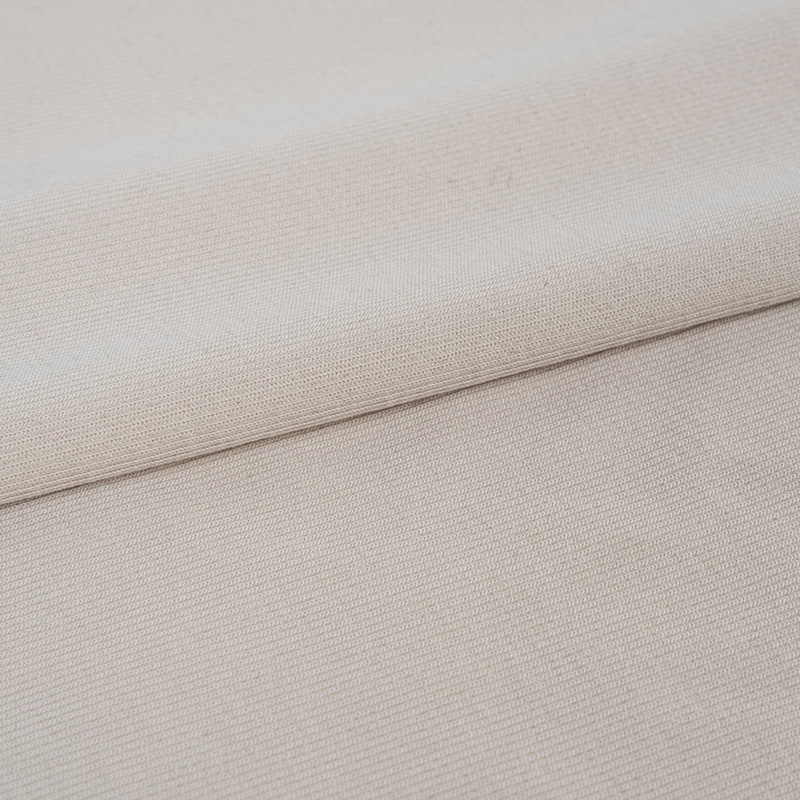
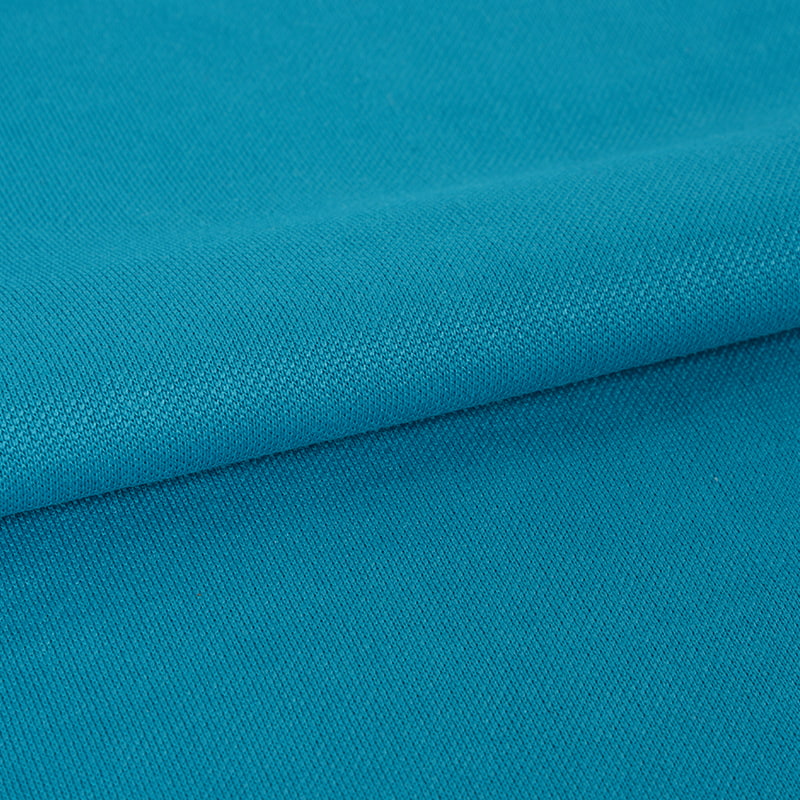
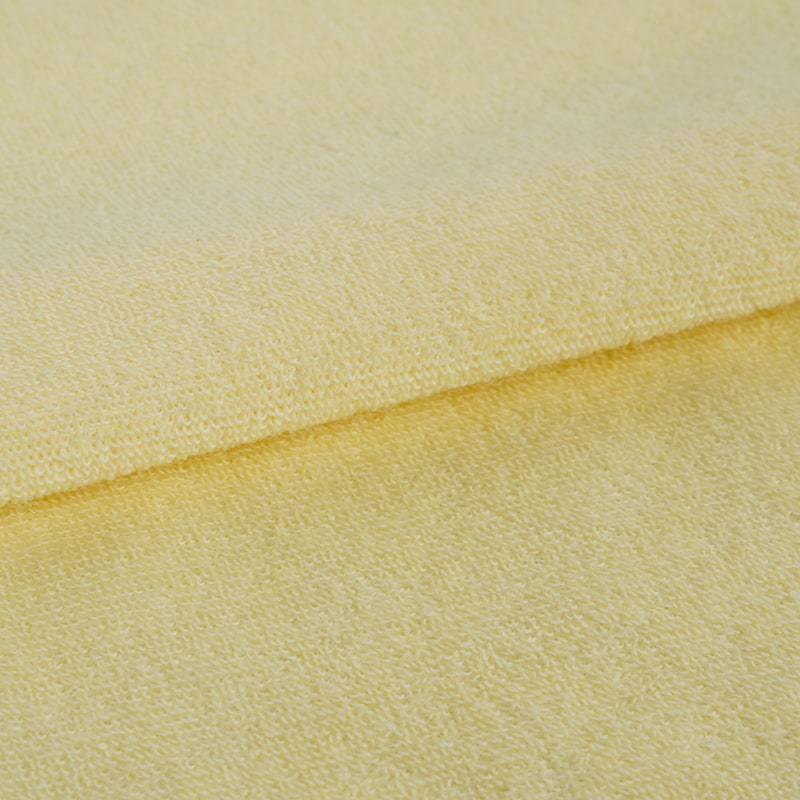
The matte soft-touch specification adds two further performance requirements to this structural base. Matte describes a surface finish that absorbs rather than reflects light: achieved through yarn selection, surface brushing or sanding, and the avoidance of synthetic fibres with inherently high lustre such as standard filament polyester or nylon. Soft-touch describes a tactile quality measurable by low surface friction, absence of pilling tendency, and a certain compressibility or give under hand pressure that signals quality to the consumer. Together, these properties require a careful combination of fibre type, yarn construction, knit architecture, and finishing treatment that cannot be achieved by applying a coating or finish to a standard air layer base.
The matte soft-touch performance profile is most commonly achieved through micro-denier polyester yarns in the face layer, typically 0.1 to 0.5 denier per filament, which produce a surface fine enough to appear matte and tactilely smooth while retaining the dimensional stability and moisture management properties of polyester. Alternatives include recycled polyester (rPET) micro-fibre for sustainability-aligned specifications, polyester-spandex blends for applications requiring stretch and recovery, and natural fibre blends incorporating modal, Tencel, or fine merino where bio-origin or enhanced moisture transfer is required. The intermediate pile or spacer layer typically uses a higher-denier monofilament polyester or textured yarn selected for compressive resilience rather than aesthetics, as it is not visible in the finished fabric.
Three mechanisms produce a genuinely matte surface on air layer fabric. The first is fibre fineness: yarns below 0.5 denier per filament create a surface dense enough that light scatters rather than reflects directionally, producing the characteristic non-sheen appearance. The second is mechanical finishing: emerising, sanding, or sueding the face layer after knitting raises a short, uniform nap that further diffuses surface reflectance and enhances tactile softness simultaneously. The third is yarn texturing: air-jet or false-twist textured yarns with controlled crimp produce a surface geometry that is inherently matte because no filament lies flat enough to act as a mirror. Premium specifications combine all three mechanisms, typically specifying micro-denier face yarns, a controlled sanding or emerising pass calibrated in grit count and passes, and a low-tension finish relaxation to preserve loft.
Matte soft-touch air layer fabric performs across a broader application range than most single-construction textiles because its three-dimensional architecture simultaneously addresses thermal, tactile, structural, and aesthetic requirements that would otherwise require multiple separate components. Understanding where it genuinely outperforms alternatives, and where it is over-specified or under-performing, is essential for accurate material selection.
| Property | Air Layer Fabric | Single Jersey Fleece | Bonded Laminate | Woven Shell |
|---|---|---|---|---|
| Matte surface finish | Yes (intrinsic) | Partial | Depends on face | Depends on weave |
| Soft-touch hand | Yes (durable) | Yes | No (stiffens) | No |
| Thermal insulation | Yes (integral) | Low | Yes (membrane only) | No |
| Delamination risk | None | None | High (adhesive) | None |
| Structural cushioning | Yes | No | No | No |
| Wash durability | High | High | Medium | High |
| Cut-and-sew ease | Moderate | Easy | Moderate | Easy |
| Weight efficiency | High | High | Medium | Low |
In technical apparel, the most important application is body-mapped midlayer and outer panel construction for activewear and outerwear. Body mapping places higher-loft, higher-insulating air layer panels over the torso core where heat retention is critical, with thinner or more breathable panels over high-perspiration zones such as the underarm and upper back. The structural stability of air layer fabric allows pattern pieces to be cut and seamed without the edge fraying or loft collapse that limits thicker bonded materials, and its dimensional recovery means panels retain their shape and performance through repeated mechanical stress and washing cycles.
In automotive and industrial interiors, matte soft-touch air layer fabric addresses a specific problem: trim surfaces that must feel premium, resist wear and soiling, absorb ambient vibration, and maintain dimensional stability against temperature cycling between approximately minus 40 and plus 120 degrees Celsius. Standard pile fabrics and bonded composites either fail on durability or produce an aesthetically unacceptable sheen under automotive cabin lighting. The micro-fibre matte face of an engineered air layer construction passes both requirements simultaneously, and its integral cushioning eliminates the need for a separate foam substrate layer in many headliner and pillar panel applications.
Procuring matte soft-touch air layer fabric at consistent quality requires a specification framework that goes beyond visual and tactile assessment at the sampling stage. The performance properties that distinguish a high-quality air layer construction from a commodity alternative are not reliably apparent from hand-feel or appearance alone: loft retention after repeated compression, matte durability through wash cycles, and face-layer pilling resistance under abrasion all require systematic laboratory evaluation.
The commercial production of matte soft-touch air layer fabric is concentrated among specialised circular or warp knitting mills with three-dimensional knitting capability, primarily in Taiwan, South Korea, Japan, and increasingly in Guangdong and Zhejiang provinces in China. The capital cost of three-dimensional knitting machinery and the process knowledge required to produce consistent loft, face-layer quality, and finishing results means the category is not produced by commodity knitting mills even when they nominally claim air layer capability. Buyer qualification visits should include inspection of the warp or circular knitting equipment, the finishing line (sanding and emerising equipment condition and calibration), and laboratory testing infrastructure for ongoing quality control.
Minimum order quantities at the mill level typically begin at 500 to 1,000 metres per colour per construction variant for established fabric programmes. Development sampling, where a brand specifies a new loft height, fibre combination, or width, typically requires 200 to 500 metres minimum for lab dip and production trials. Lead times from order confirmation to shipment run 45 to 90 days for repeat orders in established constructions, and 90 to 150 days for development programmes requiring new construction validation.
The rPET version of matte soft-touch air layer fabric has gained significant commercial traction because the micro-denier face yarns required for matte performance can be produced from recycled bottle-grade PET with comparable consistency to virgin polyester at commercial scale, provided the GRS chain-of-custody is properly maintained through the yarn spinning, texturing, and knitting stages. Buyers specifying rPET constructions should request GRS transaction certificates for each production run rather than relying on mill-level scope certificates alone, since blending of virgin and recycled content at the yarn stage is a documented quality control challenge in the category.

 Address: Xinglian Village, Fuquan Street, Keqiao District, Shaoxing City, Zhejiang Province, China.
  Phone: +86-15958501675
  Email: [email protected]
For exclusive deals and latest offers, sign up by entering your email address below.
Coprright © Shaoxing Keqiao Ruijue Textiles Co., Ltd. All Rights Reserved. Custom Jacquard Jersey Fabric Manufacturers



 English
 Español